


Hope for male fecundity: clinically insignificant changes in semen parameters over 10 years at a single clinic while assessing an infertility population
- PMID: 34386934
- PMCID: PMC8609088
- DOI: 10.1007/s10815-021-02298-8
Hope for male fecundity: clinically insignificant changes in semen parameters over 10 years at a single clinic while assessing an infertility population
Erratum in
-
Correction to: Hope for male fecundity: clinically insignificant changes in semen parameters over 10 years at a single clinic while assessing an infertility population.J Assist Reprod Genet. 2021 Nov;38(11):3003. doi: 10.1007/s10815-021-02317-8. J Assist Reprod Genet. 2021. PMID: 34518956 Free PMC article. No abstract available.
Abstract
Purpose: What is the trend in sperm parameters in a group of men attending a single reproductive center, over a 10-year period?
Methods: A retrospective study was conducted on 12,188 semen samples obtained from unique individuals who attended a university reproductive clinic from 2009 to 2018, inclusively. Semen analysis was done using computer-assisted sperm analysis and verified by an andrologist. Analysis was done after dividing the dataset into two groups: above WHO 2010 lower reference limits (ARL) (N = 6325) and below the reference limits (BRL) (N = 5521).
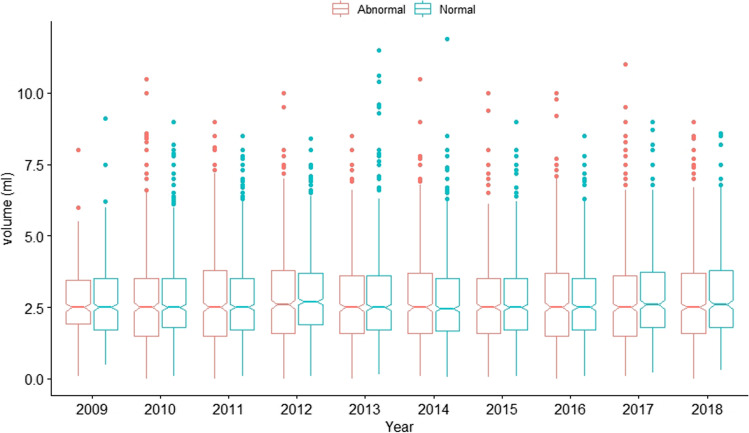
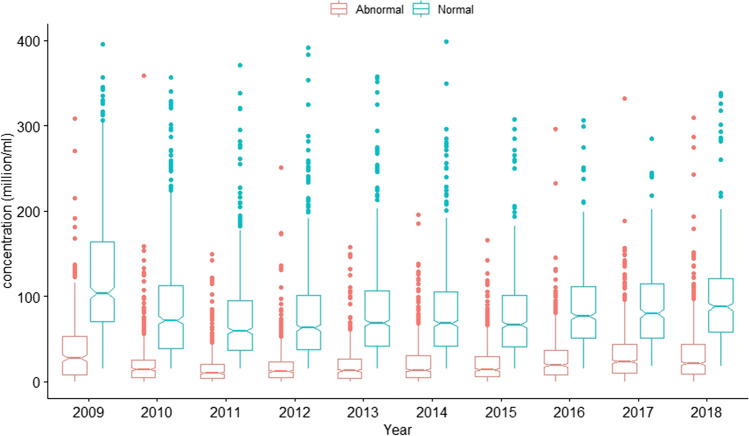
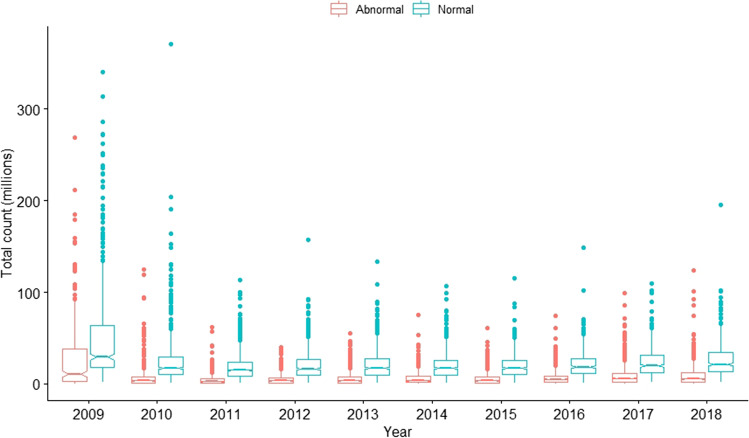
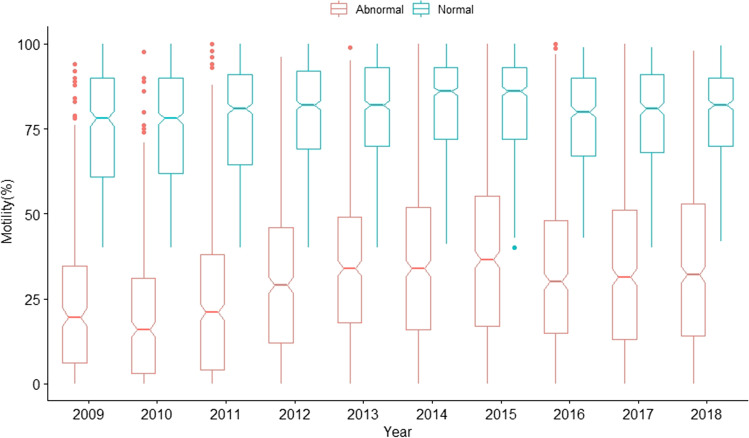
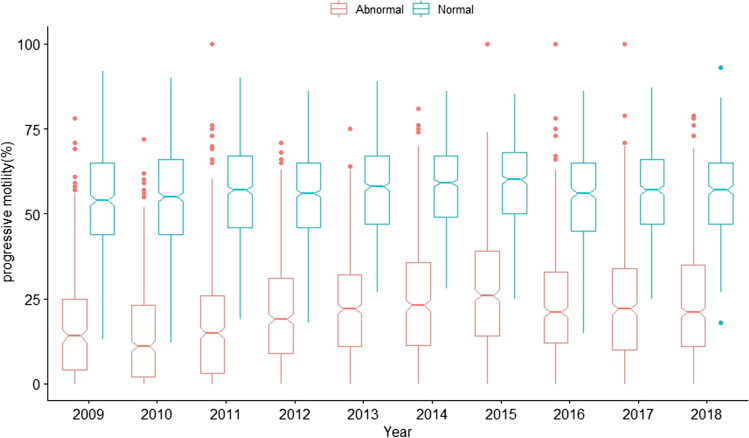
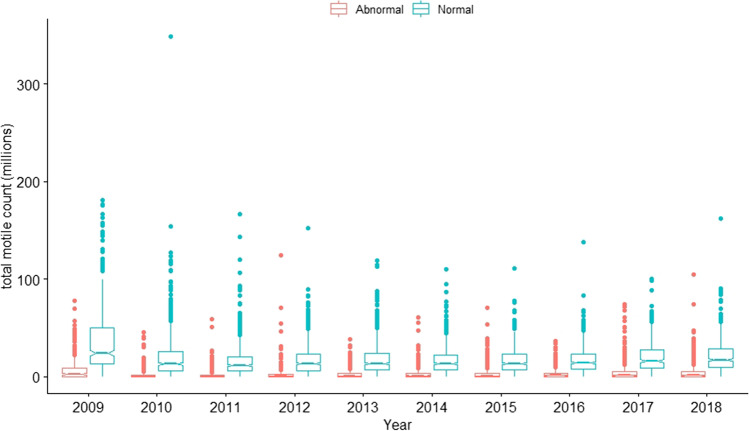
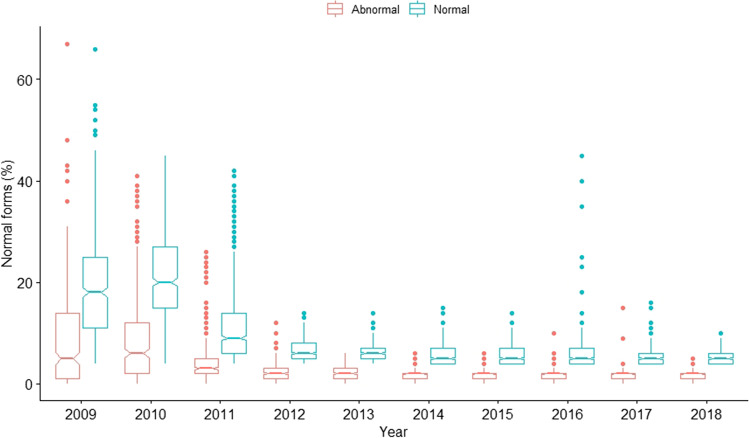
Results: Volume increased slightly (ARL, p = 0.049) before returning to baseline or was stable (BRL, p = 0.59). Sperm concentration and total count of the BRL and ARL group declined initially and then recovered slightly (p < 0.0001, in all cases). Although these changes were statistically significant, this was due to the large study population; clinically, these changes were quite mild and would not have been significant for fertility. Sperm total motility and progressive motility of both the BRL group and the ARL group increased slightly from 2009 until 2015 and then decreased back to baseline (p < 0.0001). This change offset the decrease in count seen in those years. A spurious change was observed with sperm morphology that declined after the first 2 years and remained stable thereafter (p < 0.0001, in both groups). However, this change was attributed to a contemporaneous change in the method of analyzing strict morphology which happened when the change occurred.
Conclusion: While statistically significant changes were found, clinically, these changes were quite mild and would not have been significant for fertility.
Keywords: Andrology; Computer sperm analysis; Male infertility; Semen analysis; Sperm quality.
© 2021. The Author(s), under exclusive licence to Springer Science+Business Media, LLC, part of Springer Nature.
Conflict of interest statement
The authors declare no competing interests.
Figures
References
-
- MACOMBER D, SANDERS MB. The Spermatozoa Count. New England Journal of Medicine [Internet]. N Engl J Med (NEJM/MMS); 1929 [cited 2021 Mar 14];200:981–4. Available from: http://www.nejm.org/doi/abs/10.1056/NEJM192905092001905.. - DOI
-
- Carlsen E, Giwercman A, Keiding N, Skakkebaek NE. Evidence for decreasing quality of semen during past 50 years. Br Med J [Internet]. British Medical Journal Publishing Group; 1992 [cited 2021 Mar 7];305:609–13. Available from: http://www.bmj.com/. - PMC - PubMed
-
- Merzenich H, Zeeb H, Blettner M. Decreasing sperm quality: a global problem? [Internet]. BMC Public Health. BMC Public Health; 2010 [cited 2021 Mar 7]. Available from: https://pubmed-ncbi-nlm-nih-gov.proxy3.library.mcgill.ca/20085639/. - PMC - PubMed
MeSH terms
LinkOut - more resources
Full Text Sources
Medical
