


Epidemiology of respiratory syncytial virus in Japan: A nationwide claims database analysis
- PMID: 34388302
- PMCID: PMC9300113
- DOI: 10.1111/ped.14957
Epidemiology of respiratory syncytial virus in Japan: A nationwide claims database analysis
Abstract
Background: Respiratory syncytial virus (RSV) is a major cause of hospitalization for bronchiolitis and pneumonia in infancy. In Japan, limited data are publicly available on RSV epidemiology and clinical characteristics among infants.
Methods: This retrospective study described RSV incidence, seasonality, patient characteristics, resource use, and clinical outcomes among Japanese children <2 years from January 2017 through December 2018. The RSV cases were identified using the Japanese Medical Data Center database.
Results: In the database, 9,711 and 8,509 RSV patients <2 years were identified in 2017 and 2018, respectively. Of these, 25% required hospitalization. Ninety percent of hospitalized patients did not have a known RSV risk factor. Nineteen percent of hospitalized patients experienced dehydration, and 12% had acute respiratory failure. Hospitalization lasted 1 week on average and 7% required some type of mechanical ventilation. The peak of hospitalizations occurred at 2 months. The incidence of RSV hospitalization in children <2 years was 23.2 per 1,000 person-years, which increased to 35.4 per 1,000 for infants <6 months. This age group accounted for 40% of all RSV-associated hospitalizations among children <2 years.
Conclusions: Roughly one-fourth of all RSV patients <2 years were hospitalized. Ninety percent of these did not have an underlying risk condition. This underscores that RSV can cause serious disease among all young children. Three to four out of every 100 Japanese children <6 months were hospitalized for RSV, and this age group accounted for ~40% of all RSV-associated hospitalizations. Novel and broad-based RSV prevention strategies, especially those targeting young infants, are needed.
Keywords: Japan; epidemiology; respiratory syncytial virus.
© 2021 The Authors. Pediatrics International published by John Wiley & Sons Australia, Ltd on behalf of Japan Pediatric Society.
Conflict of interest statement
This study was sponsored by Pfizer Japan Inc. All authors are employees of Pfizer Japan Inc. and Pfizer Inc. Dr Togo and Mr Kobayashi report personal fees from Pfizer Japan Inc., stock from Pfizer Inc., during the conduct of the study. Dr McLaughlin and Dr Agosti report personal fees and stock from Pfizer Inc. during the conduct of the study.
Figures
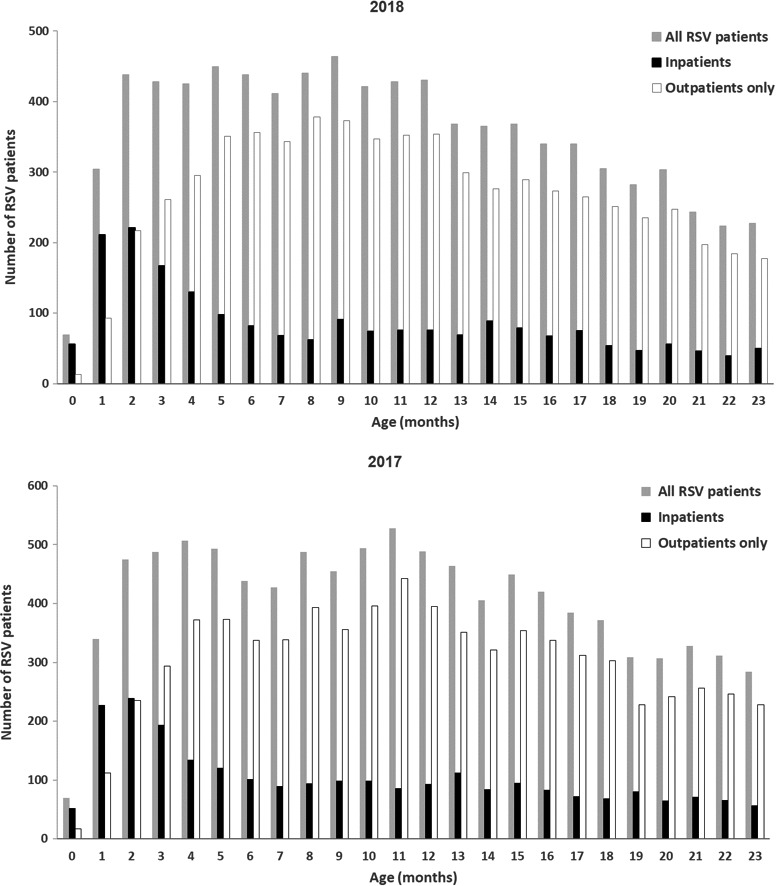
 ): All RSV patients; (■): Inpatients; (□): Outpatients only.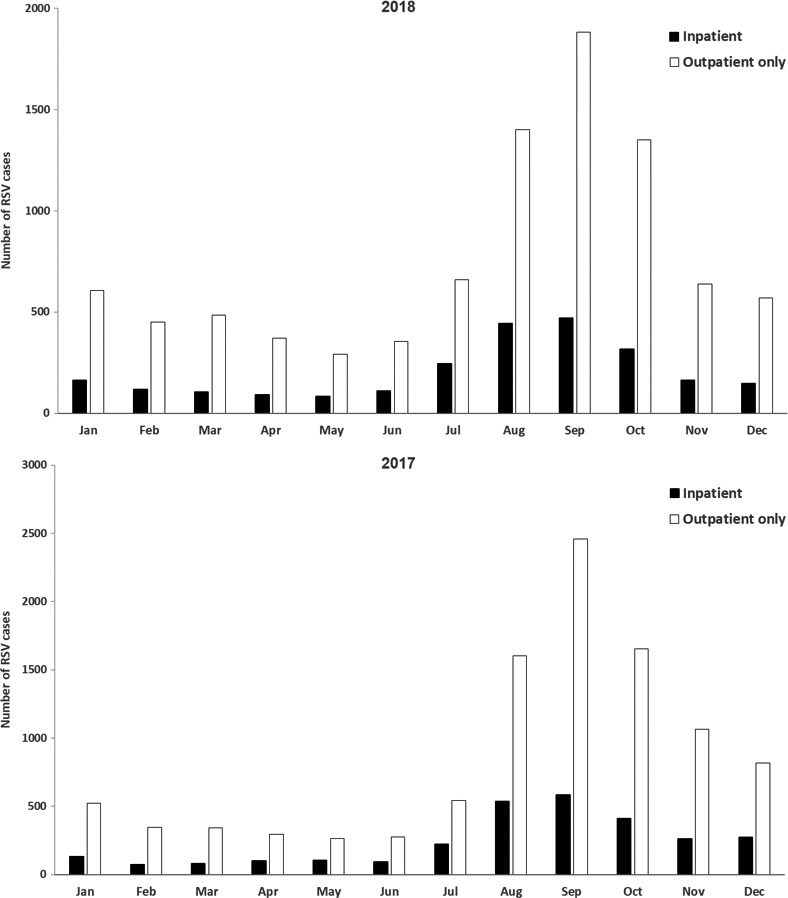
References
-
- Leader S, Kohlhase K. Respiratory syncytial virus‐coded pediatric hospitalizations, 1997 to 1999. Pediatr. Infect. Dis. J. 2002; 21: 629–32. - PubMed
-
- Sigurs N, Gustafsson PM, Bjarnason R et al. Severe respiratory syncytial virus bronchiolitis in infancy and asthma and allergy at age 13. Am. J. Resp. Crit Care. 2005; 171(2): 137–41. - PubMed
MeSH terms
Grants and funding
LinkOut - more resources
Full Text Sources
Medical
