


Biological contaminants in the indoor air environment and their impacts on human health
- PMID: 34394766
- PMCID: PMC8346343
- DOI: 10.1007/s11869-021-00978-z
Biological contaminants in the indoor air environment and their impacts on human health
Abstract
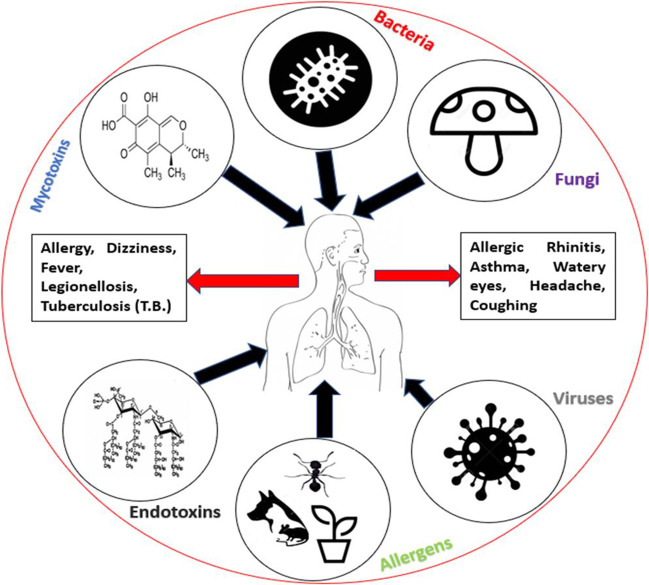
Indoor air environment contains a complex mixture of biological contaminants such as bacteria, fungi, viruses, algae, insects, and their by-products such as endotoxins, mycotoxins, volatile organic compounds, etc. Biological contaminants have been categorized according to whether they are allergenic, infectious, capable of inducing toxic or inflammatory responses in human beings. At present, there is a lack of awareness about biological contamination in the indoor environment and their potential sources for the spreading of various infections. Therefore, this review article examines the association of biological contaminants with human health, and it will also provide in-depth knowledge of various biological contaminants present in different places such as residential areas, hospitals, offices, schools, etc. Moreover, qualitative and quantitative data of bio-contaminants in various indoor environments such as schools, hospitals, residential houses, etc. have also been derived from the recent literature survey.
Keywords: Bacteria; Bio-contaminants; Endotoxin; Fungi; Health effects; Viruses.
© The Author(s), under exclusive licence to Springer Nature B.V. part of Springer Nature 2021.
Conflict of interest statement
Conflict of interestThe authors declare that they have no conflict of interest.
Figures
References
-
- American Air and Water (2020) Mold, mold spores and indoor air quality. American Air and Water. Available at https://www.americanairandwater.com/mold Accessed on: 8 June 2020
-
- American Conference of Governmental Industrial Hygienist (1989) Guidelines for the assessment of Bioaerosols in indoor environment. American Conference of Governmental Industrial Hygienist, Cincinnati
-
- Ananthanaryan R, Paniker CKJ (2009) Text of Microbiology, 8th Edition, Universities press
Publication types
LinkOut - more resources
Full Text Sources