. 2021 Jul 29:8:714604.
doi: 10.3389/fnut.2021.714604. eCollection 2021.

NMN Maintains Intestinal Homeostasis by Regulating the Gut Microbiota

Affiliations

NMN Maintains Intestinal Homeostasis by Regulating the Gut Microbiota

Pan Huang et al. Front Nutr. .

Abstract

The aim of this study was to determine the effects of long-term Nicotinamide mononucleotide (NMN) treatment on modulating gut microbiota diversity and composition, as well as its association with intestinal barrier function. In this study, C57BL/6J mice were fed different concentrations of NMN, and their feces were collected for detection of 16S rDNA and non-targeted metabolites to explore the effects of NMN on intestinal microbiota and metabolites. The results revealed that NMN increased the abundance of butyric acid-producing bacteria (Ruminococcae_UCG-014 and Prevotellaceae_NK3B31_group) and other probiotics (Akkermansia muciniphila), while the abundance of several harmful bacteria (Bilophila and Oscillibacter) were decreased after NMN treatment. Meanwhile, the level of bile acid-related metabolites in feces from the G1 group (0.1 mg/ml) was significantly increased compared to the control group, including cholic acid, taurodeoxycholic acid, taurocholic acid, glycocholic acid, and tauro-β-muricholic acid. In addition, long-term NMN treatment affected the permeability of the intestinal mucosa. The number of goblet cells and mucus thickness increased, as well as expression of tight junction protein. These results demonstrate that NMN reduced intestinal mucosal permeability and exerts a protective effect on the intestinal tract. This study lays the foundation for exploring NMN's utility in clinical research.

Keywords: NMN; bacterial metabolites; colon; gut microbiota; intestinal mucosa.


Conflict of interest statement

The authors declare that the research was conducted in the absence of any commercial or financial relationships that could be construed as a potential conflict of interest.

Figures
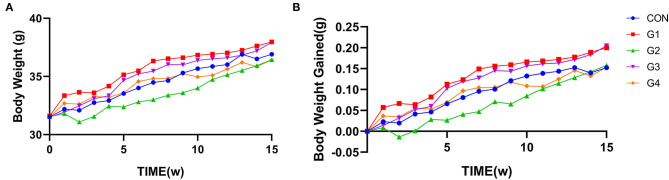
Figure 1
Figure 1
The effect of long-term NMN treatment on body weight in mice. Long-term supplementation of NMN had no significant effect on body weight (A) or the body weight change rate (B) between the two groups of mice.
Figure 2
Figure 2
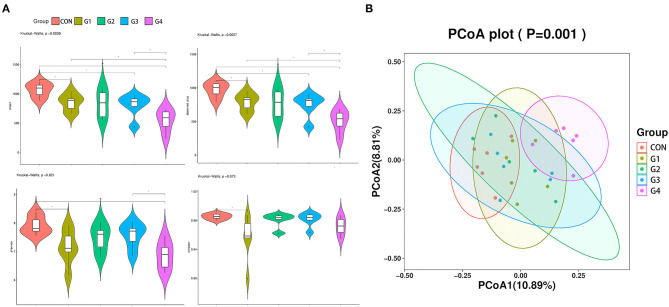
The effects of long-term NMN treatment on the diversity of intestinal flora. α diversity analysis of the feces from mice was performed, and the four indexes were Chao1 (A), Observed (B), Shannon (C), and Simpson (D) (*P < 0.05, **0.001 < P < 0.01). β diversity analysis of gut microbiota and PCOA analysis (E) of fecal flora composition in each group (P = 0.001).
Figure 3
Figure 3
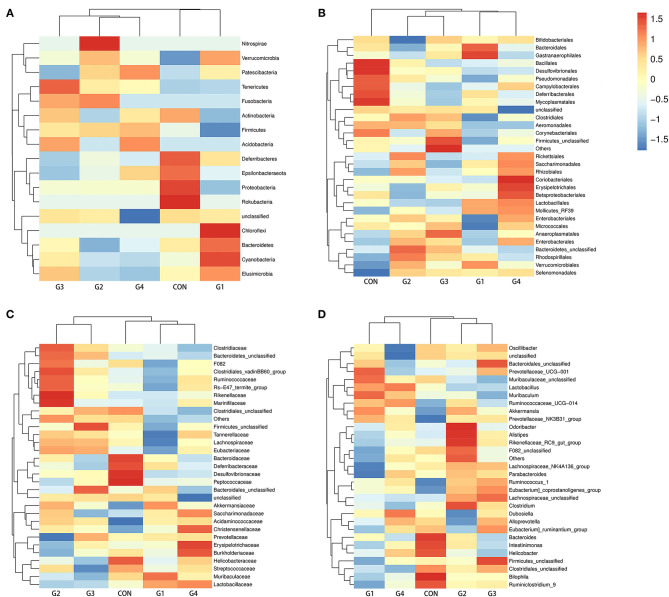
The effects of long-term NMN treatment on the structure of intestinal microflora. Abundance analysis of gut microbiota population, shown as heat maps of species abundance at phylum (A), order (B), family (C), and genus (D) levels.
Figure 4
Figure 4
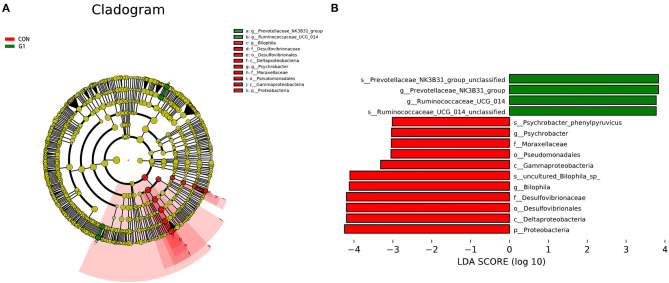
Cladogram indicating the phylogenetic distribution of microbiota correlated with each group (A). The differences in abundance between each group (B).
Figure 5
Figure 5
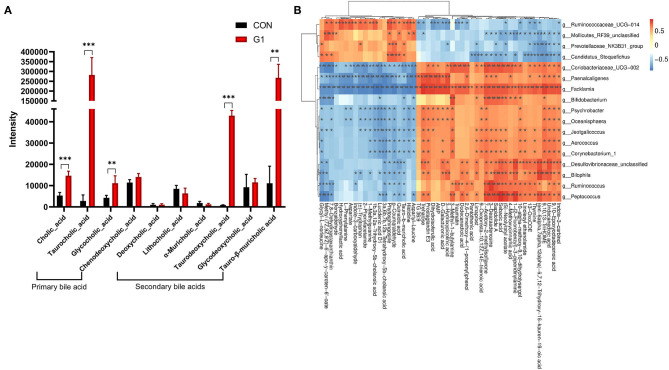
The effects of long-term NMN treatment on the concentration of bile acid-related metabolites. The concentration of bile acid-related metabolites was significantly increased (A) *0.01 < P < 0.05, **0.01 < P < 0.001, and ***P < 0.001. Correlation analysis of differential bacteria and metabolites (B).
Figure 6
Figure 6
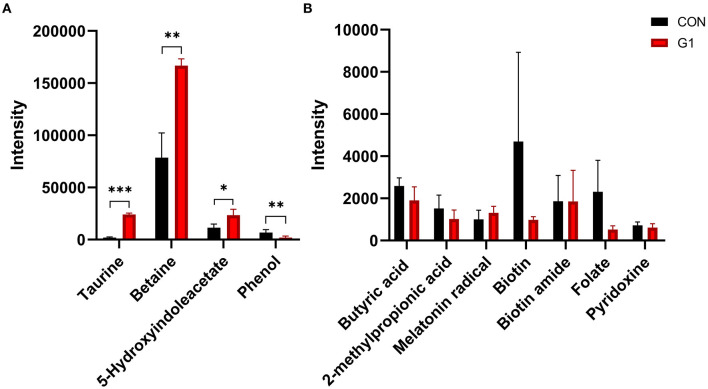
The effects of long-term NMN treatment on other common metabolites. The concentration of some common metabolites was significantly increased (A), others were not affected (B) *0.01 < P < 0.05, **0.01 < P < 0.001, and ***P < 0.001.
Figure 7
Figure 7
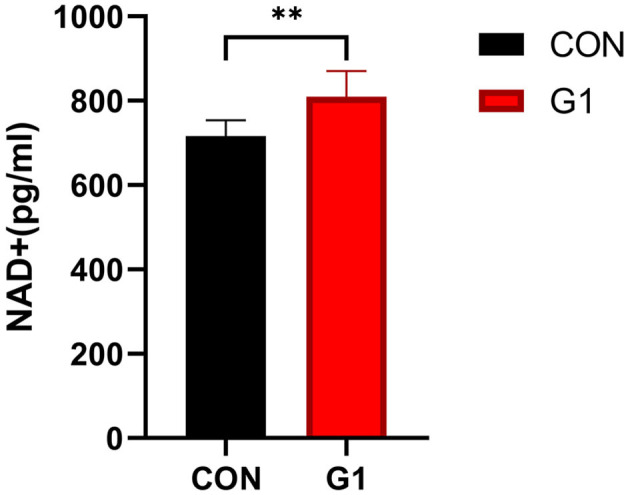
Serum NAD+ content was significantly increased after long-term NMN treatment (P < 0.01).
Figure 8
Figure 8
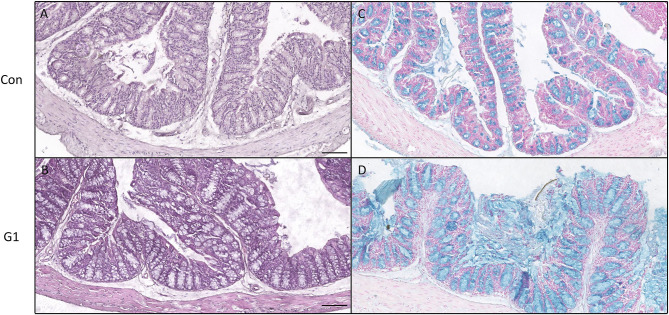
The effects of long-term NMN treatment on colon morphology. H&E staining (A,B) and Alcian Blue staining for colonic mucus and goblet cells (C,D), bar: 100 μm.
Figure 9
Figure 9
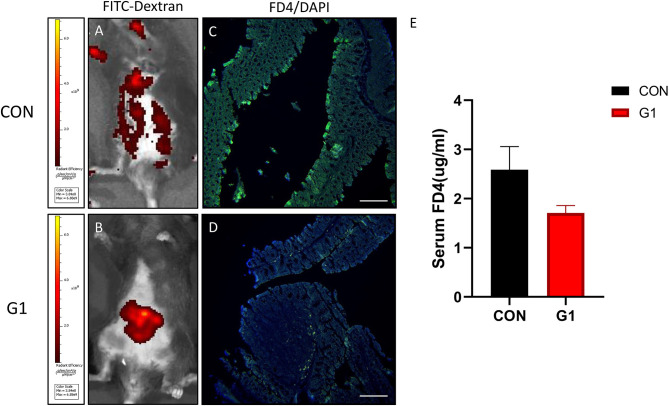
The effect of long-term NMN treatment on intestinal mucosal permeability in mice. Leakage of FD4 was observed by in vivo imaging (A,B). Colonic tissue section observing the embedment of FD4 into colon epithelial tissue (C,D); scale bar: 100 μm. Levels of FD4 in the serum (E).
Figure 10
Figure 10
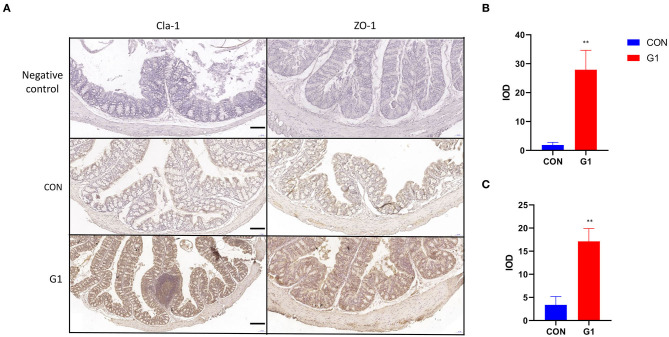
The effect of long-term NMN treatment on the expression and localization of colonic tight junction proteins in mice. The expression of tight junction proteins Claudin-1 and ZO-1 in the colonic epithelium of mice (scale bar: 100 μm) (A) after treatment with NMN. Immunohistochemical results of Claudin-1 and ZO-1 were analyzed by Image-Pro Plus (B,C) *0.01 < P < 0.05, and **0.001 < P < 0.01.
Figure 11
Figure 11
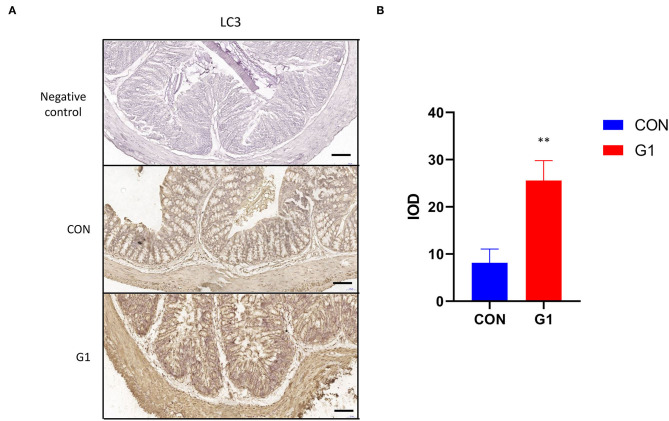
The effects of long-term NMN treatment on the expression and localization of colonic autophagy protein in mice. Expression of the autophagy protein LC3 in colonic epithelium of mice (scale bar: 100 μm) (A) after treatment with NMN. The immunohistochemical results of LC3 were analyzed using Image-Pro Plus (B) 0.001 < P < 0.01.

References

    1. Yoshino J, Baur JA, Imai S-I. NAD+ intermediates: the biology and therapeutic potential of NMN and NR. Cell Metabolism. (2018) 27:513–28. 10.1016/j.cmet.2017.11.002 - DOI - PMC - PubMed
    1. Imai S, Yoshino J. The importance of NAMPT/NAD/SIRT1 in the systemic regulation of metabolism and ageing. Diabetes Obes Metab. (2013) 15 (Suppl. 3):26–33. 10.1111/dom.12171 - DOI - PMC - PubMed
    1. Revollo JR, Grimm AA, Imai S. The NAD biosynthesis pathway mediated by nicotinamide phosphoribosyltransferase regulates sir2 activity in mammalian cells. J Biol Chem. (2004) 279:50754–63. 10.1074/jbc.M408388200 - DOI - PubMed
    1. Peek CB, Affinati AH, Ramsey KM, Kuo HY, Yu W, Sena LA, et al. Circadian clock nAD+ cycle drives mitochondrial oxidative metabolism in mice. Science. (2013) 342:1243417. 10.1126/science.1243417 - DOI - PMC - PubMed
    1. Mills KF, Yoshida S, Stein LR, Grozio A, Kubota S, Sasaki Y, et al. Long-Term administration of nicotinamide mononucleotide mitigates age-Associated physiological decline in mice. Cell Metab. (2016) 24:795–806. 10.1016/j.cmet.2016.09.013 - DOI - PMC - PubMed

LinkOut - more resources