


Etiology and Diagnosis of Pelvic Inflammatory Disease: Looking Beyond Gonorrhea and Chlamydia
- PMID: 34396407
- PMCID: PMC8365120
- DOI: 10.1093/infdis/jiab067
Etiology and Diagnosis of Pelvic Inflammatory Disease: Looking Beyond Gonorrhea and Chlamydia
Abstract
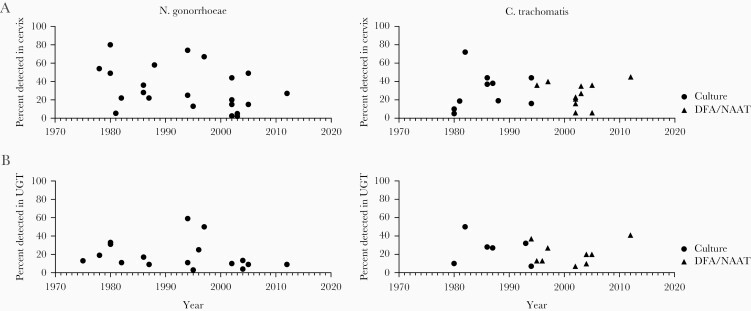
Pelvic inflammatory disease (PID) is a clinical syndrome that has been associated with a wide range of potential causal pathogens. Three broad groups of organisms have been isolated from the genital tract of people with PID: sexually transmitted organisms such as Neisseria gonorrhoeae, Chlamydia trachomatis, Mycoplasma genitalium, and Trichomonas vaginalis; bacterial vaginosis (BV)-associated species and genera such as Atopobium vaginae, Sneathia, and Megasphaera; and genera and species usually associated with the gastrointestinal or respiratory tracts such as Bacteroides, Escherichia coli, Streptococcus, or Haemophilus influenza. Although PID is often considered to be synonymous with gonorrhea or chlamydia, these pathogens are found in only one quarter to one third of people with PID, suggesting that broader screening and diagnostic and treatment strategies need to be considered to reduce the burden of PID and its associated sequelae.
Keywords: bacterial vaginosis; chlamydia; gonorrhea; pelvic inflammatory disease; sexually transmitted infections.
© The Author(s) 2021. Published by Oxford University Press for the Infectious Diseases Society of America. All rights reserved. For permissions, e-mail: journals.permissions@oup.com.
Figures
References
-
- Workowski KA, Bolan GA; Centers for Disease Control and Prevention . Sexually transmitted diseases treatment guidelines, 2015. MMWR Morb Mortal Wkly Rep 2015; 64:1–137. - PubMed
-
- McKee DL, Hu Z, Stahlman S. Incidence and sequelae of acute pelvic inflammatory disease among active component females, U.S. Armed Forces, 1996–2016. MMWR Morb Mortal Wkly Rep 2018; 25:2–8. - PubMed
-
- Haggerty CL, Peipert JF, Weitzen S, et al. ; PID Evaluation and Clinical Health (PEACH) Study Investigators . Predictors of chronic pelvic pain in an urban population of women with symptoms and signs of pelvic inflammatory disease. Sex Transm Dis 2005; 32:293–9. - PubMed
