


Rabies epidemiology, prevention and control in Nigeria: Scoping progress towards elimination
- PMID: 34398902
- PMCID: PMC8389847
- DOI: 10.1371/journal.pntd.0009617
Rabies epidemiology, prevention and control in Nigeria: Scoping progress towards elimination
Abstract
Background: Human rabies remains a significant public health problem in Africa with outbreaks reported in most countries. In Nigeria-the most populous country in Africa-rabies causes a significant public health burden partly due to perennial obstacles to implementing a national prevention and control program.
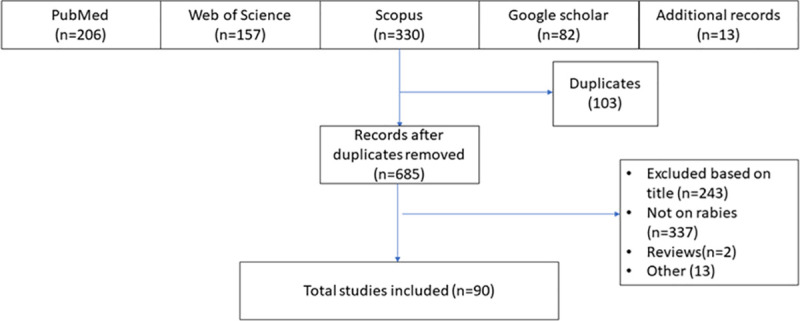
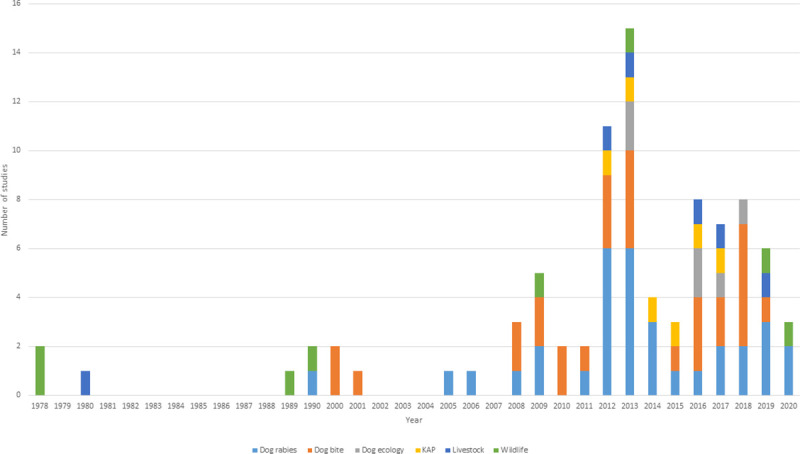
Methods: We conducted a scoping review using standard Preferred Reporting Items for Systematic Reviews and Meta-Analyses (PRISMA) guidelines to identify and select published articles from Nigeria during 1978-2020 reporting on rabies virus infections (human, canine, livestock, and wildlife), canine bites, knowledge, attitudes and practices (KAP) surveys on rabies and canine ecology studies. We extracted information on study location, year and additional details of each study such as rabies prevalence, general characteristics of offending dogs, dog vaccination status and health-seeking behaviours.
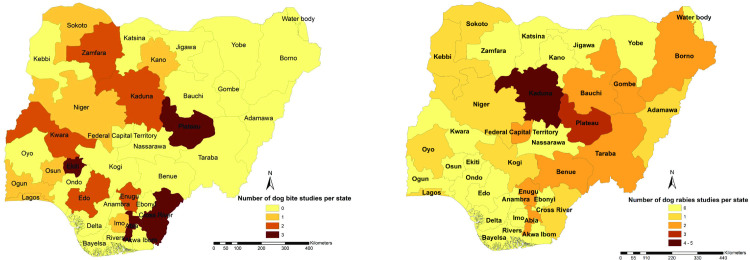
Findings: Between 1978 and 2020, 90 published articles met our inclusion criteria. The prevalence of rabies virus antigen detection varied between 3% and 28%, with more studies in the north. Most bites were unprovoked from dog bite studies (36.4%-97%), by dogs with low vaccination rates (12-38%). A more significant proportion of biting dogs were owned (31-90%). Laboratory confirmation for biting was available for only a small proportion of studies (6%; n = 2/32). Of the dogs surveyed during ecology studies, indigenous dogs accounted for the majority (62-98%), used mostly for security purposes (52-98%), with the vaccination rate between 15% and 38% in most states. Studies conducted in areas distant from rabies diagnostic facilities accounted for more human rabies cases and fewer dog rabies cases.
Conclusion: Significant improvements are necessary to achieve the elimination of human rabies mediated via dogs by 2030.
Conflict of interest statement
The authors have declared that no competing interests exist.
Figures
References
-
- Caffrey N, Rock M, Schmidtz O, Anderson D, Parkinson M, Checkley SL. Insights about the Epidemiology of Dog Bites in a Canadian City Using a Dog Aggression Scale and Administrative Data. Animals (Basel). 2019;9(6):324. Epub 2019/06/09. doi: 10.3390/ani9060324; PubMed Central PMCID: PMC6617111. - DOI - PMC - PubMed
-
- WHO. Animal bites. In: (WHO): WHO, editor. 2018.
Publication types
MeSH terms
Substances
LinkOut - more resources
Full Text Sources
Medical
Miscellaneous
