


The persistent lack of knowledge and misunderstanding of the Genetic Information Nondiscrimination Act (GINA) more than a decade after passage
- PMID: 34400812
- PMCID: PMC8633070
- DOI: 10.1038/s41436-021-01268-w
The persistent lack of knowledge and misunderstanding of the Genetic Information Nondiscrimination Act (GINA) more than a decade after passage
Erratum in
-
Correction: The persistent lack of knowledge and misunderstanding of the Genetic Information Nondiscrimination Act (GINA) more than a decade after passage.Genet Med. 2021 Dec;23(12):2471. doi: 10.1038/s41436-021-01305-8. Genet Med. 2021. PMID: 34446926 No abstract available.
Abstract
Purpose: More than a decade after the Genetic Information Nondiscrimination Act (GINA) was passed, there is a paucity of research on the general public's awareness of GINA. This study's objective was to assess knowledge of GINA and concerns of genetic discrimination.
Methods: A quota-based sample of US adults (N = 421) was recruited via Qualtrics Research Services to complete an online survey.
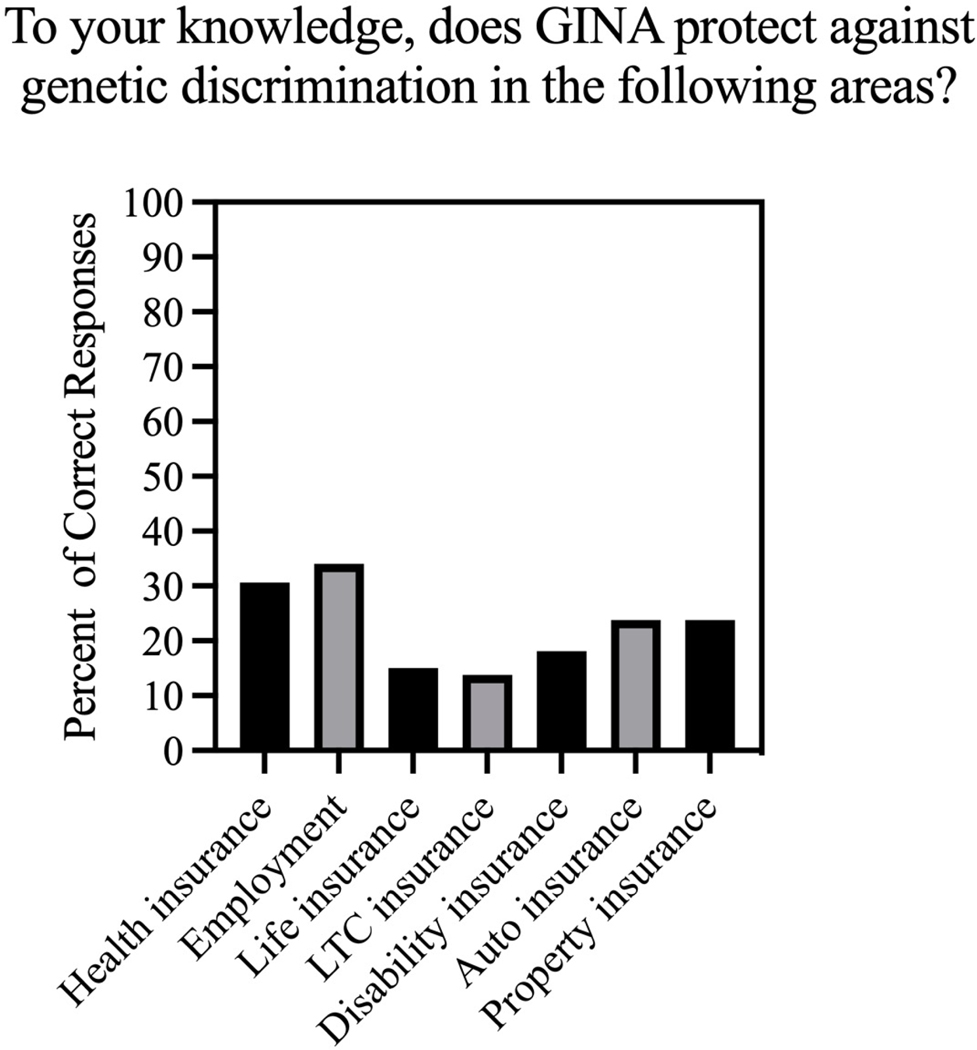
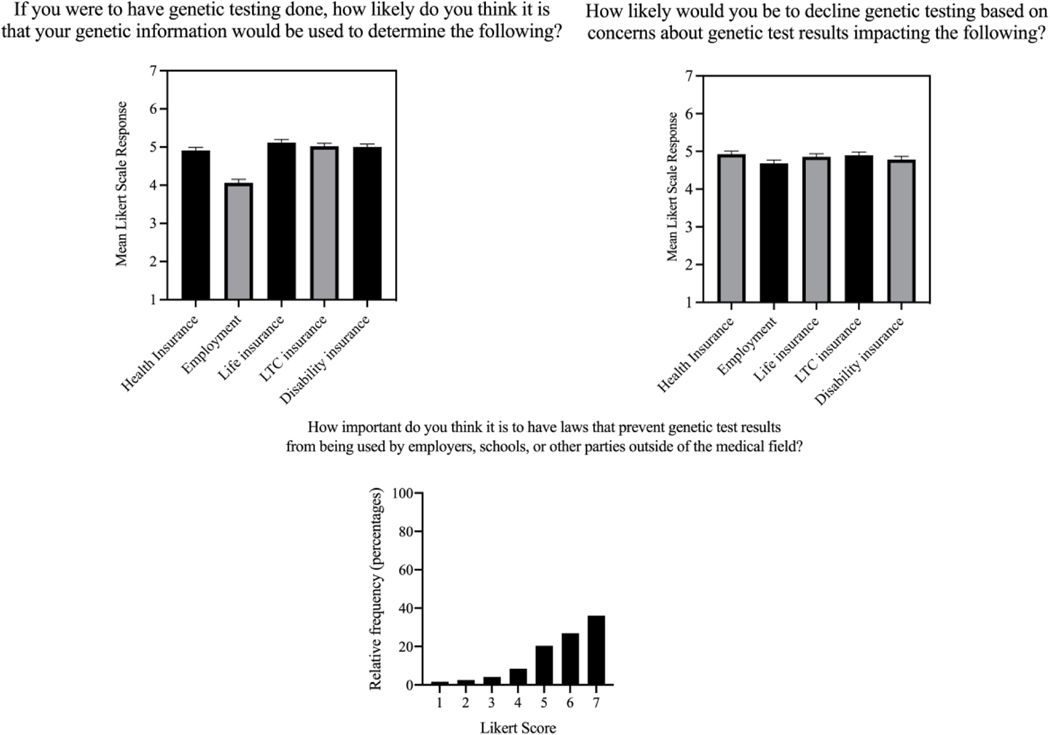
Results: Overall, participants had a mean age of 43.1 (SD = 13.9), 51.8% identified as female, 63.1% identified as non-Hispanic White, and 38.4% had ≥4-year college degree. Respondents reported relatively low subjective knowledge of GINA (M = 3.10, SD = 1.98; 7-point Likert scale). Among respondents reporting high subjective knowledge of GINA (16.2%), 92.6% incorrectly reported or did not know that GINA does not covers life, long-term care, and disability insurance, and this number was 82.4% for auto or property insurance. Respondents were relatively likely to decline genetic testing due to concerns about results being used to determine eligibility for employment (M = 4.68, SD = 1.89) or health insurance (M = 4.94, SD = 1.73). There were few consistent demographic associations with either subjective or objective knowledge of GINA.
Conclusion: This study highlights continued public concern about genetic discrimination and a lack of awareness and understanding of GINA and its scope of protections.
© 2021. The Author(s), under exclusive licence to the American College of Medical Genetics and Genomics.
Conflict of interest statement
Conflicts of Interest
The authors have no conflicts of interest to declare.
Figures
References
-
- Faces of Genetic Discrimination How Genetic Discrimination Affects Real People. National Partnership for Women & Families on behalf of the Coalition for Genetic Fairness. (2004).
-
- Hall MA, McEwen JE, Barton JC, et al. Concerns in a primary care population about genetic discrimination by insurers. Genet Med. (2005);7(5):311–16. - PubMed
-
- Thompson HS, Valdimarsdottir HB, Duteau-Buck C, et al. Psychosocial predictors of BRCA counseling and testing decisions among urban African-American women. Cancer Epidemiol Biomarkers Prev. (2002);11(12):1579–85 - PubMed
-
- Peterson EA, Milliron KJ, Lewis KE, et al. Health insurance and discrimination concerns and BRCA1/2 testing in a clinic population. Cancer Epidemiol Biomarkers Prev. (2002);11:79–87 - PubMed
Publication types
MeSH terms
Grants and funding
LinkOut - more resources
Full Text Sources
Medical
