


A prospective randomized study to define the role of low dose continuous prophylactic antibiotics and anti-adherence agents in altering the microbial colonization related to indwelling double-J stents
- PMID: 34401333
- PMCID: PMC8356036
- DOI: 10.1016/j.ajur.2020.08.003
A prospective randomized study to define the role of low dose continuous prophylactic antibiotics and anti-adherence agents in altering the microbial colonization related to indwelling double-J stents
Abstract
Objective: Despite conflicting evidence, it is common practice to use continuous antibiotic prophylaxis (CAP) in patients with indwelling double-J (DJ) stents. Cranberry extracts and d-mannose have been shown to prevent colonization of the urinary tract. We evaluated their role in this setting.
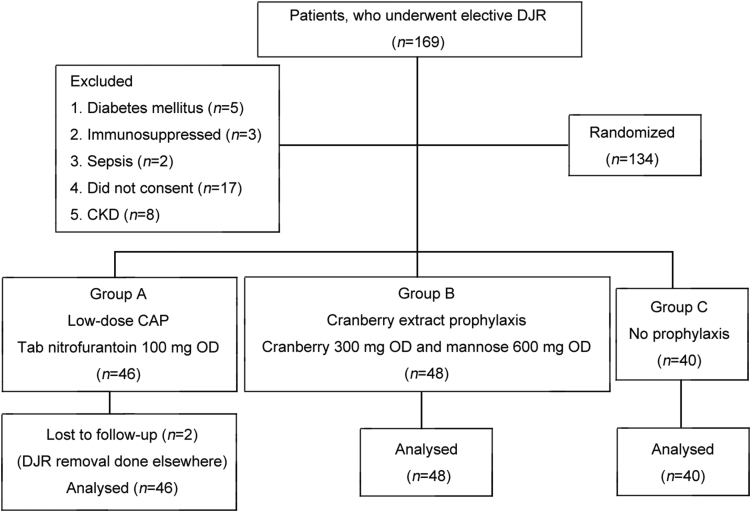
Methods: We conducted a prospective randomized study to evaluate patients with indwelling DJ stents following urological procedures. They were randomized into three groups. Group A (n=46) received CAP (nitrofurantoin 100 mg once daily [OD]). Group B (n=48) received cranberry extract 300 mg and d-mannose 600 mg twice daily (BD). Group C (n=40) received no prophylaxis. The stents were removed between 15 days and 45 days after surgery. Three groups were compared in terms of colonization of stent and urine, stent related symptoms and febrile urinary tract infections (UTIs) during the period of indwelling stent and until 1 week after removal.
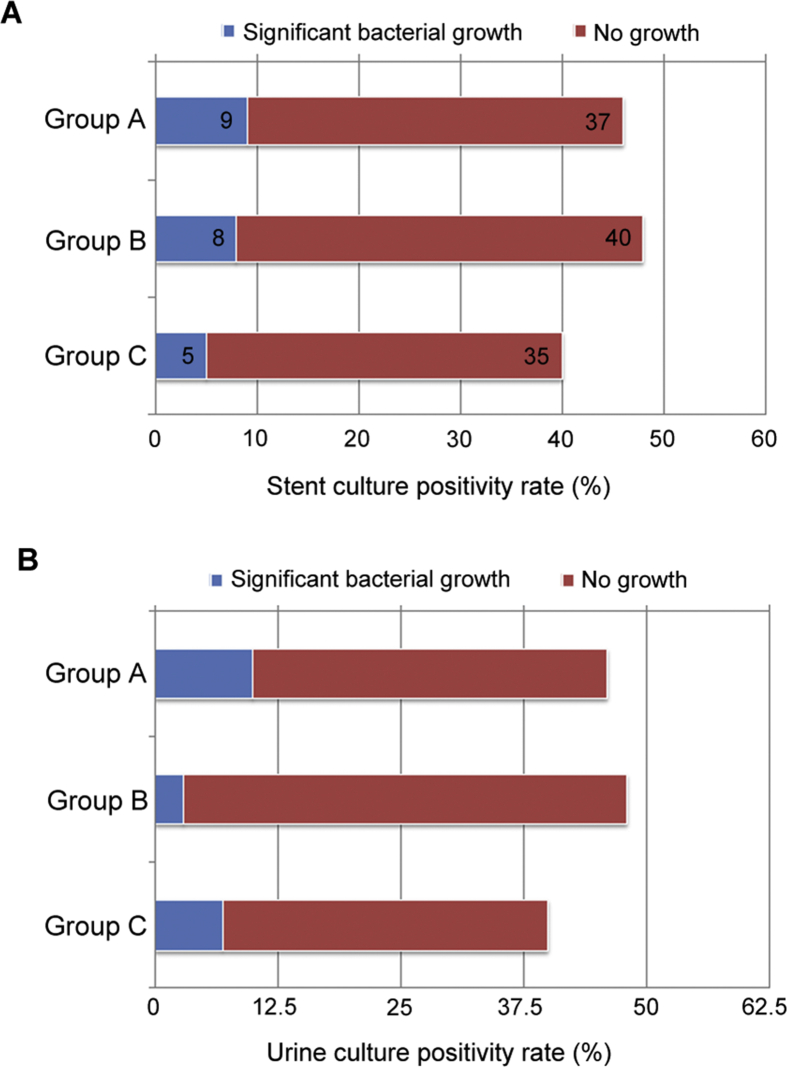
Results: In Group A, 9 (19.5%) patients had significant bacterial growth on the stents. This was 8 (16.7%) in the Group B and 5 (12.5%) in Group C (p-value: 0.743). However, the culture positivity rate of urine specimens showed a significant difference (p-value: 0.023) with Group B showing least colonization of urine compared to groups A and C. There was no statistically significant difference in the frequency of stent related symptoms (p-value: 0.242) or febrile UTIs (p-value: 0.399) among the groups.
Conclusion: Prophylactic agents have no role in altering bacterial growth on temporary indwelling DJ stent, stent related symptoms or febrile UTIs. Cranberry extract may reduce the colonization of urinary tract, but its clinical significance needs further evaluation.
Keywords: Antibiotic; Cranberry; Infection; Prophylaxis; Stent.
© 2021 Editorial Office of Asian Journal of Urology. Production and hosting by Elsevier B.V.
Conflict of interest statement
The authors declare no conflict of interest.
Figures
References
-
- Klis R., Korczak-Kozakiewicz E., Denys A., Sosnowski M., Rozanski W. Relationship between urinary tract infection and self-retaining double-J catheter colonization. J Endourol. 2009;23:1015–1019. - PubMed
-
- Akay A.F., Aflay U., Gedik A., Sahin H., Bircan M.K. Risk factors for lower urinary tract infection and bacterial stent colonization in patients with a double‐J ureteral stent. Int Urol Nephrol. 2007;39:95–98. - PubMed
-
- Paick S.H., Park H.K., Oh S.J., Kim H.H. Characteristics of bacterial colonization and urinary tract infection after indwelling of double‐J ureteral stent. Urology. 2003;62:214–217. - PubMed
-
- Ando E., Monden K., Mitsuhata R., Kariyama R., Kumon H. Biofilm formation among methicillin resistant Staphylococcus aureus isolates from patients with urinary tract infection. Acta Med Okayama. 2004;58:207–214. - PubMed
-
- Ramaswamy K., Shah O. Antibiotic prophylaxis after uncomplicated ureteroscopic stone treatment: is there a difference? J Endourol. 2012;26:122–125. - PubMed
LinkOut - more resources
Full Text Sources
Miscellaneous
