


Movement Disorders and Liver Disease
- PMID: 34401403
- PMCID: PMC8354085
- DOI: 10.1002/mdc3.13238
Movement Disorders and Liver Disease
Abstract
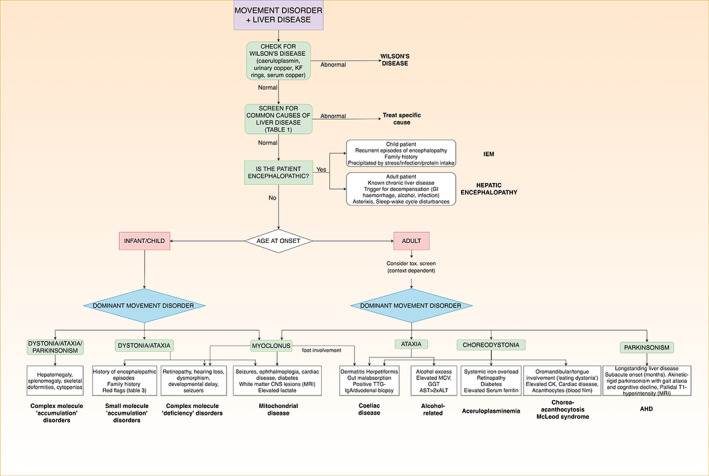
The association of movement disorders with structural or functional hepatic disease occurs in three principal scenarios: (1) combined involvement of both organ systems from a single disease entity, (2) nervous system dysfunction resulting from exposure to toxic compounds in the setting of defective hepatic clearance, or (3) hepatic and/or neurological injury secondary to exposure to exogenous drugs or toxins. An important early step in the workup of any patient with combined movement disorders and liver disease is the exclusion of Wilson's disease. Diagnostic delay remains common for this treatable disorder, and this has major implications for patient outcomes. Thereafter, a structured approach integrating variables such as age of onset, tempo of progression, nature and severity of liver involvement, movement disorder phenomenology, exposure to drugs/toxins and laboratory/neuroimaging findings is key to ensuring timely diagnosis and disease-specific therapy. Herein, we provide an overview of disorders which may manifest with a combination of movement disorders and liver disease, structured under the three headings as detailed above. In each section, the most common disorders are discussed, along with important clinical pearls, suggested diagnostic workup, differential diagnoses and where appropriate, treatment considerations.
Keywords: liver diseases; movement disorders.
© 2021 The Authors. Movement Disorders Clinical Practice published by Wiley Periodicals LLC. on behalf of International Parkinson and Movement Disorder Society.
Conflict of interest statement
No specific funding was received for this work. The authors declare that there are no conflicts of interest relevant to this work.
Figures
References
Publication types
LinkOut - more resources
Full Text Sources
