


Expression of Progesterone Receptor and Its Association with Clinicopathological Characteristics in Meningiomas: A Cross-Sectional Study
- PMID: 34401742
- PMCID: PMC8355943
- DOI: 10.1016/j.wnsx.2021.100111
Expression of Progesterone Receptor and Its Association with Clinicopathological Characteristics in Meningiomas: A Cross-Sectional Study
Abstract
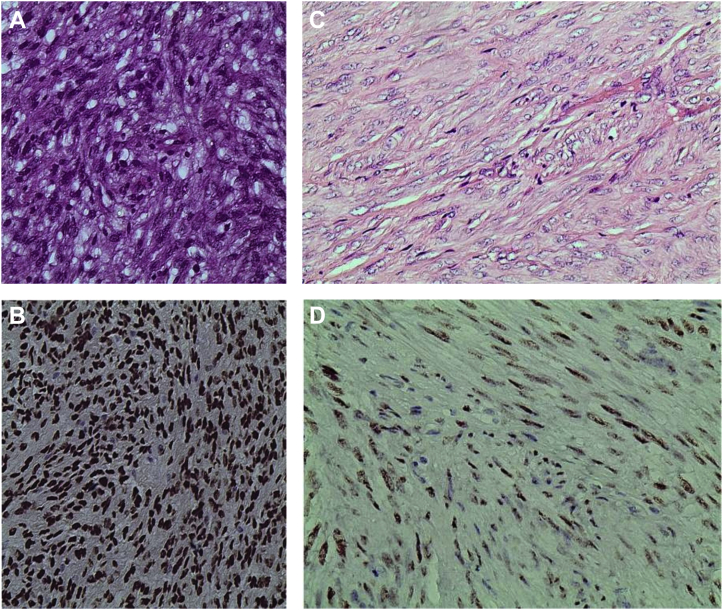
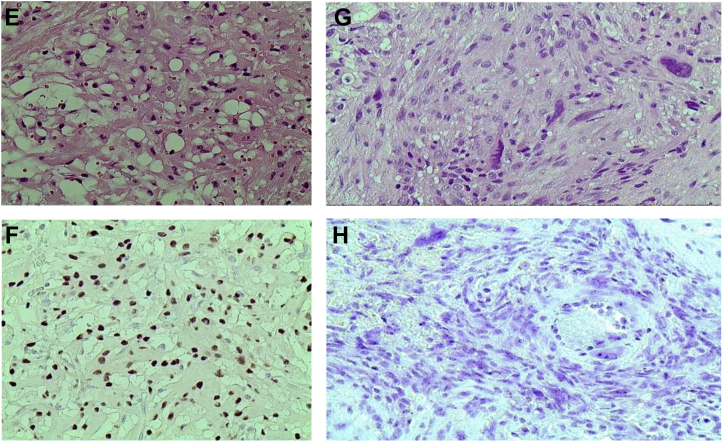
Background: Meningiomas that are progesterone receptor positive have a low recurrence rate and good prognosis compared to those that are progesterone receptor negative. This study aimed to determine the prevalence of expression of progesterone in meningiomas and its association with clinicopathological characteristics.
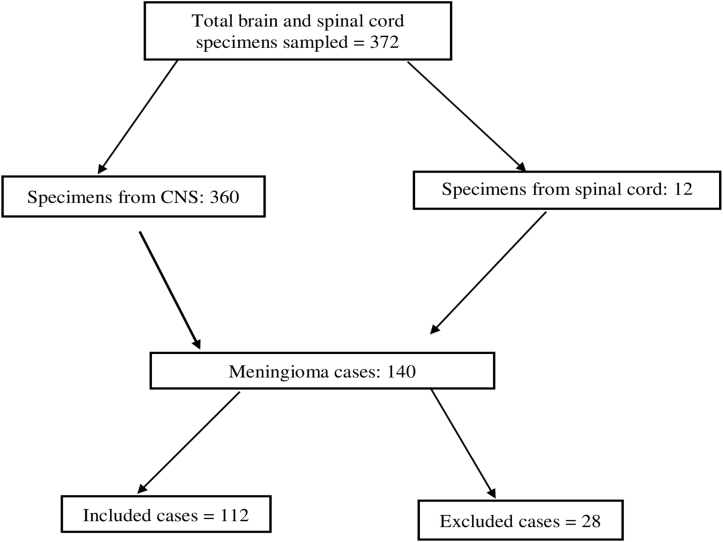
Materials and methods: This was a cross-sectional laboratory-based study that was conducted at Muhimbili National Hospital. The study included 112 formalin-fixed paraffin-embedded tissue blocks of patients who were confirmed to have meningiomas on histological basis from January 2010 to December 2014. Immunohistochemical expression of progesterone receptor was tested using a primary monoclonal progesterone receptor antibody ready to use (IR 068 Dako). The χ2 test was used to determine the association between clinicopathological characteristics and progesterone receptor expression. A 2-tailed P < 0.05 was considered significant.
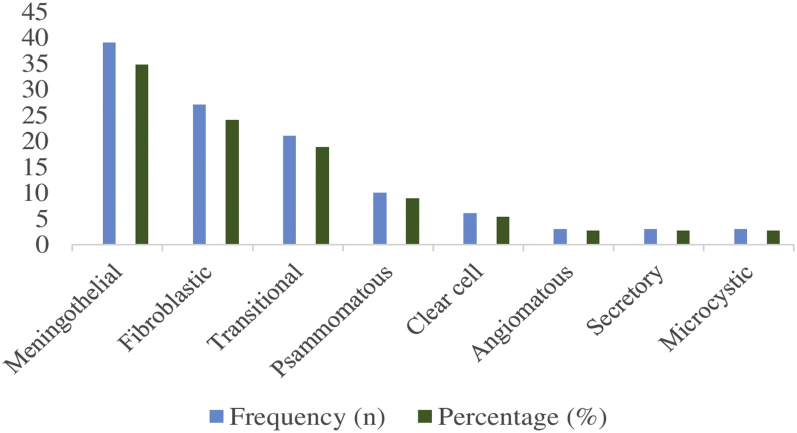
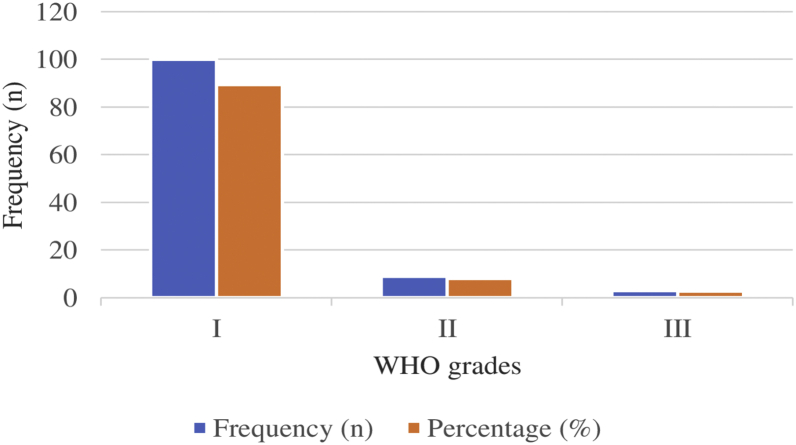
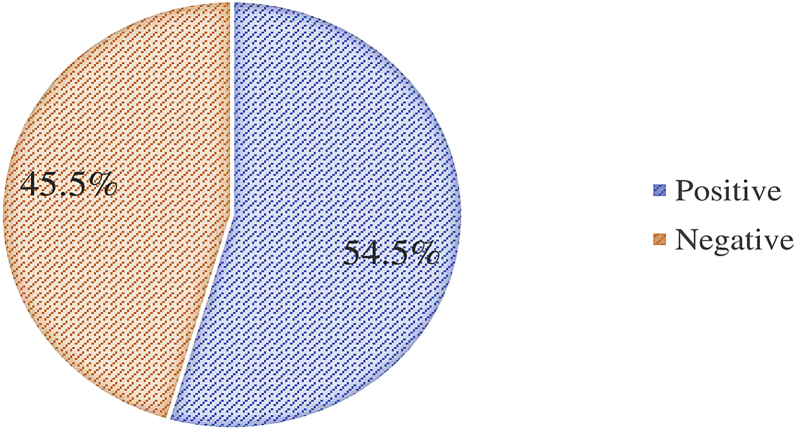
Results: The mean age of the patients was 45.5 ± 3.601 years, and majority (66.1%, n = 74) were in the age group between 31 and 60 years. Also, majority of the patients (60%, n = 67) in this study were females. Over one-third of the cases (34.8%, n = 39) comprised of meningotheliomatous subtype, and majority of the cases (89.3%, n = 100) were of grade I. The prevalence of progesterone expression was 54.5% (n = 61), and only age was associated with progesterone receptor expression (P = 0.043).
Conclusion: The finding of high expression of the progesterone receptor for grade I cases in this study indicates that progesterone receptor expression in meningiomas is of prognostic value and may be considered when evaluating patients for management. Lack of expression of progesterone receptor in all the malignant cases is intriguing and needs further studies that can investigate its prognostic role.
Keywords: CNS, Central nervous system; Clinicopathological characteristics; FFPE, Formalin-fixed paraffin-embedded; IHC, Immunohistochemistry; Meningioma; PR, Progesterone receptor; Progesterone receptor; TBS, Tris buffer solution; WHO, World Health Organization.
© 2021 The Author(s).
Figures
References
-
- Abul-Kasim K., Thurnher M.M., McKeever P., Sundgren P.C. Intradural spinal tumors: current classification and MRI features. Neuroradiology. 2008;50:301–314. - PubMed
-
- Cea-Soriano L., Wallander M.A., Garca Rodrguez L.A. Epidemiology of meningioma in the United Kingdom. Neuroepidemiology. 2012;39:27–34. - PubMed
LinkOut - more resources
Full Text Sources
Research Materials
