. 2021 Aug 17;16(8):e0255809.
doi: 10.1371/journal.pone.0255809. eCollection 2021.

Colonoscopy polyp detection and classification: Dataset creation and comparative evaluations

Affiliations

Colonoscopy polyp detection and classification: Dataset creation and comparative evaluations

Kaidong Li et al. PLoS One. .

Abstract

Colorectal cancer (CRC) is one of the most common types of cancer with a high mortality rate. Colonoscopy is the preferred procedure for CRC screening and has proven to be effective in reducing CRC mortality. Thus, a reliable computer-aided polyp detection and classification system can significantly increase the effectiveness of colonoscopy. In this paper, we create an endoscopic dataset collected from various sources and annotate the ground truth of polyp location and classification results with the help of experienced gastroenterologists. The dataset can serve as a benchmark platform to train and evaluate the machine learning models for polyp classification. We have also compared the performance of eight state-of-the-art deep learning-based object detection models. The results demonstrate that deep CNN models are promising in CRC screening. This work can serve as a baseline for future research in polyp detection and classification.


Conflict of interest statement

No authors have competing interests.

Figures
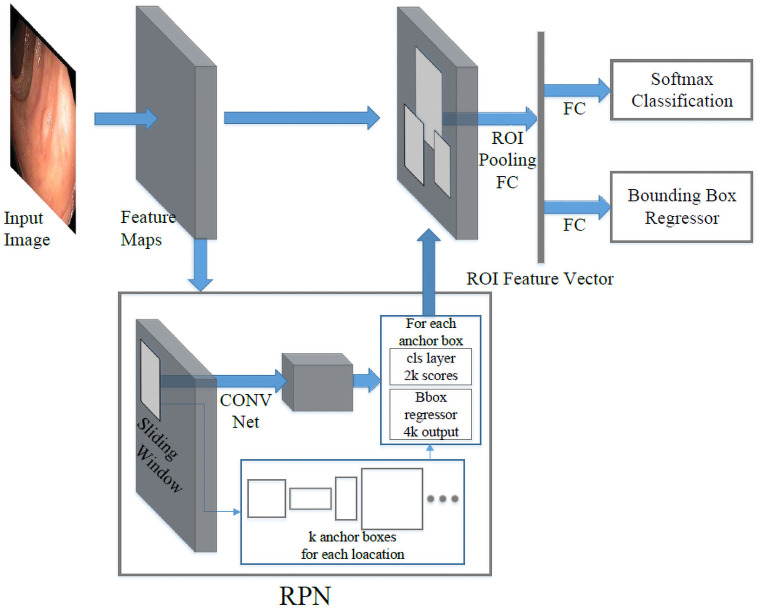
Fig 1
Fig 1. Faster R-CNN structure.
Region proposal network (RPN) shares the same base CNN with a fast R-CNN network. The region proposal is generated by sliding a small convolutional network over the shared feature maps, and these proposals are used to produce final detection results.
Fig 2
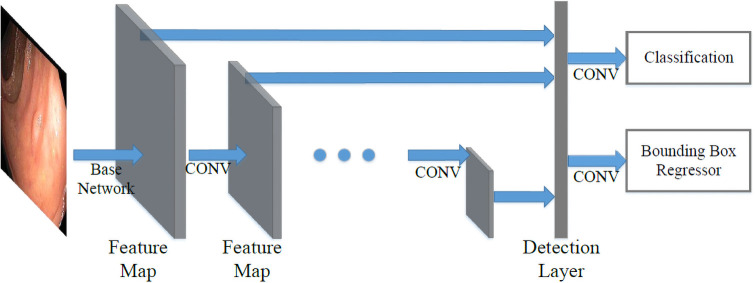
Fig 2. SSD structure.
Base network is truncated from a standard network. The detection layer computes confident scores for each class and offsets to default boxes.
Fig 3
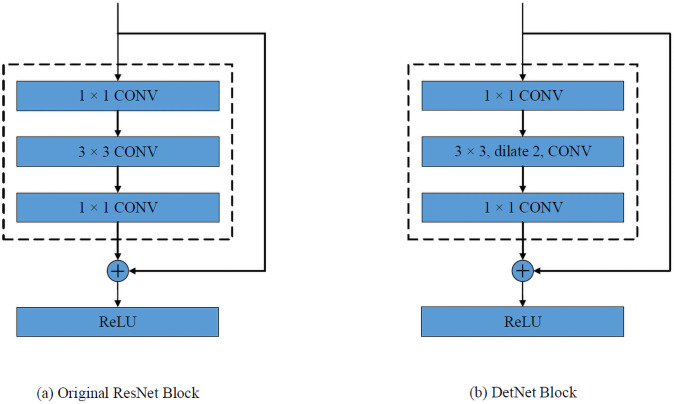
Fig 3. DetNet structure.
The diagram shows the basic building block of ResNet [55] and DetNet [66]. (a) After each ResNet block, the resolution is reduce in half. (b) The DetNet preserves the feature map resolution and increases the receptive field by using dilated convolutions.
Fig 4
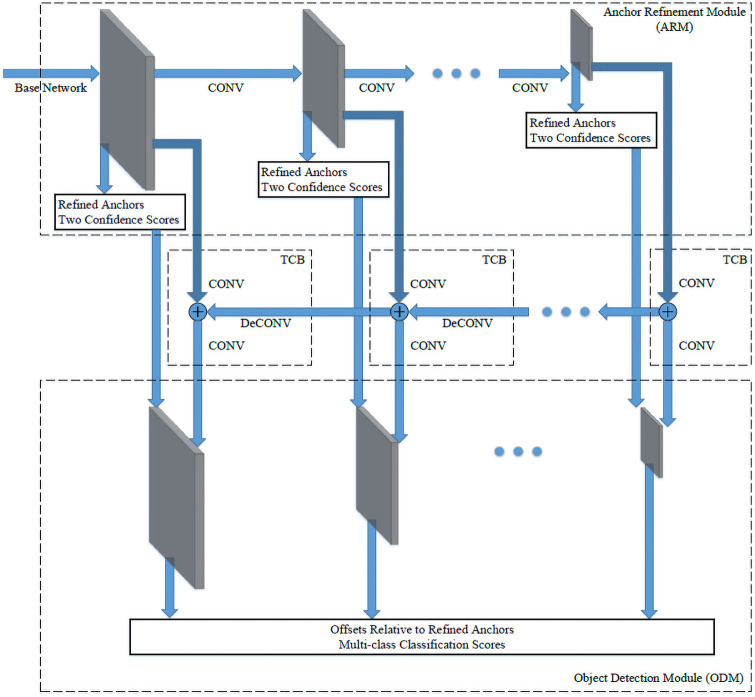
Fig 4. RefineDet structure.
The architecture has three modules: Anchor refinement module (ARM), transfer connection block (TCB), and object detection module (ODM).
Fig 5
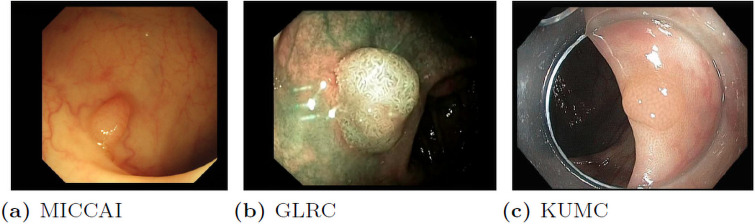
Fig 5. Sample frames from different colonoscopy.
(a) has a higher resolution and a warm color temperature; (b) has lower resolution and a green tone; (c) is more natural in color tone but has a transparent cover around the frame edges.
Fig 6
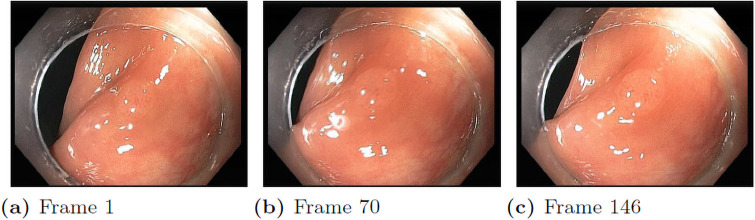
Fig 6. A colonoscopy sequence.
From frame 1 to frame 146, the camera shows unnoticeable movement.
Fig 7
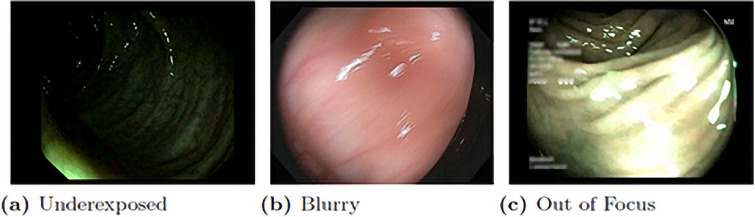
Fig 7. Some bad examples of colonoscopy frames.
Fig 8
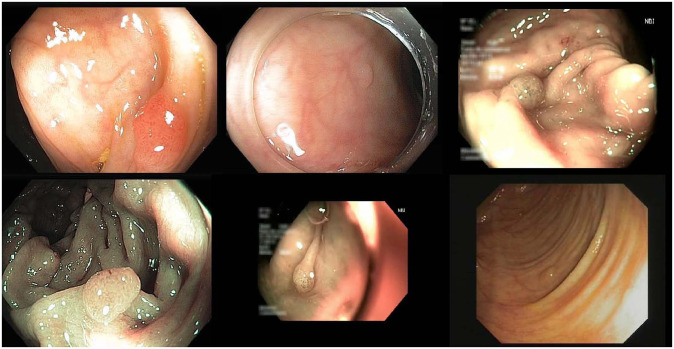
Fig 8. Six sample frames from the generated dataset.
Fig 9
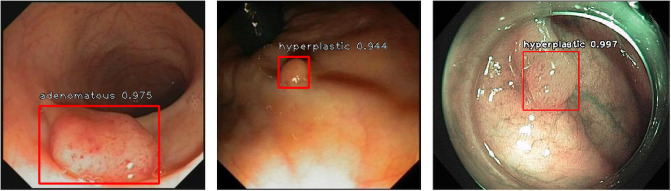
Fig 9. Three examples of the detection results with the predicted classes and confidence scores.
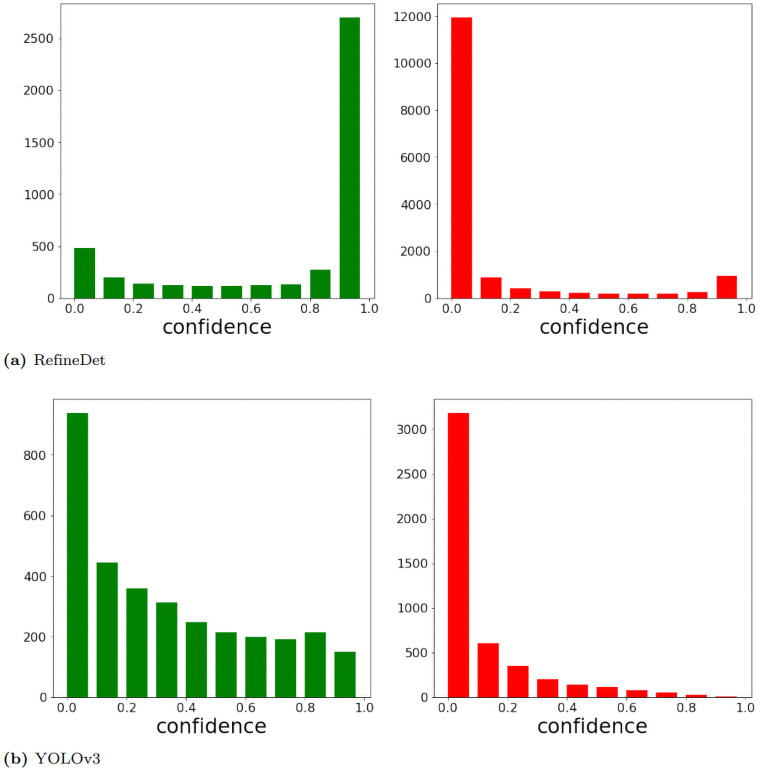
Fig 10
Fig 10. True positive (green plot) and false positive (red plot) count w.r.t. confidence.
We discard any predictions with a confidence score below 0.01 since they tend to be random predictions.
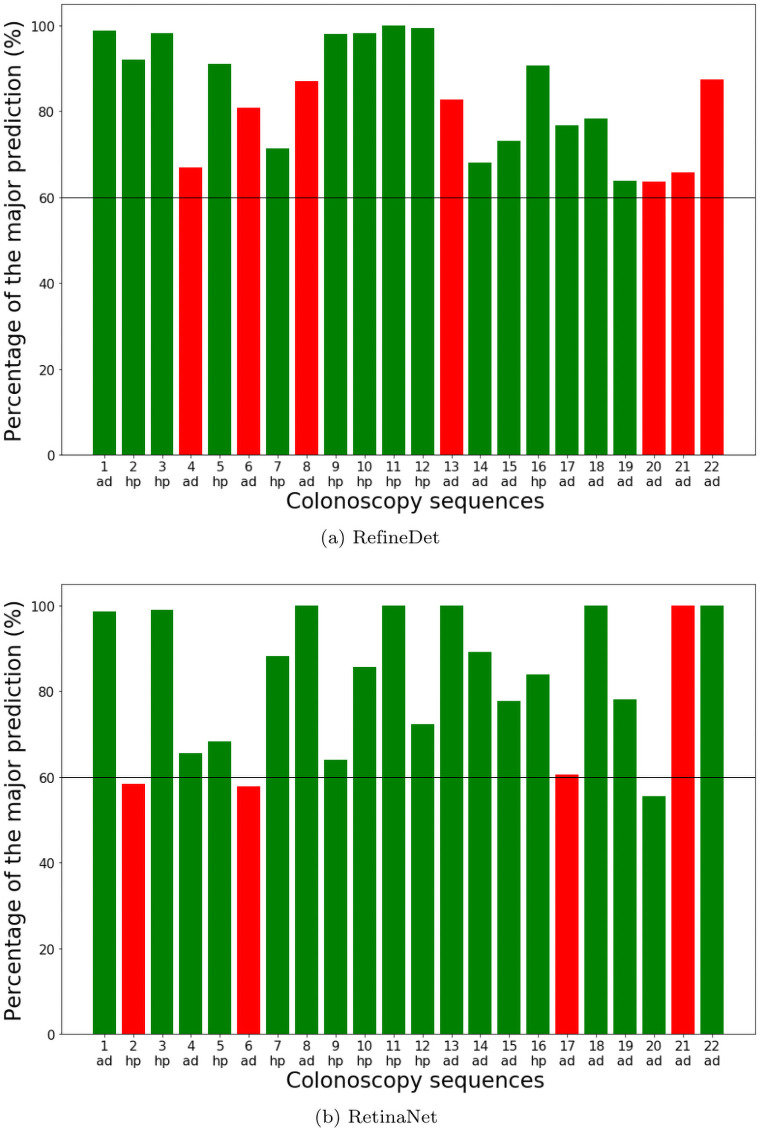
Fig 11
Fig 11. Percentage of the dominant class.
Detectors predict the polyp category in each individual frame. The category with more than 50% of all frames is the dominant category for that video sequence. The charts show the percentage of frames classified as the dominant class in each test sequence. (ad) and (hp) on the bottom means ground truth class adenomatous and hyperplastic respectively. Correct predictions are in green and misclassifications are in red.

References

    1. Thanikachalam K, Khan G. Colorectal cancer and nutrition. Nutrients. 2019;11(1):164. doi: 10.3390/nu11010164 - DOI - PMC - PubMed
    1. Haggar FA, Boushey RP. Colorectal cancer epidemiology: incidence, mortality, survival, and risk factors. Clinics in colon and rectal surgery. 2009;22(04):191–197. doi: 10.1055/s-0029-1242458 - DOI - PMC - PubMed
    1. Bray F, Ferlay J, Soerjomataram I, Siegel RL, Torre LA, Jemal A. Global cancer statistics 2018: GLOBOCAN estimates of incidence and mortality worldwide for 36 cancers in 185 countries. CA: a cancer journal for clinicians. 2018;68(6):394–424. - PubMed
    1. American Cancer Society. Cancer Facts & Figures 2015. Atlanta: American Cancer Society. 2015;.
    1. Simon K. Colorectal cancer development and advances in screening. Clinical interventions in aging. 2016;11:967. doi: 10.2147/CIA.S109285 - DOI - PMC - PubMed

Publication types