GNS561, a New Autophagy Inhibitor Active against Cancer Stem Cells in Hepatocellular Carcinoma and Hepatic Metastasis from Colorectal Cancer
- PMID: 34405006
- PMCID: PMC8364651
- DOI: 10.7150/jca.58533
GNS561, a New Autophagy Inhibitor Active against Cancer Stem Cells in Hepatocellular Carcinoma and Hepatic Metastasis from Colorectal Cancer
Abstract
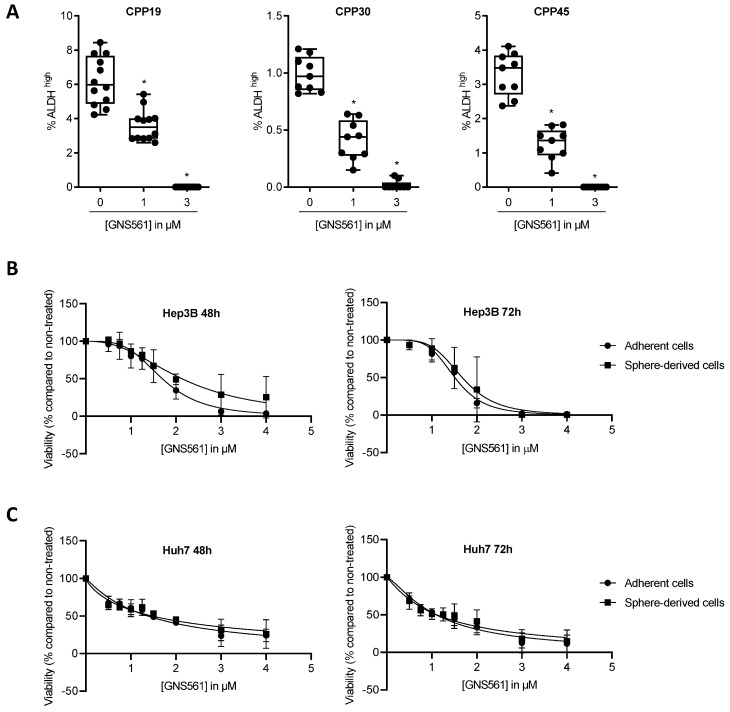
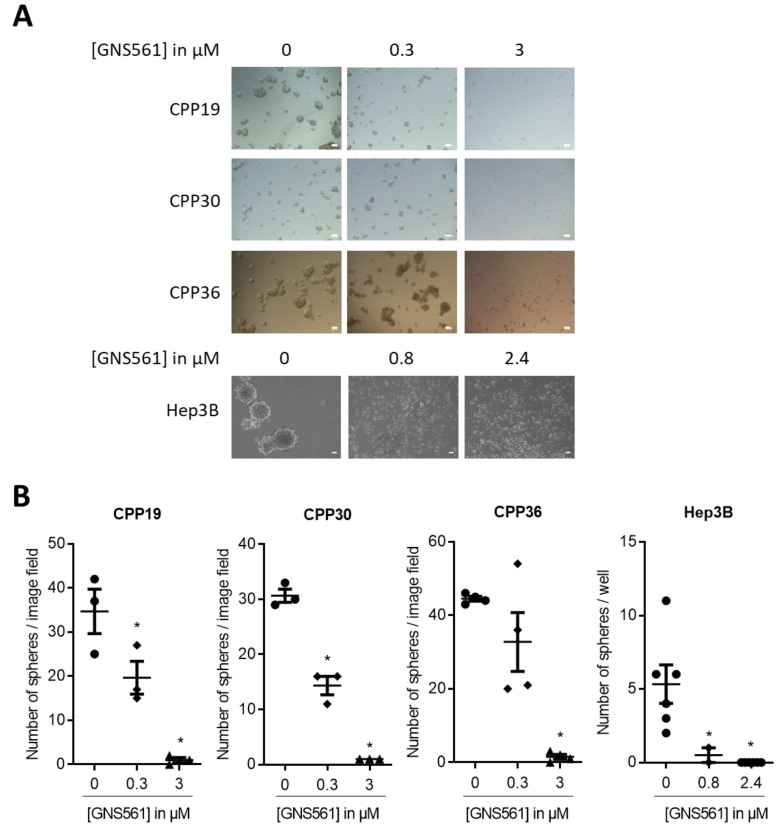
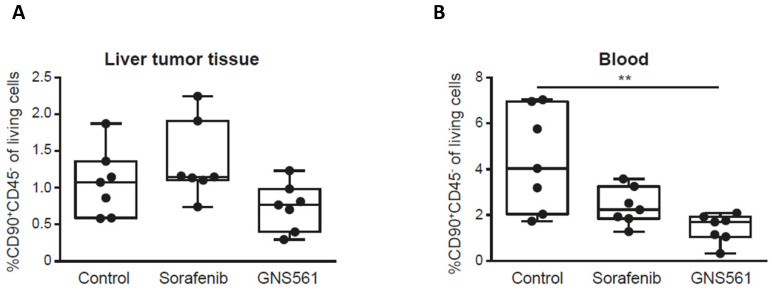
Patients with advanced hepatocellular carcinoma (HCC) or metastatic colorectal cancer (mCRC) have a very poor prognosis due to the lack of efficient treatments. As observed in several other tumors, the effectiveness of treatments is mainly hampered by the presence of a highly tumorigenic sub-population of cancer cells called cancer stem cells (CSCs). Indeed, CSCs are resistant to chemotherapy and radiotherapy and can regenerate the tumor bulk. Hence, innovative drugs that are efficient against both bulk tumor cells and CSCs would likely improve cancer treatment. In this study, we demonstrated that GNS561, a new autophagy inhibitor that induces lysosomal cell death, showed significant activity against not only the whole tumor population but also a sub-population displaying CSC features (high ALDH activity and tumorsphere formation ability) in HCC and in liver mCRC cell lines. These results were confirmed in vivo in HCC from a DEN-induced cirrhotic rat model in which GNS561 decreased tumor growth and reduced the frequency of CSCs (CD90+CD45-). Thus, GNS561 offers great promise for cancer therapy by exterminating both the tumor bulk and the CSC sub-population. Accordingly, a global phase 1b clinical trial in liver cancers was recently completed.
Keywords: GNS561; cancer stem cell; colorectal cancer; liver cancer; lysosome; therapy.
© The author(s).
Conflict of interest statement
Competing Interests: SB, EB, FB, SM, JC and PH are employees of Genoscience Pharma. SB, FB and PH are shareholders of Genoscience Pharma. SB, FB, JC and PH are co-inventors of a pending patent. The other authors declare that they have no conflicts of interest to report.
Figures
References
-
- Bray F, Ferlay J, Soerjomataram I, Siegel RL, Torre LA, Jemal A. Global cancer statistics 2018: GLOBOCAN estimates of incidence and mortality worldwide for 36 cancers in 185 countries. CA Cancer J Clin. 2018;68:394–424. - PubMed
-
- Vitale I, Manic G, Dandrea V, De Maria R. Role of autophagy in the maintenance and function of cancer stem cells. Int J Dev Biol. 2015;59:95–108. - PubMed
LinkOut - more resources
Full Text Sources
Research Materials
Miscellaneous