


Migration health research in the United Kingdom: A scoping review
- PMID: 34405201
- PMCID: PMC8352015
- DOI: 10.1016/j.jmh.2021.100061
Migration health research in the United Kingdom: A scoping review
Abstract
Background: One in seven people living in the United Kingdom (UK) is an international migrant, rendering migrants an important population group with diverse and dynamic health and healthcare needs. However, there has been no attempt to map contemporary trends within migration health research conducted in the UK. The aim of this scoping review was to describe trends within migration health research and identify gaps for future research agendas.
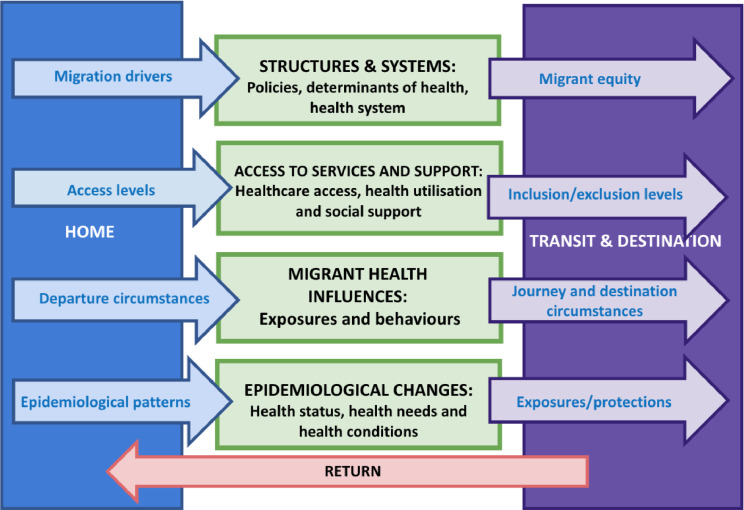
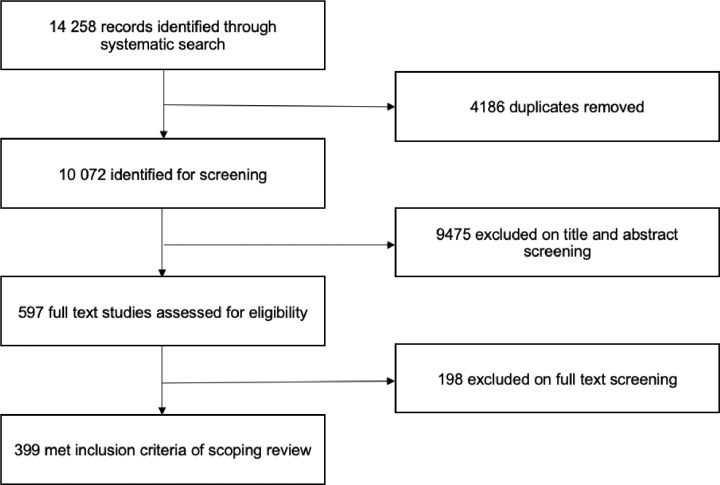
Methods: PubMed and Embase were systematically searched for empirical research with a primary focus on the concepts "health" and "migrants" published between 2001 and 2019. Findings were analysed using the UCL-Lancet Commission on Migration and Health Conceptual Framework for Migration and Health.
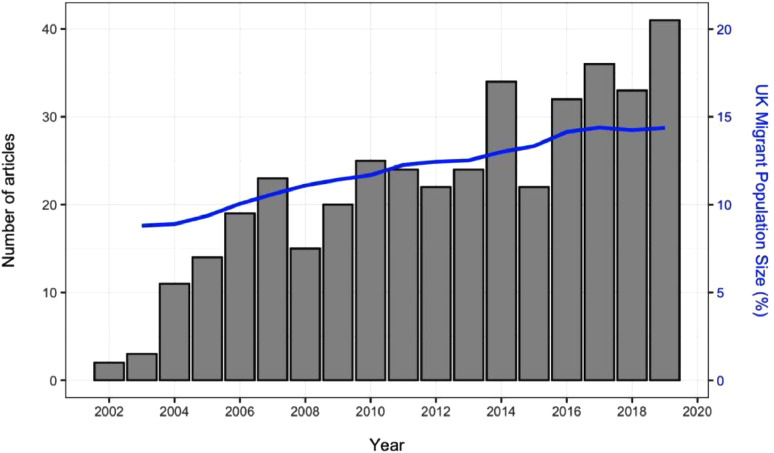
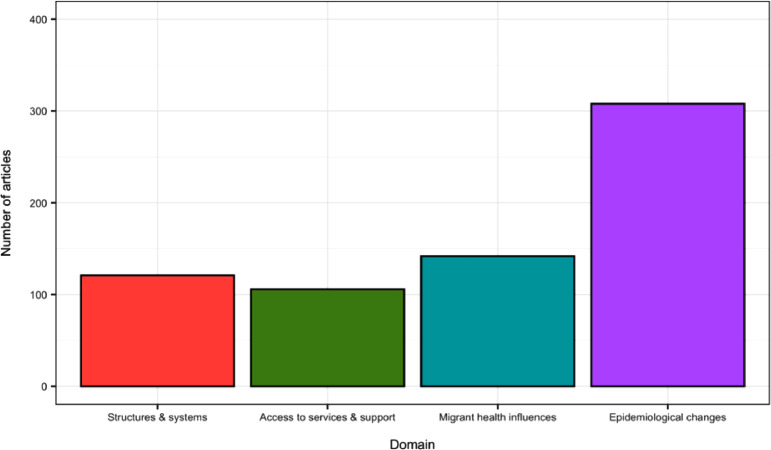
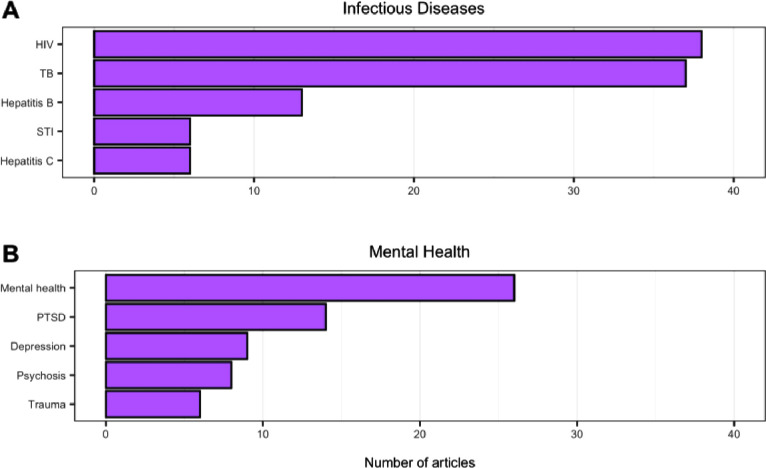
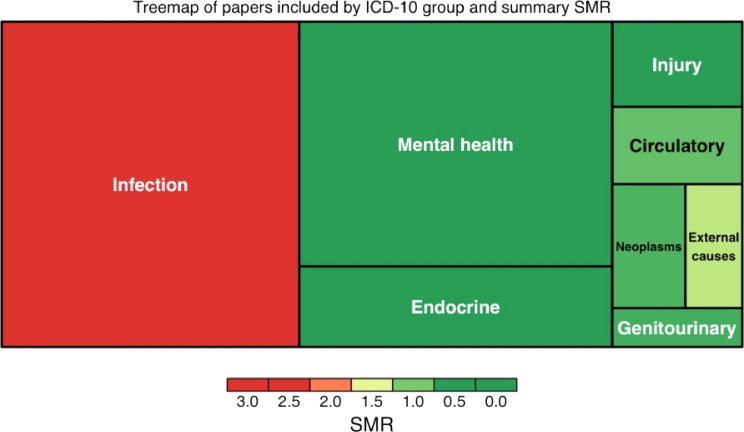
Results: In total, 399 studies were included, with almost half (41.1%; 164/399) published in the last five years of the study period between 2015 and 2019 and a third (34.1%; 136/399) conducted in London. Studies included asylum seekers (14.8%; 59/399), refugees (12.3%; 49/399), and undocumented migrants or migrants with insecure status (3.5%; 14/399), but most articles (74.9%; 299/399) did not specify a migrant sub-group. The most studied health topics were specific disease outcomes such as infectious diseases (24.1% of studies) and mental health (19.1%) compared to examining systems or structures that impact health (27.8%), access to healthcare (26.3%), or specific exposures or behaviours (35.3%).
Conclusions: There has been a growing interest in migration health. Ensuring a diverse geographic distribution of research conducted in the UK and disaggregation by migrant sub-group is required for a nuanced and region-specific understanding of specific health needs, interventions and appropriate service delivery for different migrant populations. More research is needed to understand how migration policy and legislation intersect with both the social determinants of health and access to healthcare to shape the health of migrants in the UK.
Keywords: EU, European Union; HIV, Human immunodeficiency virus; Health; ICD-10, International Classification of Diseases - Tenth Revision; Migrant; Migration; NHS, National Health Service; ONS, Office of National Statistics; PTSD, Post-traumatic stress disorder; SMR, Standardised mortality ratio; Scoping review; TB, Tuberculosis; UCL, University College London; United Kingdom.
© 2021 The Author(s).
Conflict of interest statement
The authors declare that they have no known competing financial interests or personal relationships that could have appeared to influence the work reported in this paper.
Figures


References
-
- Population of the UK by country of birth and nationality - Office for National Statistics n.d. https://www.ons.gov.uk/peoplepopulationandcommunity/populationandmigrati..., 2020.
-
- Kierans D., Who migrates to the UK and why? n.d. https://migrationobservatory.ox.ac.uk/resources/briefings/who-migrates-t..., 2020.
-
- Czaika M., de Haas H., Determinants of Migration to the UK n.d. https://migrationobservatory.ox.ac.uk/resources/briefings/determinants-o..., 2020.
-
- Migration Statistics Quarterly Report: May 2020. Office of National Statistics; n.d.
Publication types
Grants and funding
LinkOut - more resources
Full Text Sources
