Review
. 2022 Jan 1;112(1):222-236.
doi: 10.1016/j.ijrobp.2021.08.015. Epub 2021 Aug 15.

Mechanisms and Review of Clinical Evidence of Variations in Relative Biological Effectiveness in Proton Therapy

Affiliations
Review

Mechanisms and Review of Clinical Evidence of Variations in Relative Biological Effectiveness in Proton Therapy

Harald Paganetti. Int J Radiat Oncol Biol Phys. .

Abstract

Proton therapy is increasingly being used as a radiation therapy modality. There is uncertainty about the biological effectiveness of protons relative to photon therapies as it depends on several physical and biological parameters. Radiation oncology currently applies a constant and generic value for the relative biological effectiveness (RBE) of 1.1, which was chosen conservatively to ensure tumor coverage. The use of a constant value has been challenged particularly when considering normal tissue constraints. Potential variations in RBE have been assessed in several published reviews but have mostly focused on data from clonogenic cell survival experiments with unclear relevance for clinical proton therapy. The goal of this review is to put in vitro findings in relation to clinical observations. Relevant in vivo pathways determining RBE for tumors and normal tissues are outlined, including not only damage to tumor cells and parenchyma but also vascular damage and immune response. Furthermore, the current clinical evidence of varying RBE is reviewed. The assessment can serve as guidance for treatment planning, personalized dose prescriptions, and outcome analysis.


Conflict of interest statement

Conflict of Interest Statement

The author declares that there is no conflict of interest. The sole author was responsible for literature review, analysis and interpretation of data and drafting of the manuscript. He takes full responsibility for the integrity of the data and accuracy of the data analysis.

Data Availability Statement for this Work

Research data are stored in an institutional repository and will be shared upon request to the corresponding author.

Figures
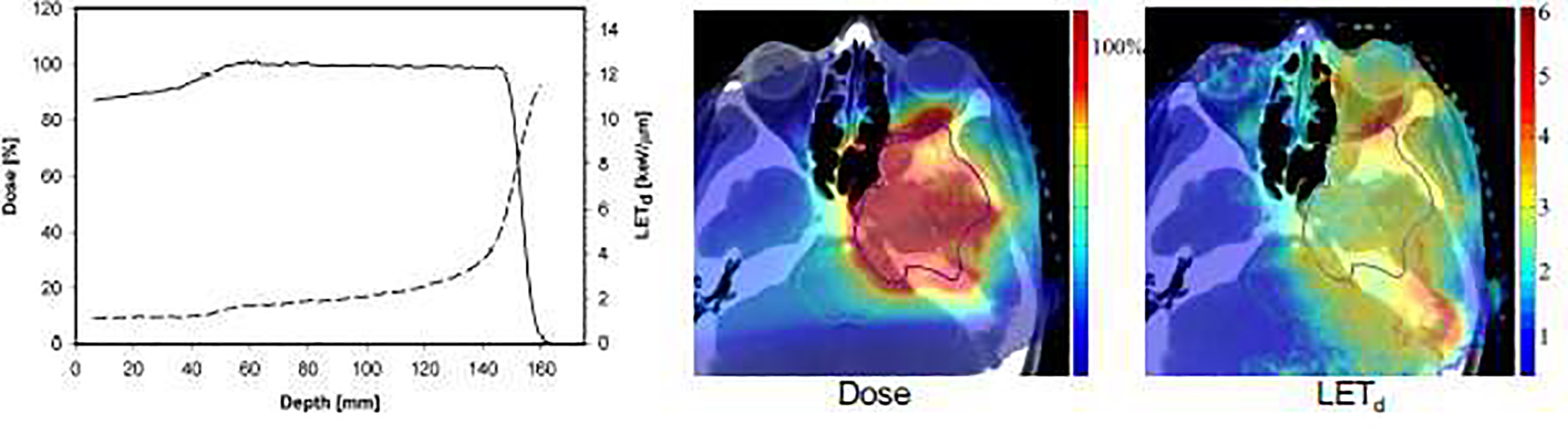
Figure 1:
Figure 1:
Left side: Typical ranges of linear energy transfer (dashed line; dose-averaged LETd) in a spread-out Bragg peak (solid line) in water. Right side: Dose (%) and LETd (keV/μm) in a chordoma patient based on intensity modulated proton therapy. Figure adapted from [9, 21].
Figure 2:
Figure 2:
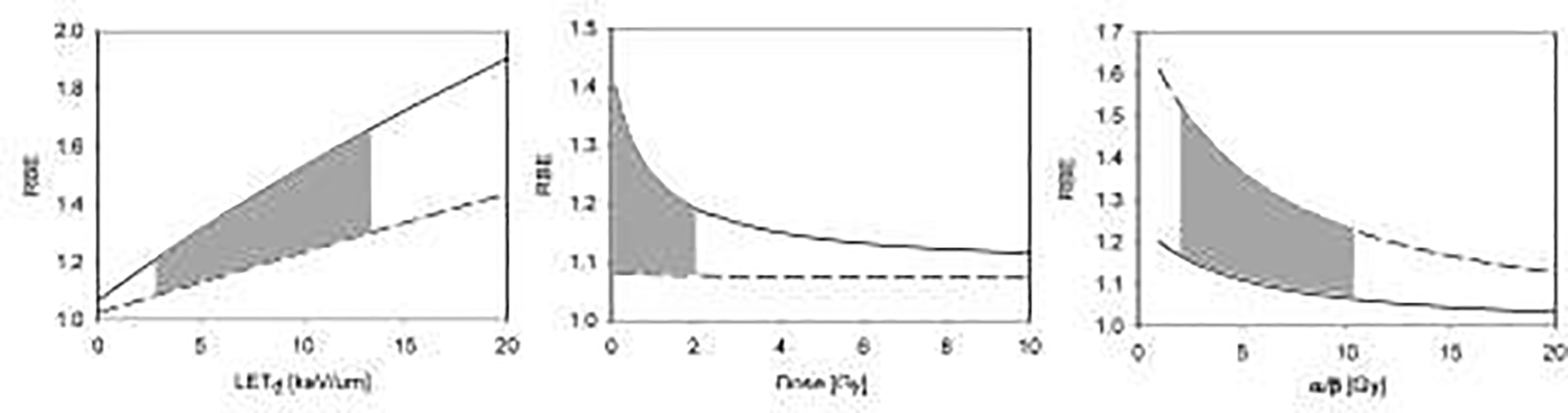
Proton RBE for clonogenic cell survival as predicted by an empirical model (equation 2) [4]. Left: RBE as a function of LET at 2 Gy (solid (α/β)x=2 Gy; dashed (α/β)x=10 Gy). The grey area shows the clinically and dosimetrically most relevant region as LET values are typically between 2.5 and 13 keV/μm [21]. Middle: RBE as a function of dose for LET=2.5 keV/μm (solid (α/β)x=2 Gy; dashed (α/β)x=10 Gy). The grey area shows the clinically most relevant region for a standard 2 Gy fractionation, i.e., doses to organs at risk <2Gy. Right: RBE as a function of (α/β)x for a dose of 2 Gy (solid LET=2 keV/μm; dashed LET=10 keV/μm). The grey area shows the clinically most relevant region of (α/β)x=2–10 Gy.
Figure 3:
Figure 3:
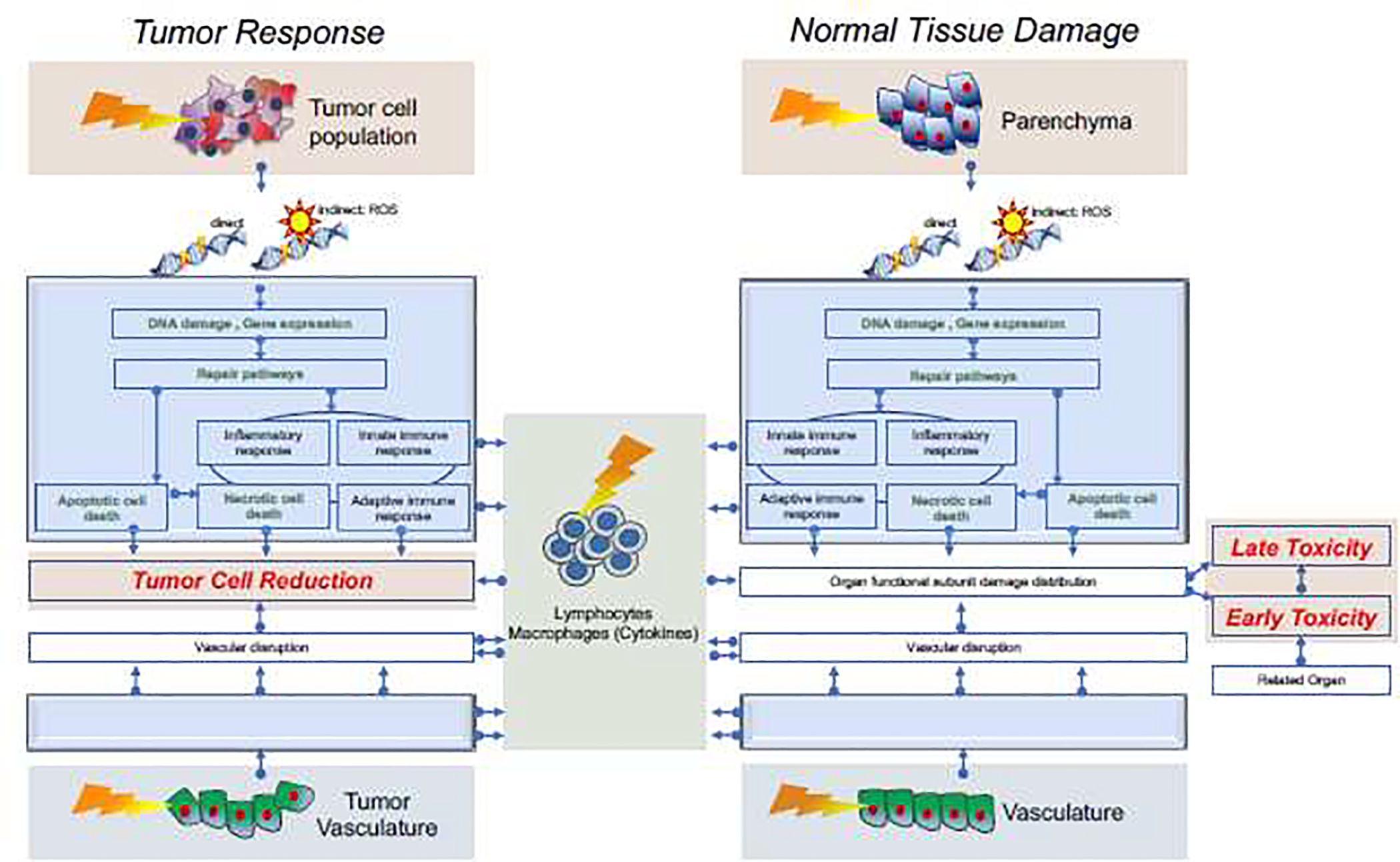
Schematics of some relevant pathways leading to tumor cell kill and normal tissue toxicities. Starting with direct and indirect DNA damage to the tumor and parenchyma, there are repair pathways that, upon failure, lead to cell kill of tumor cells (left) or damage to functional subunits (right). The text in green indicates pathways related to in vitro cell kill studies. In addition to direct damage to cells, there is radiation-induced damage to vasculature leading to vascular disruption which impacts tumor and normal tissue response. Similarly, adaptive and innate immune response are impacted by radiation. Clinically relevant endpoints are indicated in red. Note that the two empty blue boxes are placeholders for mirrored images of the upper two blue boxes.
Figure 4:
Figure 4:
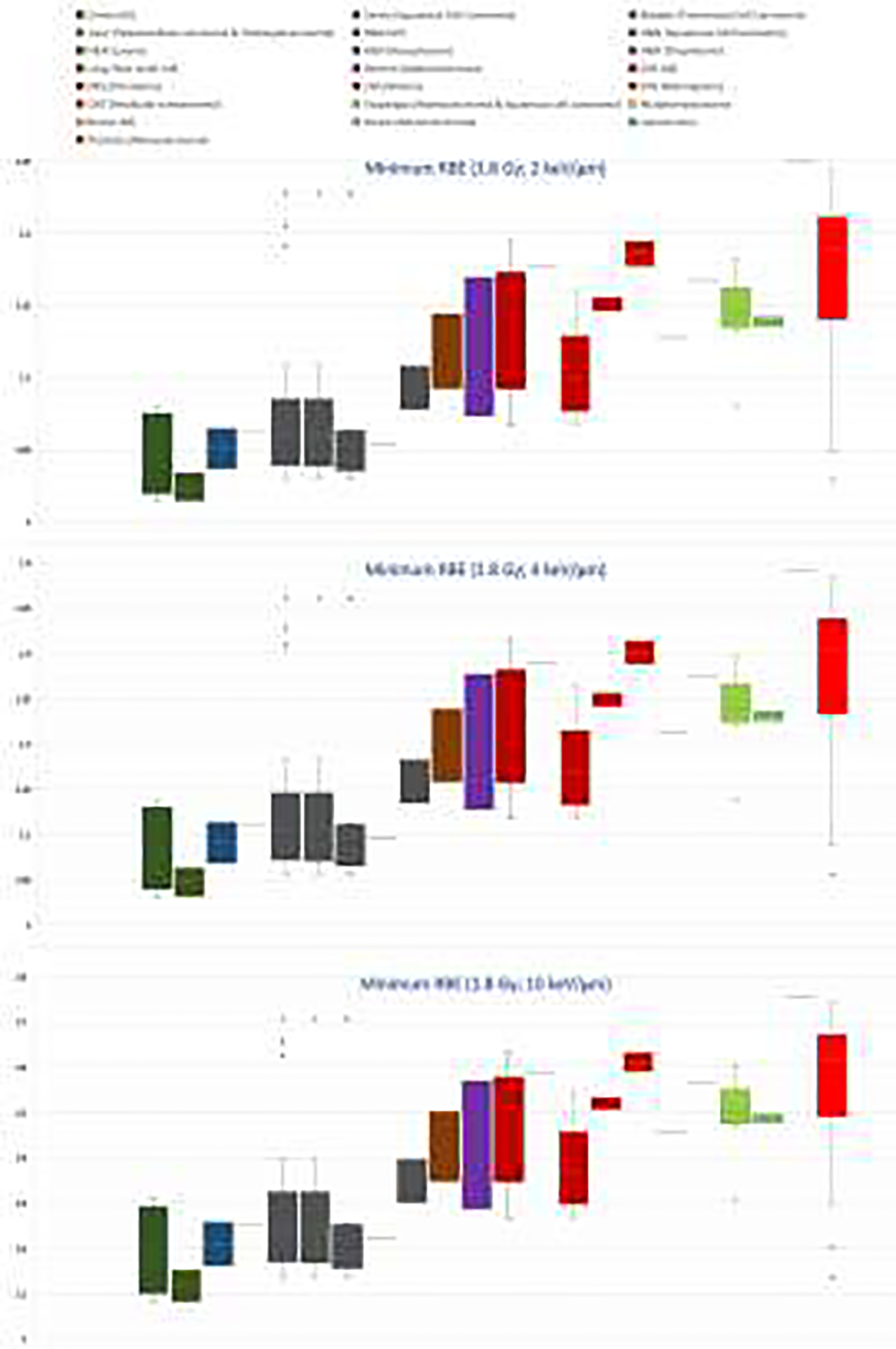
Proton RBE at 1.8 Gy per fraction based on tumor (α/β)x values extracted from clinical data [–67] (excluding data with negative values) assuming RBE as a function of (α/β)x) as deduced from clonogenic cell survival (equation (2) [4]) and LET estimates [21]. Upper: LET of 2 keV/μm representative for the proximal part of the tumor and likely a minimum conservative RBE; Middle: LET of 4 keV/μm representative for the distal part of the target; Lower: LET of 10 keV/μm as a maximum for the target.
Figure 5:
Figure 5:
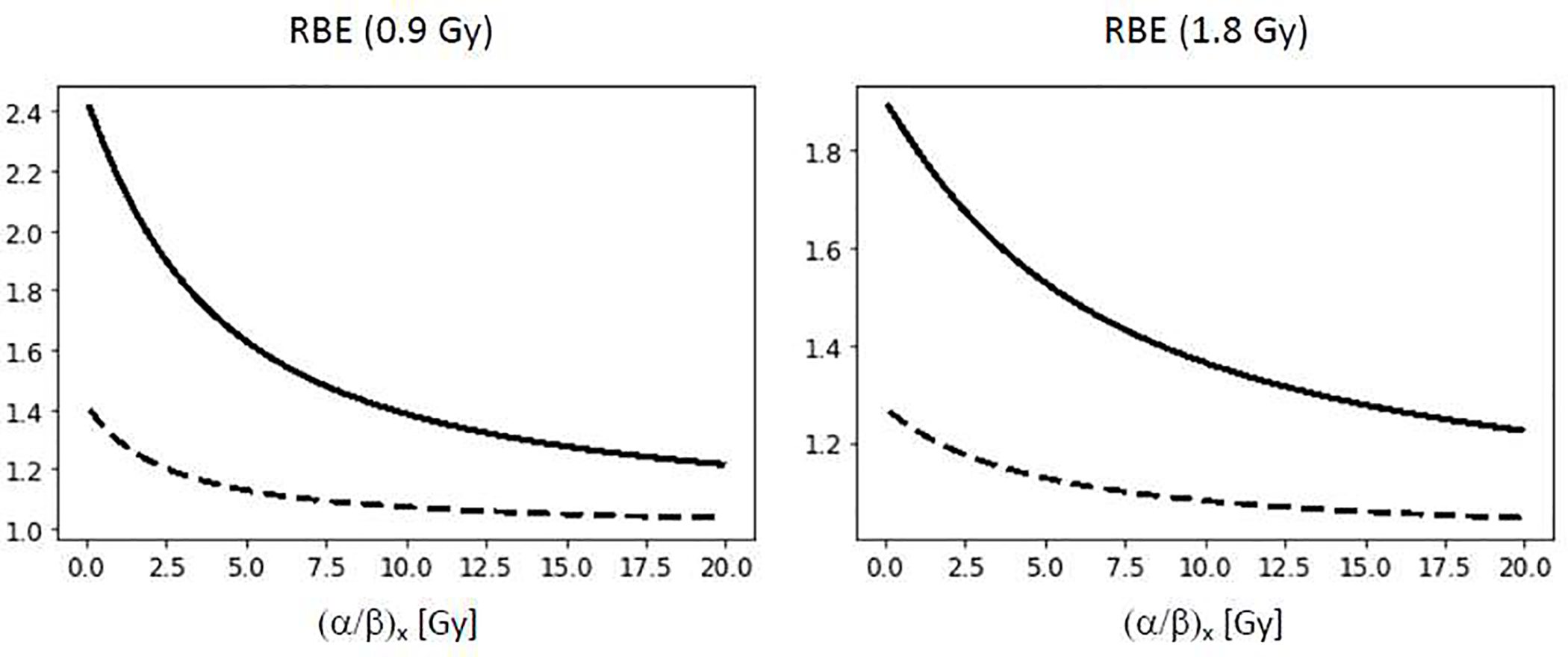
Proton RBE for clonogenic cell survival as predicted by an empirical model [4]. Left: RBE as a function of (α/β)x at 0.9 Gy (representative of 50% target dose for standard fractionation) for LET=2 keV/μm (dashed) and 10 keV/μm (solid). Right: RBE as a function of (α/β)x at 1.8 Gy for LET=2 keV/μm (dashed) and 10 keV/μm (solid). The two LET values are representative for the entrance region and the distal fall-off of an SOBP field.

References

    1. McMahon SJ. The linear quadratic model: Usage, interpretation and challenges. Phys Med Biol 2018;64:01TR01. - PubMed
    1. Kalholm F, Grzanka L, Traneus E, Bassler N. A systematic review on the usage of averaged LET in radiation biology for particle therapy. Radiother Oncol 2021;161:211–221. - PubMed
    1. Rørvik E, Fjæra LF, Dahle TJ, et al. Exploration and application of phenomenological RBE models for proton therapy. Phys Med Biol 2018;63 185013. - PubMed
    1. McNamara AL, Schuemann J, Paganetti H. A phenomenological relative biological effectiveness (RBE) model for proton therapy based on all published in vitro cell survival data. Phys Med Biol 2015;60:8399–8416. - PMC - PubMed
    1. Giedzinski E, Rola R, Fike JR, Limoli CL. Efficient production of reactive oxygen species in neural precursor cells after exposure to 250 MeV protons. Radiat Res 2005;164(Pt 2):540–544. - PubMed

Publication types