


Similar outcomes in computer-assisted and conventional total knee arthroplasty: ten-year results of a prospective randomized study
- PMID: 34407776
- PMCID: PMC8371882
- DOI: 10.1186/s12891-021-04556-3
Similar outcomes in computer-assisted and conventional total knee arthroplasty: ten-year results of a prospective randomized study
Abstract
Background: Computer-assisted navigation (CAS) was developed to improve the surgical accuracy and precision. Many studies demonstrated better alignment in the coronal plane in CAS TKA compared to conventional technique. The influence on the functional outcome is still unclear. Only few studies report long-term results of CAS TKA. This study was initiated to investigate 10-year patient-reported outcome of CAS and conventional TKA.
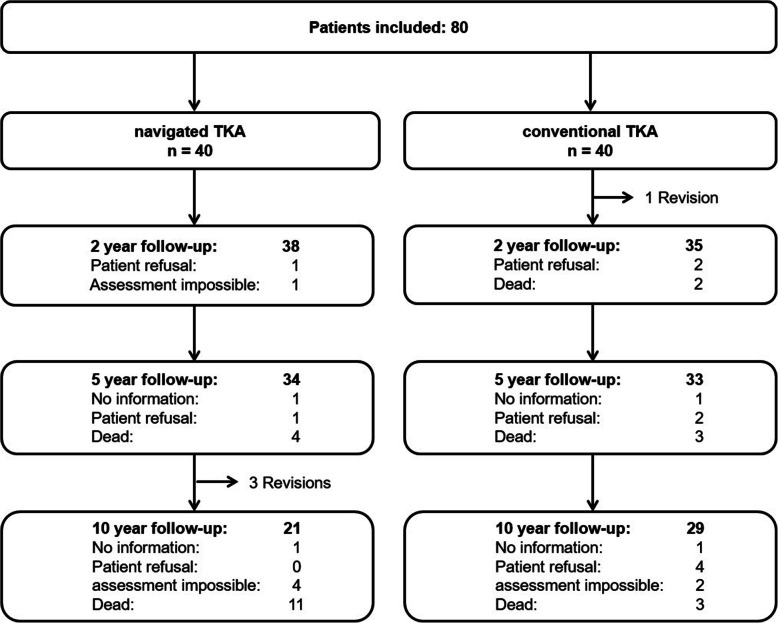
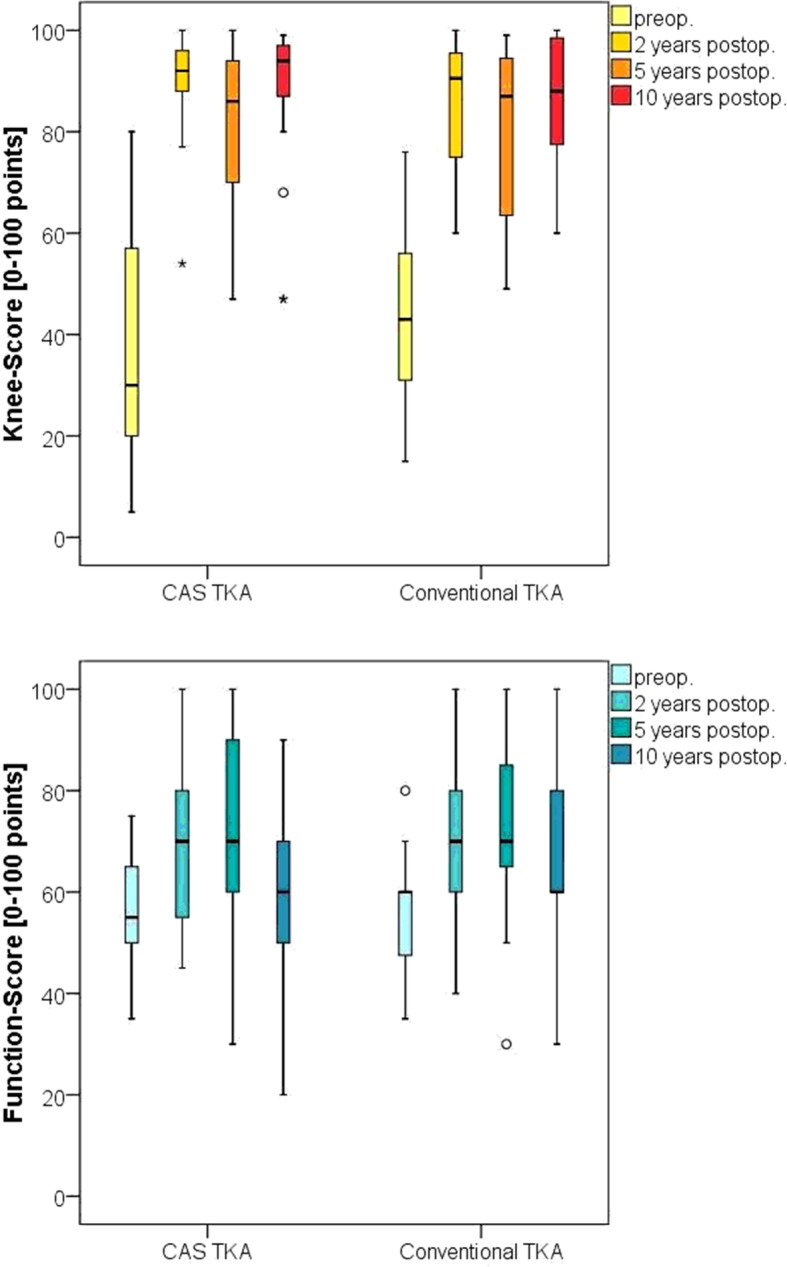
Methods: From initially 80 patients of a randomized study of CAS and conventional TKA a total of 50 patients could be evaluated at the 10-year follow-up. The Knee Society Score and EuroQuol Questionnaire were assessed. For all patients a competing risk analysis for revision was performed.
Results: The patient-reported outcome measures demonstrated similar values for both groups. The 10-year risk for revision was 2.5% for conventional TKA and 7.5% for CAS TKA (p=0.237).
Conclusions: There was no difference between CAS and conventional TKA with regard to patient-reported outcome and revision risk ten years after surgery.
Trial registration: This study was registered at clinicaltrials.gov on 11/30/2009, ID: NCT01022099 .
Keywords: Computer-assisted; Knee arthroplasty; Knee replacement; Navigation; Patient-reported outcome; Results.
© 2021. The Author(s).
Conflict of interest statement
JL has received research grants from Aesculap, Link, Mathys, Smith&Nephew and BiometZimmer and honoraria for workshops from Aesculap, Link, Mathys and Pfizer outside the submitted work. SK has received research grants from Stryker and BiometZimmer and honoraria from Smith&Nephew outside the submitted work. All other authors declare that they have no conflict of interest.
Figures
References
Publication types
MeSH terms
Associated data
Grants and funding
LinkOut - more resources
Full Text Sources
Medical
