Review
. 2022 Jan;47(1):90-103.
doi: 10.1038/s41386-021-01152-w. Epub 2021 Aug 18.

The role of PFC networks in cognitive control and executive function

Affiliations
Review

The role of PFC networks in cognitive control and executive function

Vinod Menon et al. Neuropsychopharmacology. 2022 Jan.

Abstract

Systems neuroscience approaches with a focus on large-scale brain organization and network analysis are advancing foundational knowledge of how cognitive control processes are implemented in the brain. Over the past decade, technological and computational innovations in the study of brain connectivity have led to advances in our understanding of how brain networks function, inspiring new conceptualizations of the role of prefrontal cortex (PFC) networks in the coordination of cognitive control. In this review, we describe six key PFC networks involved in cognitive control and elucidate key principles relevant for understanding how these networks implement cognitive control. Implementation of cognitive control in a constantly changing environment depends on the dynamic and flexible organization of PFC networks. In this context, we describe major empirical and theoretical models that have emerged in recent years and describe how their functional architecture and dynamic organization supports flexible cognitive control. We take an overarching view of advances made in the past few decades and consider fundamental issues regarding PFC network function, global brain dynamics, and cognition that still need to be resolved. We conclude by clarifying important future directions for research on cognitive control and their implications for advancing our understanding of PFC networks in brain disorders.


Conflict of interest statement

The authors declare no competing interests.

Figures

Fig. 1
Fig. 1. From connectivity fingerprints to large-scale brain networks.
a Each PFC area has a unique pattern of cortico-cortical and cortico-subcortical connections—a “connectional fingerprint” that distinguishes it from other Brodmann’s areas. Adapted from [7]. b Large-scale networks in the human brain, each consisting of a distinct set of cortical and subcortical areas linked by temporally synchronous neural activity. Fourteen intrinsic connectivity networks identified using independent component analysis. (A) Auditory, (B) Basal Ganglia, (C) Posterior Cingulate Cortex (PCC)/Medial Prefrontal Cortex (MPFC), (D) Secondary Visual Cortex (V2), (E) Language, (F) Left Dorsolateral Prefrontal Cortex (DLPFC)/Left Parietal Lobe, (G) Sensorimotor, (H) Posterior Insula, (I) Precuneus, (J) Primary Visual Cortex (V1), (K) Right Dorsolateral Prefrontal Cortex (DLPFC)/Right Parietal Lobe, (L) Insula/Dorsal Anterior Cingulate Cortex (dACC), (M) Retrosplenial Cortex (RSC)/Medial Temporal Lobe (MTL), (N) Intraparietal Sulcus (IPS)/Frontal Eye Field (FEF). Adapted from [20].
Fig. 2
Fig. 2. Six PFC networks that are the focus of this review.
a Fronto-parietal network (FPN), with key nodes in dorsolateral PFC (dlPFC) and posterior parietal cortex (PPC). b Salience network (SN), with key nodes in anterior insula (AI) and dorsal anterior cingulate cortex (ACC). c Cingulo-opercular network (CON, black) with key nodes in anterior insula/frontal operculum (aI/fO), dorsal ACC and medial superior frontal cortex (dACC/msFC), anterior PFC (aPFC) and thalamus, as distinguished from the FPN (yellow). d Ventral attention network (VAN), with key nodes in insula (Ins), inferior frontal junction (IFJ), supramarginal gyrus (SMG), and superior temporal gyrus (STG). e Dorsal attention network (DAN), with key nodes in frontal eye fields (FEF), inferior frontal junction (IFJ), intra-parietal sulcus and superior parietal lobule (IPS/SPL), angular gyrus (AG), visual area 3 A (V3A), and middle temporal visual area (MT). f Default mode network (DMN), with key nodes in ventromedial PFC (vmPFC) and posterior cingulate cortex (PCC). Adapted from [20, 32, 62, 93].
Fig. 3
Fig. 3. Cortical and subcortical nodes of the salience and frontoparietal networks.
The SN (red) shows stronger connectivity to amygdala, ventral striatopallidum, hypothalamus, dorsomedial thalamus (dmThal), periaqueductal gray (PAG) and ventral tegmental area (VTA). In contrast, the FPN (blue) shows extensive parietal connectivity, involving the supramarginal gyrus and superior parietal lobule, and more limited subcortical connectivity, mainly involving the dorsal caudate and anterior thalamus. Adapted from [18].
Fig. 4
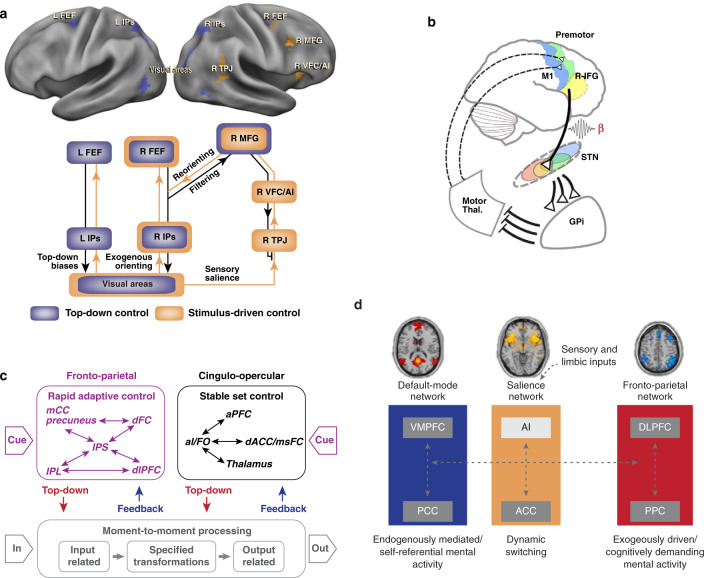
Fig. 4. Dynamic mechanisms of PFC network function.
a A circuit breaker for spatial attention. The VAN is hypothesized to act as a “circuit breaker” on the DAN, directing attention to salient events. Adapted from [32]. b Hypothetical model of different hyperdirect cortico-STN pathways for stopping and conflict processing. A, Stopping is initiated via right inferior frontal gyrus (R-IFG) in concert with the pre-SMA and implemented via projections to the subthalamic nucleus (STN) adapted from [157]. c Dual-network model of cognitive control which comprises parallel rapid-adaptive (FPN) and set-maintenance (CON) networks. Thin arrows schematize strong functional connections and boxed arrows schematize putative flow of information. The CON is hypothesized to maintain task-sets while the FPN rapidly adjusts adaptive control. Adapted from [62]. d Network switching model in which the SN is hypothesized to initiate dynamic switching between the FPN and DMN and regulate attention to endogenous and exogenous events. Sensory and limbic inputs are processed by the anterior insula (AI), which detects salient events and initiates appropriate control signals for (i) access to resources for working memory in FPN and (ii) action selection via the anterior cingulate cortex. Adapted from [8, 93].
Fig. 5
Fig. 5. Models of network segregation and integration.
a Global network integration increases, while network segregation decreases during a working memory task. Adapted from [9]. b Brain-wide functional connectivity patterns of FPN nodes shift more than those of other PFC networks across different cognitive task conditions. Adapted from [158].

References

    1. Miller EK, Cohen JD. An integrative theory of prefrontal cortex function. Annu Rev Neurosci. 2001;24:167–202. - PubMed
    1. T Egner, The Wiley Handbook of Cognitive Control (Wiley, New York, 2017).
    1. Goldman-Rakic PS. Topography of cognition: parallel distributed networks in primate association cortex. Annu Rev Neurosci. 1988;11:137–56. - PubMed
    1. Mesulam MM. From sensation to cognition. Brain. 1998;121:1013–52. - PubMed
    1. Fuster JM. The cognit: a network model of cortical representation. Int J Psychophysiol. 2006;60:125–32. - PubMed

Publication types