


Aspergillus derived mycotoxins in food and the environment: Prevalence, detection, and toxicity
- PMID: 34408970
- PMCID: PMC8363598
- DOI: 10.1016/j.toxrep.2021.04.013
Aspergillus derived mycotoxins in food and the environment: Prevalence, detection, and toxicity
Abstract
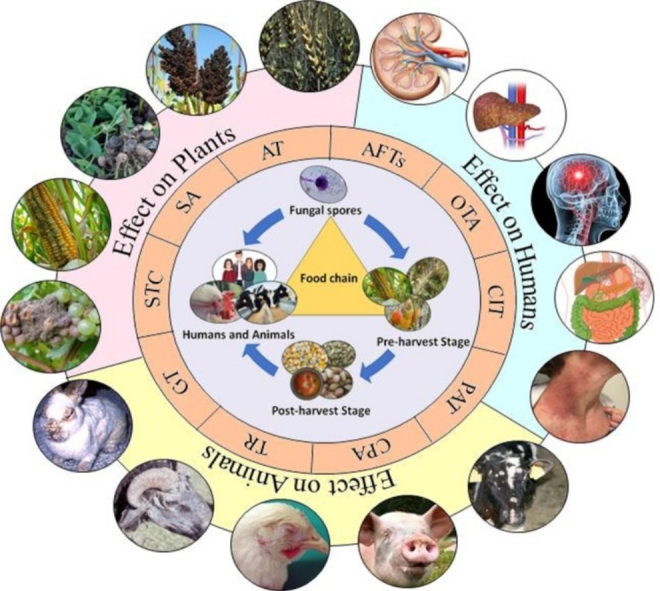
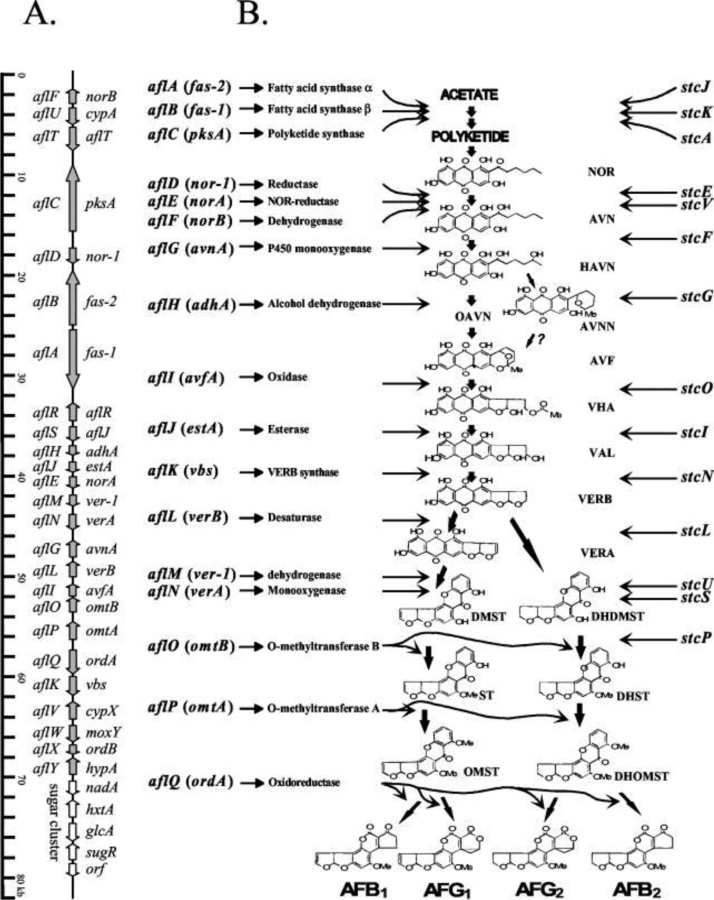
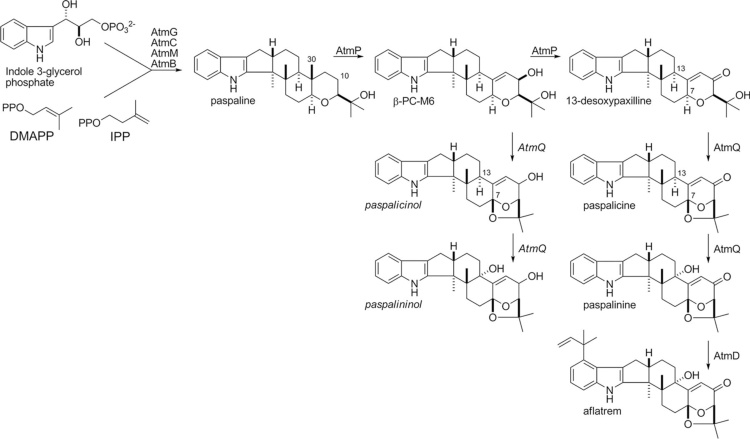
Aspergillus species are the paramount ubiquitous fungi that contaminate various food substrates and produce biochemicals known as mycotoxins. Aflatoxins (AFTs), ochratoxin A (OTA), patulin (PAT), citrinin (CIT), aflatrem (AT), secalonic acids (SA), cyclopiazonic acid (CPA), terrein (TR), sterigmatocystin (ST) and gliotoxin (GT), and other toxins produced by species of Aspergillus plays a major role in food and human health. Mycotoxins exhibited wide range of toxicity to the humans and animal models even at nanomolar (nM) concentration. Consumption of detrimental mycotoxins adulterated foodstuffs affects human and animal health even trace amounts. Bioaerosols consisting of spores and hyphal fragments are active elicitors of bronchial irritation and allergy, and challenging to the public health. Aspergillus is the furthermost predominant environmental contaminant unswervingly defile lives with a 40-90 % mortality risk in patients with conceded immunity. Genomics, proteomics, transcriptomics, and metabolomics approaches useful for mycotoxins' detection which are expensive. Antibody based detection of toxins chemotypes may result in cross-reactivity and uncertainty. Aptamers (APT) are single stranded DNA (ssDNA/RNA), are specifically binds to the target molecules can be generated by systematic evolution of ligands through exponential enrichment (SELEX). APT are fast, sensitive, simple, in-expensive, and field-deployable rapid point of care (POC) detection of toxins, and a better alternative to antibodies.
Keywords: Aptamers; Aspergillus species; Environment; Foodstuffs; Mycotoxins; OMICS; Point of care (PoC).
© 2021 The Authors.
Conflict of interest statement
The authors report no declarations of interest.
Figures

References
-
- Koteswara Rao V., Shilpa P., Girisham S., Reddy S.M. Incidence of mycotoxigenic penicillia in feeds of Andhra Pradesh, India. Int. J. Biotechnol. Mol. Biol. Res. 2016;2:46–50.
-
- FAO (Food and Agriculture Organization) Information Division, FAO; Rome: 2003. Worldwide Regulations for Mycotoxins in Food and Feed in 2003.
-
- Suanthie Y., Cousin M.A., Woloshuk C.P. Multiplex real-time PCR for detection and quantification of mycotoxigenic Aspergillus, Penicillium and Fusarium. J. Stored Prod. Res. 2008;45:139–145.
-
- Ruben R.G., Soares A.R., Corrado F., Domenico C., Giampiero C., Virginia C., Raquel Aires-Barros M. Advances, challenges and opportunities for point-of- need screening of mycotoxins in foods and feeds. Analyst. 2018;143:1015–1035. - PubMed
Publication types
LinkOut - more resources
Full Text Sources
Miscellaneous
