


Burden of skin disease and associated socioeconomic status in Asia: A cross-sectional analysis from the Global Burden of Disease Study 1990-2017
- PMID: 34409353
- PMCID: PMC8362322
- DOI: 10.1016/j.jdin.2020.10.006
Burden of skin disease and associated socioeconomic status in Asia: A cross-sectional analysis from the Global Burden of Disease Study 1990-2017
Abstract
Introduction: Skin diseases have a significant global impact on quality of life, mental health, and loss of income. The burden of dermatologic conditions and its relationship with socioeconomic status in Asia is currently not well understood.
Methods: We selected Global Burden of Disease Study datasets to analyze disability-adjusted life years (DALYs) in 50 Asian countries, including Central Asia, northern Asia, eastern Asia, western Asia, southeastern Asia, and southern Asia, between 1990 and 2017. We compared DALYs to the socioeconomic status using the sociodemographic index and gross domestic product per capita of a country. Statistical analysis was performed using Pearson's correlation.
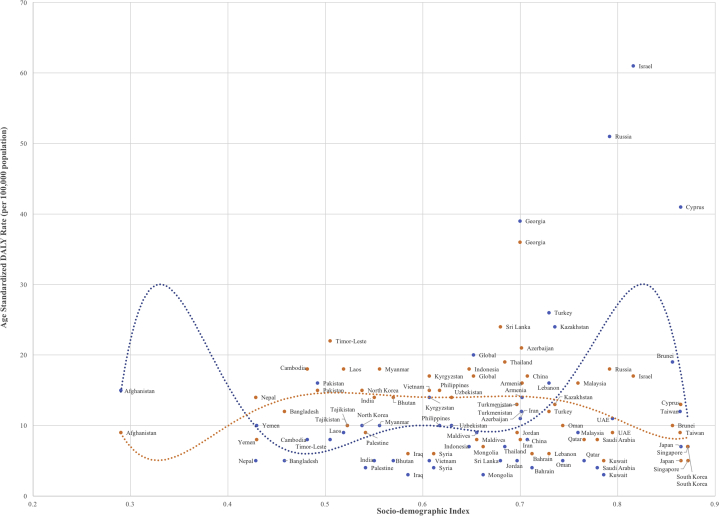
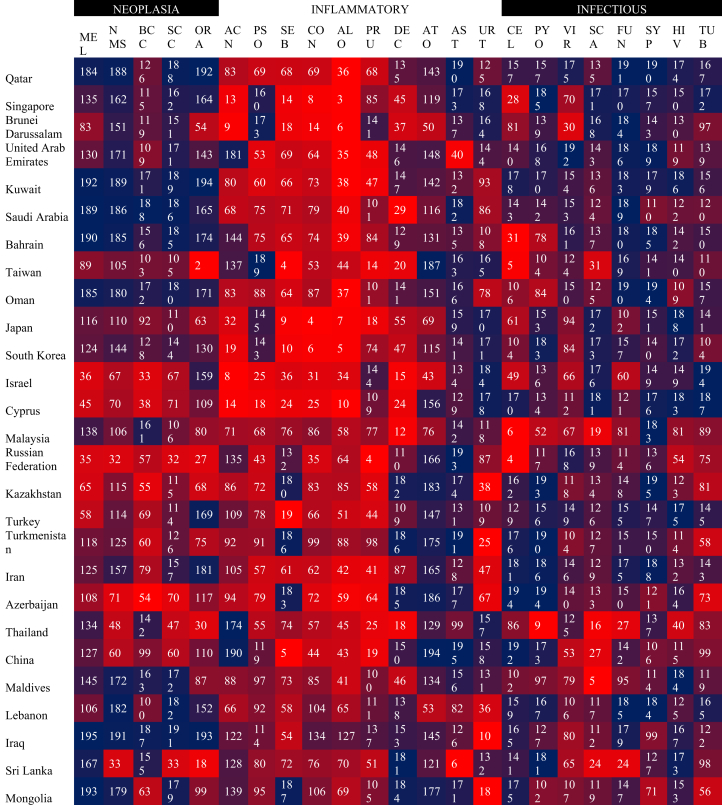
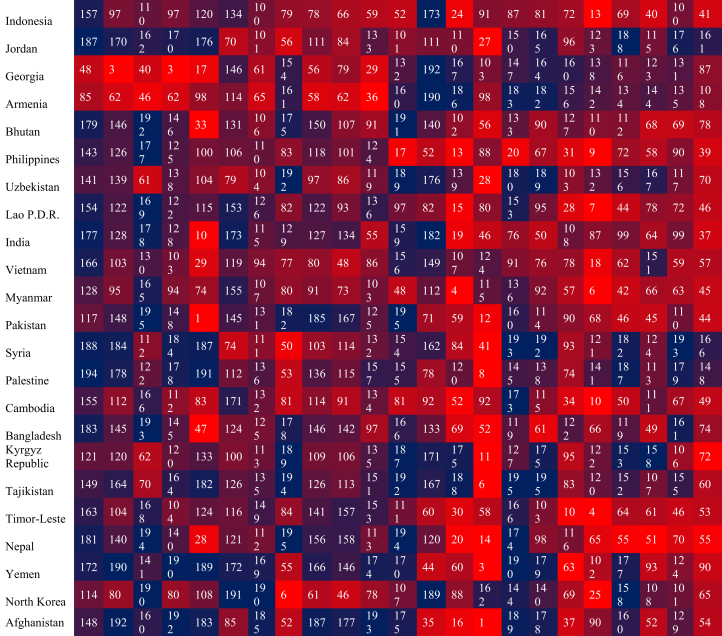
Results: Some countries had higher or lower than expected age-standardized DALY rates of skin diseases. Asian countries, especially high-income countries, had a high burden of inflammatory dermatoses, including acne, alopecia areata, atopic dermatitis, contact dermatitis, decubitus ulcers, psoriasis, pruritus, and seborrheic dermatitis. The burden of infectious dermatoses was greater in low-income Asian countries. The burden of skin cancer in Asia was relatively low.
Conclusion: There is a high burden of skin disease, especially inflammatory conditions, in Asian countries, but the burden of individual dermatoses in Asia varies by country and socioeconomic status. DALYs can potentially serve as a purposeful measure for directing resources to improve the burden of skin disease in Asia.
Keywords: AA, Alopecia areata; DALYs, disability-adjusted life years; GBD, Global Burden of Disease; GDP, gross domestic product; Global Burden of Disease Study (GBD) database; NMSC, nonmelanoma skin cancer; SDI, sociodemographic index; acne; age-standardized prevalence rates; alopecia; atopic dermatitis; basal cell carcinoma; disability-adjusted life years (DALYs); global medicine; gross domestic product (GDP) per capita; infectious disease; itch; leishmaniasis; melanoma; nonmelanoma skin cancer (NMSC); pruritus; psoriasis; scabies; skin cancer; socioeconomic status; squamous cell carcinoma; syphilis; tuberculosis; urticaria; viral skin diseases.
© 2020 by the American Academy of Dermatology, Inc. Published by Elsevier Inc.
Figures

References
-
- World Health Organization. Health statistics and information systems . 2014. Global Health Estimates.https://www.who.int/healthinfo/global_burden_disease/en/ Available at:
-
- World Bank World development indicators 2017. Accessed January 19, 2020. 2017. https://openknowledge.worldbank.org/handle/10986/26447 Available at:
-
- Institute for Health Metrics and Evaluation (IHME) 2018. Data from: Findings from the Global Burden of Disease Study 2017.http://www.healthdata.org/policy-report/findings-global-burden-disease-s... Available at:
LinkOut - more resources
Full Text Sources
Medical
Research Materials
