


Recent advances in palmoplantar pustulosis
- PMID: 34409425
- PMCID: PMC8361749
- DOI: 10.12703/r/10-62
Recent advances in palmoplantar pustulosis
Abstract
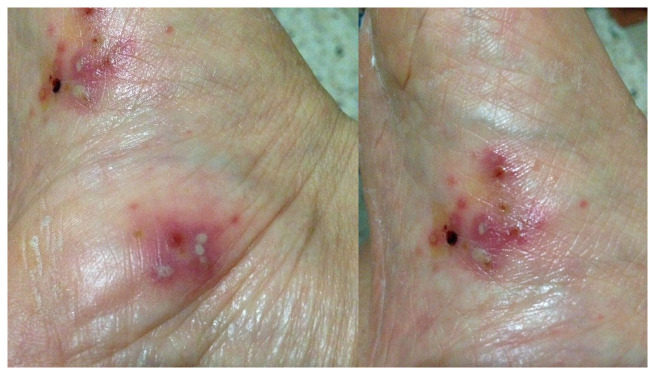
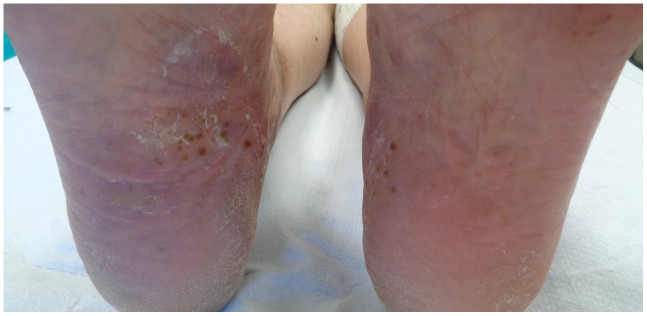
Palmoplantar pustulosis (PPP) is a chronic inflammatory condition where crops of sterile pustules with erythematous keratotic lesions causing bleeding and pain appear on the palms and soles. Recently, the European Rare and Severe Expert Network considered PPP as a variant of pustular psoriasis with or without psoriasis vulgaris. The prevalence of PPP varies from 0.050 to 0.12%. PPP occurs more frequently in women and the highest prevalence occurred between the ages of 50 and 69 years. Nail psoriasis seems to be frequent in PPP, ranging from 30 to 76%, and psoriatic arthritis in 8.6 to 26% of PPP patients. Synovitis, acne, pustulosis, hyperostosis, osteitis (SAPHO) syndrome and pustulotic arthro-osteitis are considered PPP-associated disorders. PPP has been reported with other co-morbidities such as psychiatric disorders, thyroid-associated disease, altered calcium homeostasis, gluten sensitivity diabetes, obesity, and dyslipidemia, but larger studies are required to prove such associations. Environmental exacerbating factors might contribute to the onset or worsening of PPP such as cigarette smoking, stress, focal infections, metal allergies, and drug intake. Genetic predisposition plays an important role in PPP. In PPP, both the innate and the adaptive immune systems are activated. The acrosyringeal expression of IL-17 has been demonstrated, indicating that the eccrine sweat gland is an active component of the skin barrier and an immune-competent structure. Increased levels of several inflammatory molecules, including IL-8, IL-1α, IL-1β, IL-17A, IL-17C, IL-17D, IL-17F, IL-22, IL-23A, and IL-23 receptor, have been detected in PPP biopsies. Increased serum levels of TNF-α, IL-17, IL-22, and IFN-γ have been detected in patients with PPP in comparison to healthy subjects, suggesting a similar inflammatory pattern to psoriasis vulgaris. Oral and tonsillar infections serve as trigger factors for PPP. Long-term therapy is required for many patients, but high-quality data are limited, contributing to uncertainty about the ideal approach to treatment.
Keywords: Palmoplantar pustulosis; psoriasis; pustular psoriasis; therapy.
Copyright: © 2021 Massone C et al.
Conflict of interest statement
The authors declare that they have no competing interests.No competing interests were disclosed.No competing interests were disclosed.
Figures
References
-
- Brunasso G, Massone C: Palmoplantar pustulosis: Epidemiology, clinical features, and diagnosis. In: UpToDate, Post TW (Ed), UpToDate, Waltham, MA. (Accessed on January 04, 2021). Reference Source
Publication types
LinkOut - more resources
Full Text Sources