


Communicating With Diverse Patients About Participating in a Biobank: A Randomized Multisite Study Comparing Electronic and Face-to-Face Informed Consent Processes
- PMID: 34410195
- PMCID: PMC8712348
- DOI: 10.1177/15562646211038819
Communicating With Diverse Patients About Participating in a Biobank: A Randomized Multisite Study Comparing Electronic and Face-to-Face Informed Consent Processes
Abstract
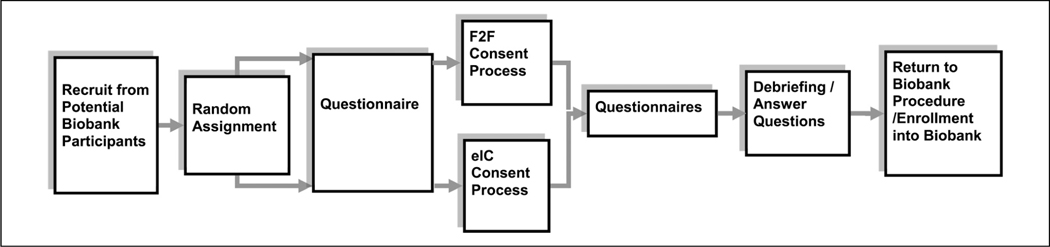
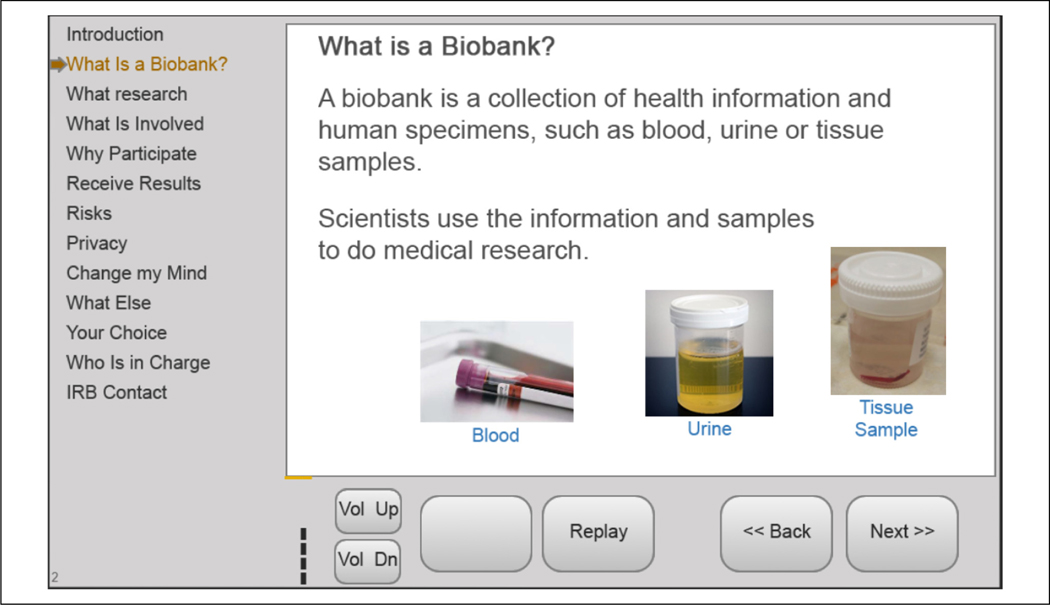
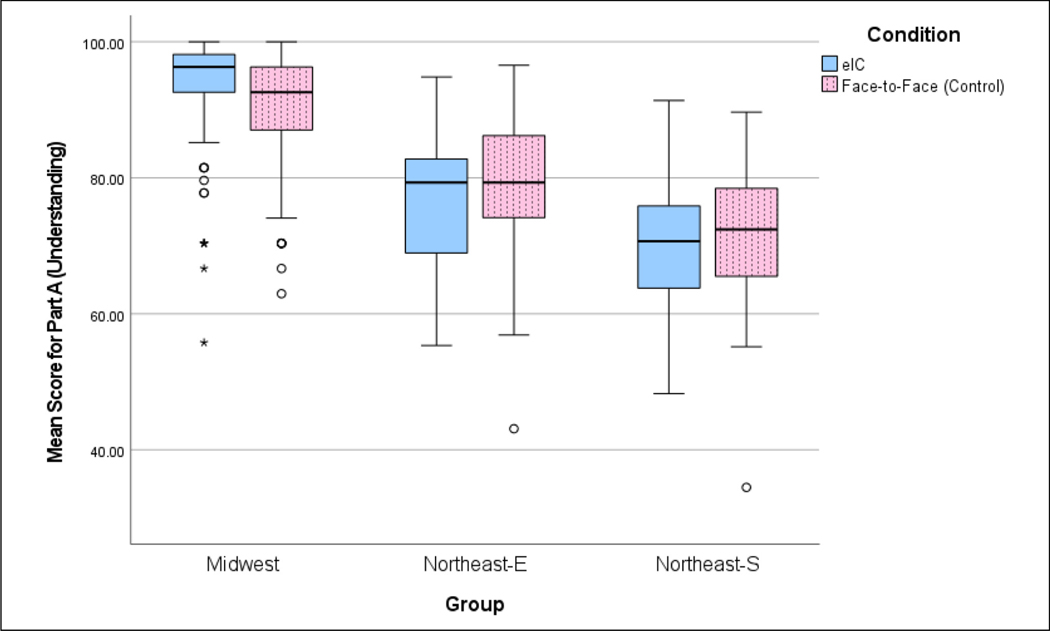
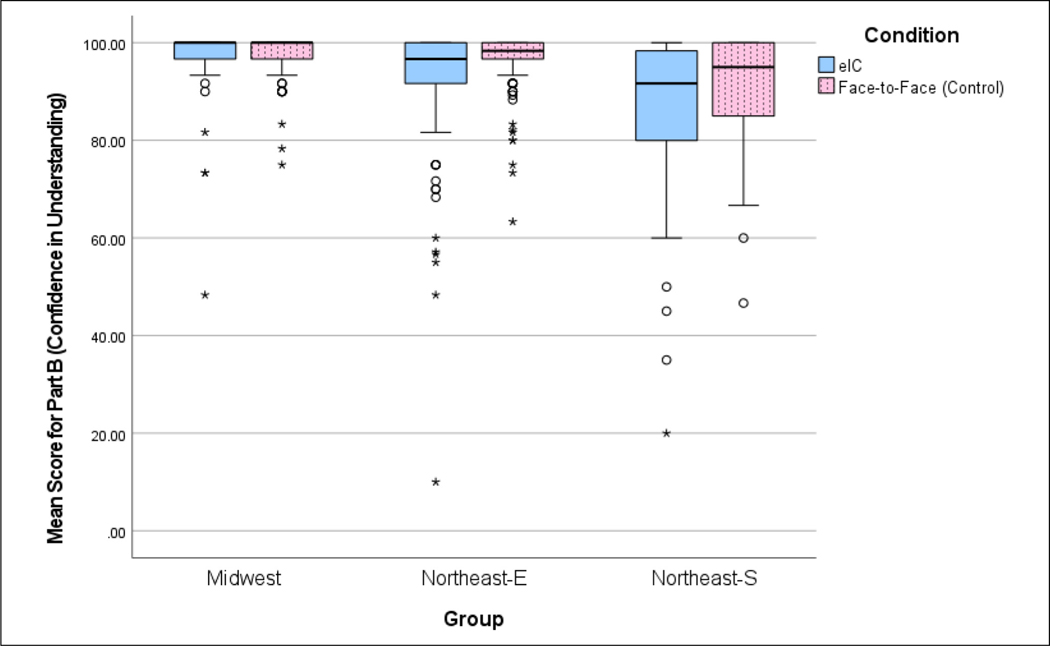
Some individuals' understanding of informed consent (IC) information may improve with electronic delivery, but others may benefit from face-to-face (F2F). This randomized, multisite study explores how individuals from diverse backgrounds understand electronic IC documents versus F2F, their confidence in understanding, and enrollment in research. A total of 501 patients at two U.S. biobanks with diverse populations participated. There were no overall differences between electronic and F2F understanding, but F2F predicted higher confidence in understanding and enrollment. Ethnicity and a higher educational level predicted higher understanding and confidence. Study findings suggest that electronic consent may lead to better understanding for non-Hispanic patients of higher socioeconomic status. F2F processes may lead to better understanding and higher enrollment of patients from Hispanic and lower socioeconomic levels. Researchers should carefully consider how they implement electronic IC processes and whether to maintain an F2F process to better address the needs and limitations of some populations.
Keywords: biobanking; electronic; informed consent; interactive; multimedia.
Figures
References
-
- Agre P, & Rapkin B. (2003). Improving informed consent: a comparison of four consent tools. IRB, 25(6), 1–7. - PubMed
-
- Beauchamp TL, & Childress JF (1979). Principles of biomedical ethics. New York: Oxford University Press.
Publication types
MeSH terms
Grants and funding
LinkOut - more resources
Full Text Sources
