. 2021 Aug 19;18(1):171.
doi: 10.1186/s12985-021-01641-w.

Antiviral activity of diallyl trisulfide against H9N2 avian influenza virus infection in vitro and in vivo

Affiliations

Antiviral activity of diallyl trisulfide against H9N2 avian influenza virus infection in vitro and in vivo

Le Ming et al. Virol J. .

Abstract

Background: Diallyl trisulfide (DATS) is a garlic-derived organosulfur compound. As it has been shown to have anti-viral activity, we hypothesized that it may alleviate infections caused by H9N2 avian influenza virus (AIV), which is prevalent in poultry with pandemic potential.

Methods: Human lung A549 epithelial cells were treated with three different concentrations of DATS 24 h before (pre-treatment) or one hour after (post-treatment) H9N2 AIV infection. Culture supernatants were collected 24 h and 48 h post-infection and analyzed for viral titers and levels of inflammatory and anti-viral immune responses. For in vivo experiments, BABL/c mice were administered daily by intraperitoneal injection with DATS (30 mg/kg) for 2 weeks starting 1 day after H9N2 AIV infection. Clinical signs, lung pathology, and inflammatory and anti-viral immune responses were assessed 2, 4, and 6 days after infection.

Results: Both pre-treatment and post-treatment of A549 cells with DATS resulted in reduced viral loads, increased expression of anti-viral genes (RIG-I, IRF-3, and interferon-β), and decreased expression of inflammatory cytokines (TNF-α and IL-6). These effects were also observed in H9N2 AIV-infected mice treated with DATS. Such treatment also reduced lung edema and inflammation in mice.

Conclusions: Results suggest that DATS has anti-viral activity against H9N2 AIV and may be used as an alternative treatment for influenza virus infection.

Keywords: Antiviral activity; Diallyl trisulfide; H9N2 AIV; Inflammation.


Conflict of interest statement

The authors declare that they have no competing interests.

Figures
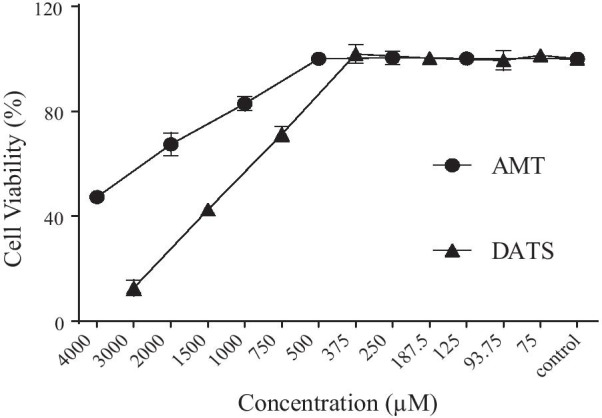
Fig. 1
Fig. 1
Cytotoxicity of diallyl trisulfide (DATS). A549 cells were incubated with various concentrations of DATS or AMT for 48 h. The percentage of cell viability was calculated. Values are presented as means ± SD of five repeats
Fig. 2
Fig. 2
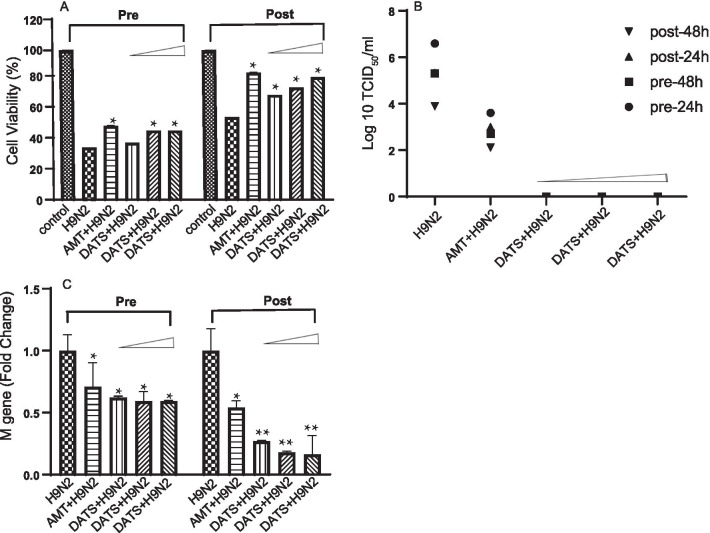
Effect of DATS on H9N2 AIV replication in A549 cells. A549 cells were treated with three different concentrations (375 µM, 187.5 µM, and 93.75 µM) of DATS 24 h before or 1 h after H9N2 AIV infection and then cultured in maintenance medium for 48 h. AMT (500 µM) was used as the positive drug control. a Viability of A549 cells was measured by MTT assay. b Culture supernatants were collected at 24 h and 48 h after infection and assayed for TCID50 on MDCK cells. c RNA was isolated from cell lysates and assayed for expression levels H9N2 AIV M gene by real-time RT-PCR. Abbreviations: control, uninfected cells; H9N2, H9N2 AIV-infected; AMT + H9N2, H9N2 AIV-infected cells treated with 500 μM AMT; DATS + H9N2, H9N2 AIV-infected cells treated with DATS. Values are averages of three independent examinations. Significant difference was determined by comparing the data to those of H9N2 AIV-infected group (*p < 0.05, **p < 0.01)
Fig. 3
Fig. 3
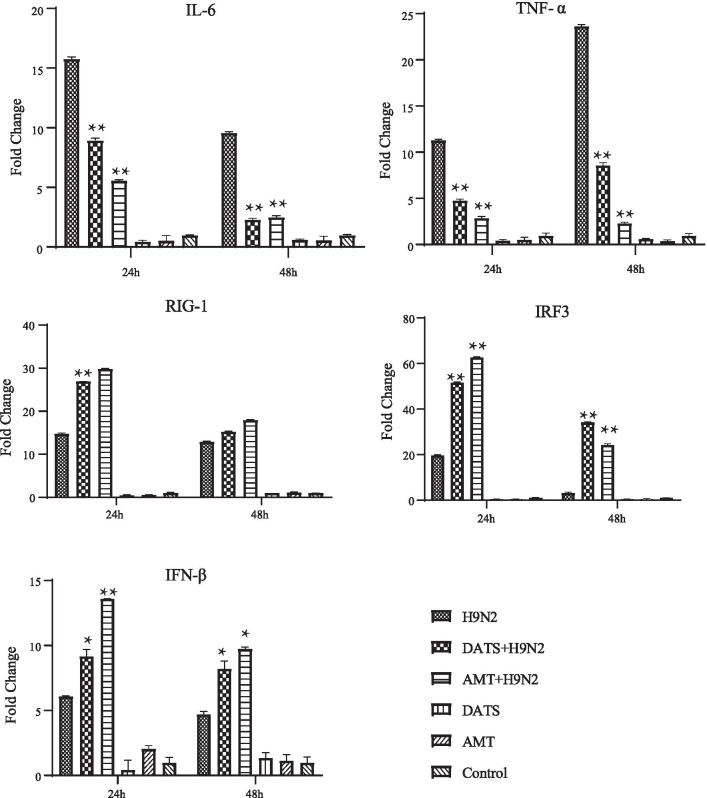
Effect of DATS on the expression of inflammatory and antiviral cytokines. A549 cells were treated with DATS and cultured in maintenance medium. At 24 h and 48 h after DATS treatment, total RNA was extracted and analyzed for expression levels of inflammatory and antiviral cytokines by real-time PCR assay. GAPDH was used as an internal control. Fold change in gene expression was calculated using the 2−ΔΔCt method. AMT (500 µM) was used as the positive drug control. Abbreviations are the same as those in Fig. 2. Values are averages of three independent examinations. Significant difference was determined by comparing the data to those of H9N2 AIV-infected group (*p < 0.05, **p < 0.01)
Fig. 4
Fig. 4
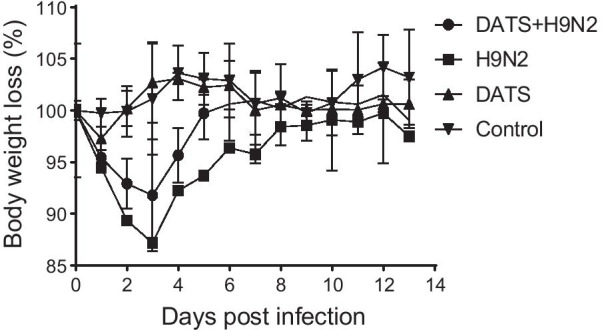
Effect of DATS on body weight of H9N2 AIV-infected mice. BALB/c female mice were inoculated intranasally with 80 μL of allantois fluid containing H9N2 AIV (1 × 106 50% egg infection dose). One day after virus inoculation, mice were injected with 30 mg/kg of DATS intraperitoneally or 0.9% saline every day and monitored for weight loss daily for 14 days. Abbreviations: Control, uninfected and untreated; DATS, DATS treated uninfected control; H9N2, H9N2 AIV-infected control; DATS + H9N2, mice infected with H9N2 AIV and then treated with DATS. Data are presented as mean ± SD of 6 mice per group
Fig. 5
Fig. 5
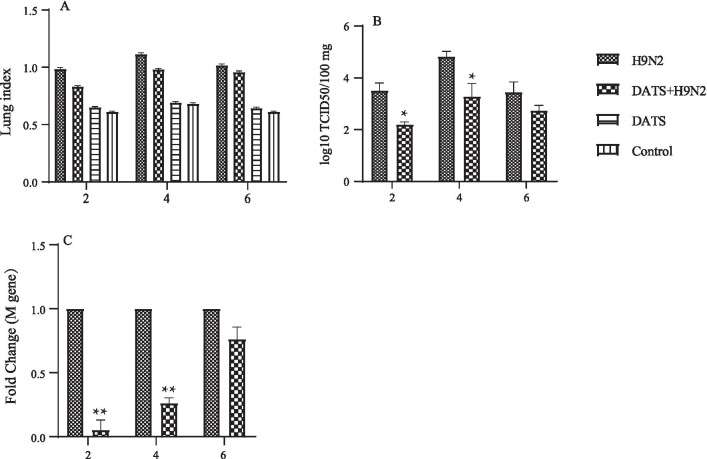
Effect of DATS on lung injury in of mice. Five mice from each group were euthanized at days 2, 4, and 6 post-infection, and their lungs were harvested and weighed. Abbreviations are the same as those in Fig. 4. Significant difference was determined by comparing the data to those of H9N2 AIV-infected group (*p < 0.05, **p < 0.01). a Wet lung weight to body weight ratios. b Viral loads in the lungs determined by TCID50 assay on MDCK cells. c Expression levels of H9N2 AIV M gene determined by real-time PCR. Fold change was calculated using the 2−ΔΔCt method
Fig. 6
Fig. 6
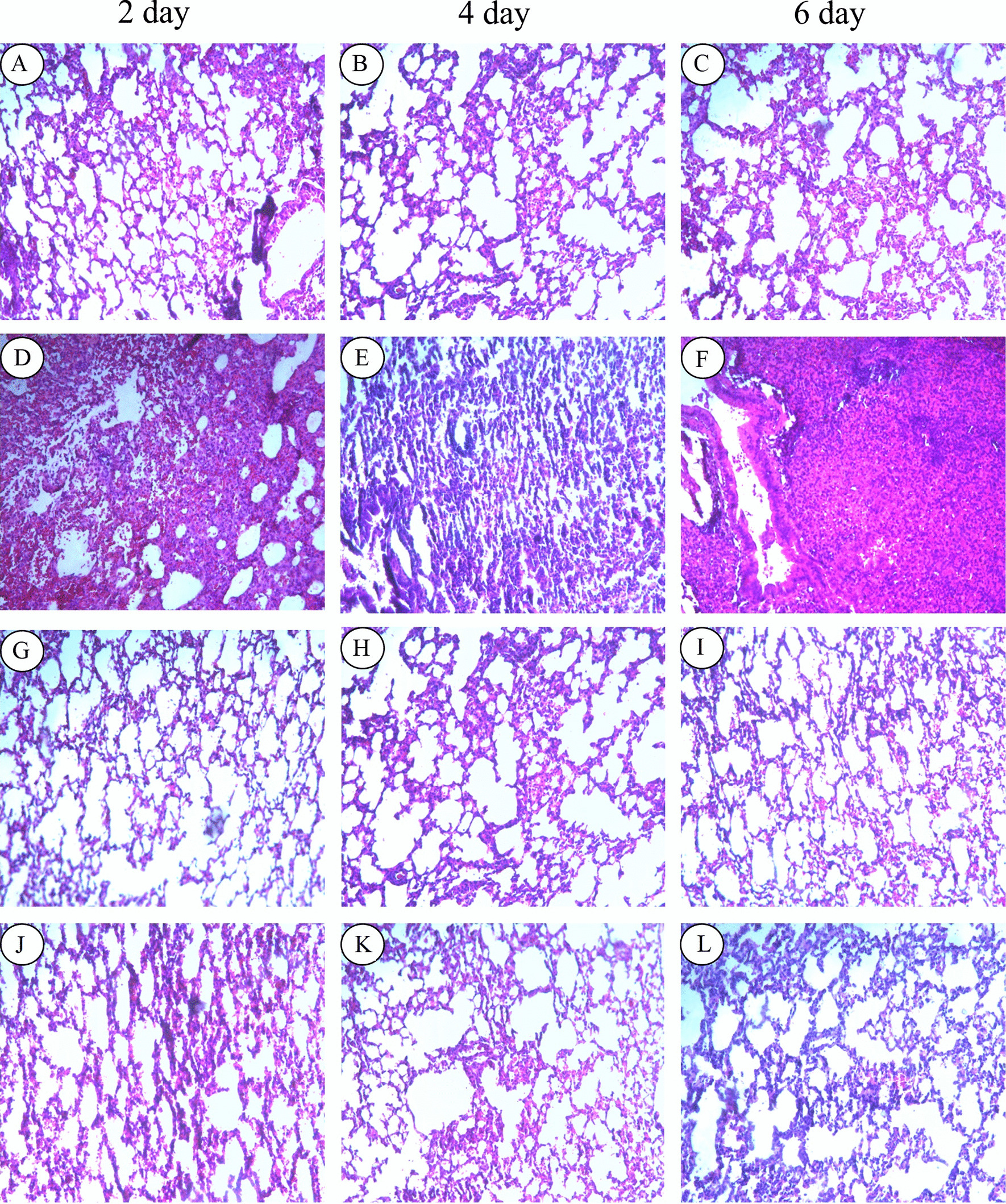
Effect of DATS on lung histology. Five mice from each group were euthanized at days 2, 4, and 6 post-infection, and their lungs were harvested for histological examinations. Abbreviations are the same as those in Fig. 4. DATS + H9N2 (ac), H9N2 (df), DATS (gi), and Control (jl). Images shown are of 100 × magnification (10 × objectives, 10 × eyepiece lens)
Fig. 7
Fig. 7
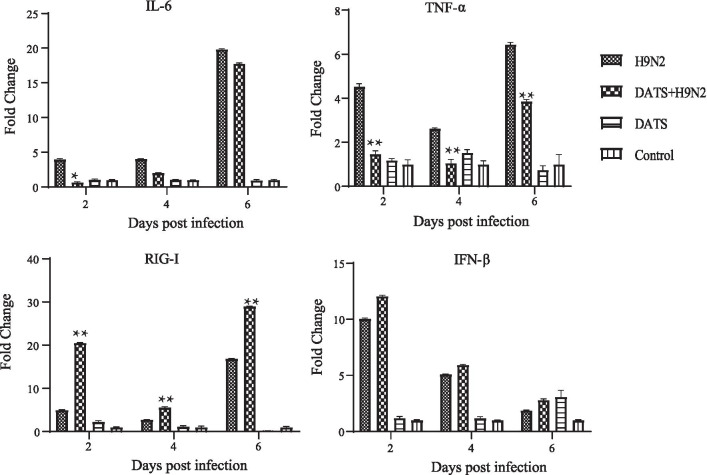
Effect of DATS on the expression of inflammatory and anti-viral cytokines in mice. Five mice from each group were euthanized at days 2, 4, and 6 post-infection, and their lungs were harvested for determination of expression levels of inflammatory and anti-viral cytokines by real-time PCR assay. GAPDH was used as an internal control. Fold change in gene expression was calculated using the 2−ΔΔCt method. Abbreviations are the same as those in Fig. 4. Values are averages of three independent examinations. Significant difference was determined by comparing the data to those of H9N2 AIV-infected group (*p < 0.05, **p < 0.01)

References

    1. Iuliano AD, Roguski KM, Chang HH, Muscatello DJ, Palekar R, Tempia S, Cohen C, Gran JM, Schanzer D, Cowling BJ, Wu P, Kyncl J, Ang LW, Park M, Redlberger-Fritz M, Yu H, Espenhain L, Krishnan A. Estimates of global seasonal influenza-associated respiratory mortality: a modelling study. The Lancet. 2018;391:1285–1300. doi: 10.1016/S0140-6736(17)33293-2. - DOI - PMC - PubMed
    1. Le QM, Kiso M, Someya K, Sakai YT, Nguyen TH, Nguyen KHL, Pham ND, Ngyen HH, Yamada S, Muramoto Y, Horimoto T, Takada A, Goto H, Suzuki T, Suzuki Y, Kawaoka Y. Avian flu: isolation of drug-resistant H5N1 virus. Nature. 2005;437:1108. doi: 10.1038/4371108a. - DOI - PubMed
    1. Bright RA, Medina MJ, Xu X, Perezoronoz G, Wallis TR, Davis XM, Povinelli L, Cox NJ, Klimov A. Incidence of adamantane resistance among influenza A (H3N2) viruses isolated worldwide from 1994 to 2005: a cause for concern. Lancet. 2005;366:1175–1181. doi: 10.1016/S0140-6736(05)67338-2. - DOI - PubMed
    1. Sharma SB, Gupta R. Drug development from natural resource: a systematic approach. Mini-Rev Med Chem. 2015;15:52–57. doi: 10.2174/138955751501150224160518. - DOI - PubMed
    1. Fang J, Liu C, Wang Q, Lin P, Cheng F. In silico polypharmacology of natural products. Brief Bioinform. 2018;19:1153–1171. - PubMed

Publication types