


Lactate is associated with mortality in very old intensive care patients suffering from COVID-19: results from an international observational study of 2860 patients
- PMID: 34417919
- PMCID: PMC8379577
- DOI: 10.1186/s13613-021-00911-8
Lactate is associated with mortality in very old intensive care patients suffering from COVID-19: results from an international observational study of 2860 patients
Abstract
Purpose: Lactate is an established prognosticator in critical care. However, there still is insufficient evidence about its role in predicting outcome in COVID-19. This is of particular concern in older patients who have been mostly affected during the initial surge in 2020.
Methods: This prospective international observation study (The COVIP study) recruited patients aged 70 years or older (ClinicalTrials.gov ID: NCT04321265) admitted to an intensive care unit (ICU) with COVID-19 disease from March 2020 to February 2021. In addition to serial lactate values (arterial blood gas analysis), we recorded several parameters, including SOFA score, ICU procedures, limitation of care, ICU- and 3-month mortality. A lactate concentration ≥ 2.0 mmol/L on the day of ICU admission (baseline) was defined as abnormal. The primary outcome was ICU-mortality. The secondary outcomes 30-day and 3-month mortality.
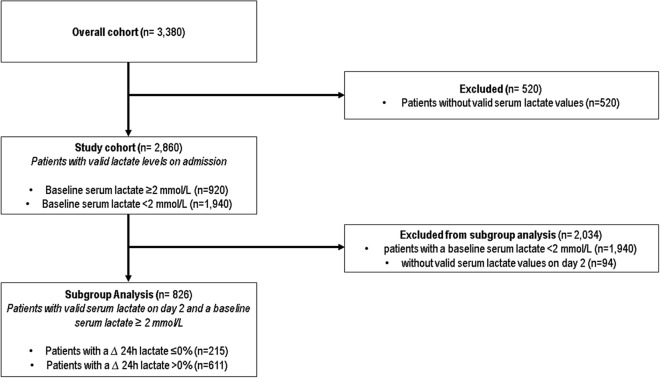
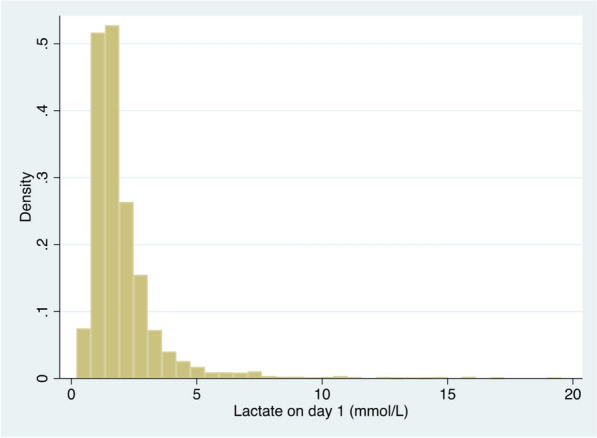
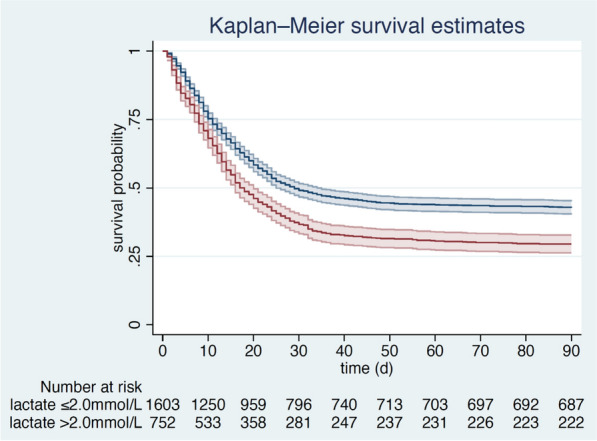
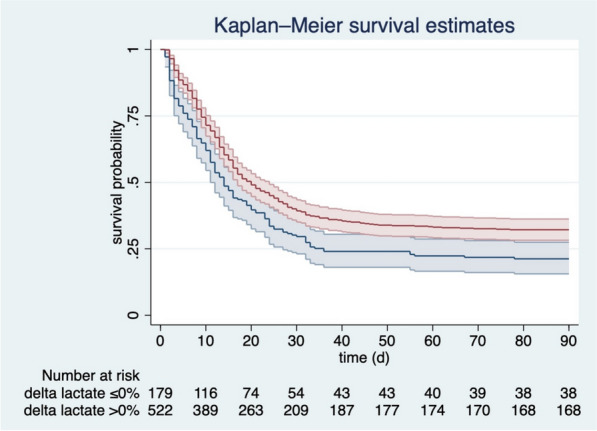
Results: In total, data from 2860 patients were analyzed. In most patients (68%), serum lactate was lower than 2 mmol/L. Elevated baseline serum lactate was associated with significantly higher ICU- and 3-month mortality (53% vs. 43%, and 71% vs. 57%, respectively, p < 0.001). In the multivariable analysis, the maximum lactate concentration on day 1 was independently associated with ICU mortality (aOR 1.06 95% CI 1.02-1.11; p = 0.007), 30-day mortality (aOR 1.07 95% CI 1.02-1.13; p = 0.005) and 3-month mortality (aOR 1.15 95% CI 1.08-1.24; p < 0.001) after adjustment for age, gender, SOFA score, and frailty. In 826 patients with baseline lactate ≥ 2 mmol/L sufficient data to calculate the difference between maximal levels on days 1 and 2 (∆ serum lactate) were available. A decreasing lactate concentration over time was inversely associated with ICU mortality after multivariate adjustment for SOFA score, age, Clinical Frailty Scale, and gender (aOR 0.60 95% CI 0.42-0.85; p = 0.004).
Conclusion: In critically ill old intensive care patients suffering from COVID-19, lactate and its kinetics are valuable tools for outcome prediction.
Trial registration number: NCT04321265.
© 2021. The Author(s).
Conflict of interest statement
The authors declare that they have no competing interests. JCS reports grants (full departmental disclosure) from Orion Pharma, Abbott Nutrition International, B. Braun Medical AG, CSEM AG, Edwards Lifesciences Services GmbH, Kenta Biotech Ltd, Maquet Critical Care AB, Omnicare Clinical Research AG, Nestle, Pierre Fabre Pharma AG, Pfizer, Bard Medica S.A., Abbott AG, Anandic Medical Systems, Pan Gas AG Healthcare, Bracco, Hamilton Medical AG, Fresenius Kabi, Getinge Group Maquet AG, Dräger AG, Teleflex Medical GmbH, Glaxo Smith Kline, Merck Sharp and Dohme AG, Eli Lilly and Company, Baxter, Astellas, Astra Zeneca, CSL Behring, Novartis, Covidien, Philips Medical, Phagenesis Ltd, Prolong Pharmaceuticals and Nycomed outside the submitted work. The money went into departmental funds. No personal financial gain applied.
Figures
References
Associated data
Grants and funding
LinkOut - more resources
Full Text Sources
Medical
