


eHealth in Geriatric Rehabilitation: Systematic Review of Effectiveness, Feasibility, and Usability
- PMID: 34420918
- PMCID: PMC8414304
- DOI: 10.2196/24015
eHealth in Geriatric Rehabilitation: Systematic Review of Effectiveness, Feasibility, and Usability
Abstract
Background: eHealth has the potential to improve outcomes such as physical activity or balance in older adults receiving geriatric rehabilitation. However, several challenges such as scarce evidence on effectiveness, feasibility, and usability hinder the successful implementation of eHealth in geriatric rehabilitation.
Objective: The aim of this systematic review was to assess evidence on the effectiveness, feasibility, and usability of eHealth interventions in older adults in geriatric rehabilitation.
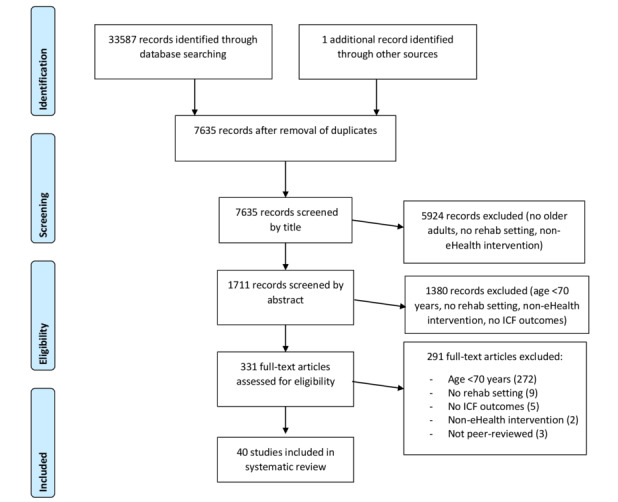
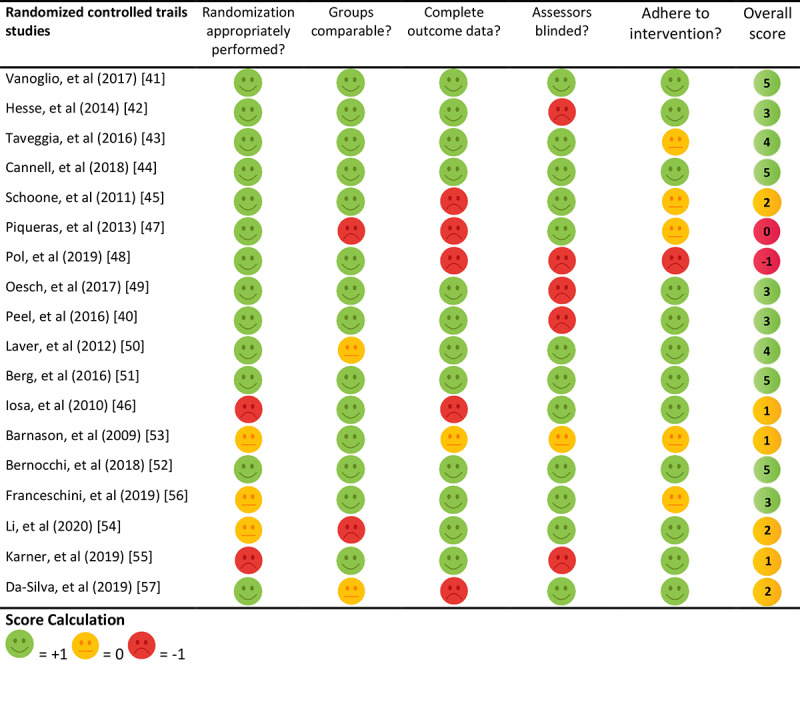
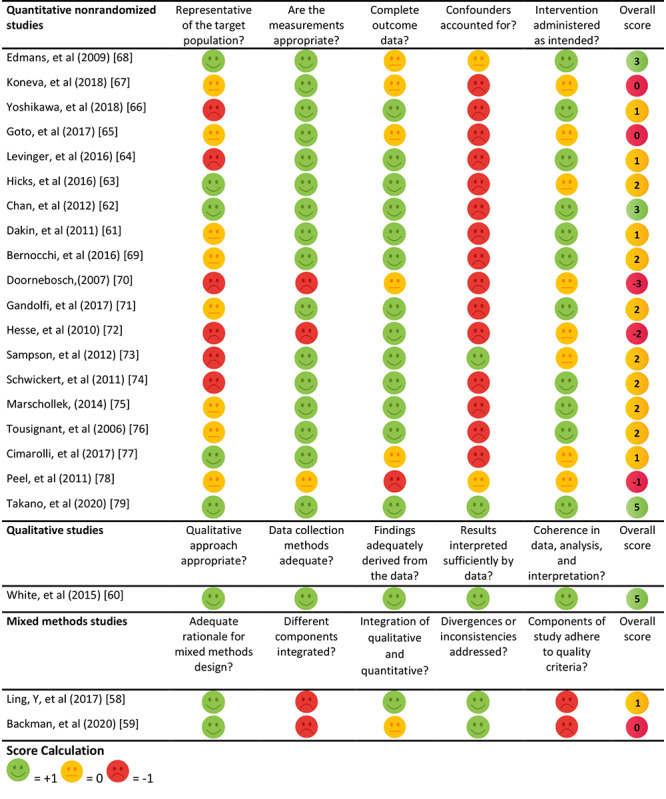
Methods: We searched 7 databases for randomized controlled trials, nonrandomized studies, quantitative descriptive studies, qualitative research, and mixed methods studies that applied eHealth interventions during geriatric rehabilitation. Included studies investigated a combination of effectiveness, usability, and feasibility of eHealth in older patients who received geriatric rehabilitation, with a mean age of ≥70 years. Quality was assessed using the Mixed Methods Appraisal Tool and a narrative synthesis was conducted using a harvest plot.
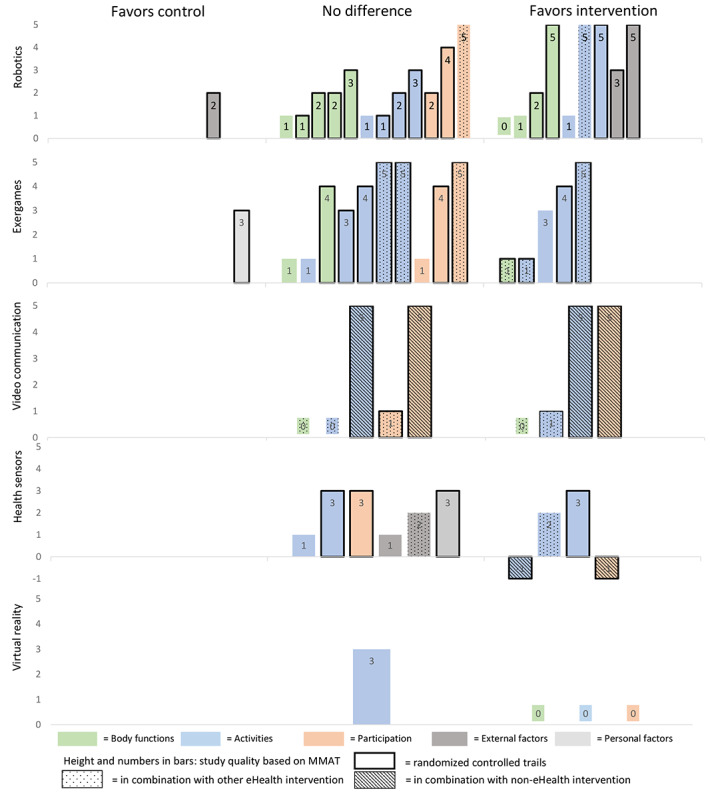
Results: In total, 40 studies were selected, with clinical heterogeneity across studies. Of 40 studies, 15 studies (38%) found eHealth was at least as effective as non-eHealth interventions (56% of the 27 studies with a control group), 11 studies (41%) found eHealth interventions were more effective than non-eHealth interventions, and 1 study (4%) reported beneficial outcomes in favor of the non-eHealth interventions. Of 17 studies, 16 (94%) concluded that eHealth was feasible. However, high exclusion rates were reported in 7 studies of 40 (18%). Of 40 studies, 4 (10%) included outcomes related to usability and indicated that there were certain aging-related barriers to cognitive ability, physical ability, or perception, which led to difficulties in using eHealth.
Conclusions: eHealth can potentially improve rehabilitation outcomes for older patients receiving geriatric rehabilitation. Simple eHealth interventions were more likely to be feasible for older patients receiving geriatric rehabilitation, especially, in combination with another non-eHealth intervention. However, a lack of evidence on usability might hamper the implementation of eHealth. eHealth applications in geriatric rehabilitation show promise, but more research is required, including research with a focus on usability and participation.
Keywords: digital health; eHealth; effectiveness; feasibility; geriatric rehabilitation; mHealth; systematic review; usability.
©Jules J M Kraaijkamp, Eléonore F van Dam van Isselt, Anke Persoon, Anke Versluis, Niels H Chavannes, Wilco P Achterberg. Originally published in the Journal of Medical Internet Research (https://www.jmir.org), 19.08.2021.
Conflict of interest statement
Conflicts of Interest: None declared.
Figures
References
-
- United Nations Department of Economic and Social affairs, Population division. World Population Ageing. 2019. [2020-11-06]. https://www.un.org/en/development/desa/population/publications/pdf/agein... .
-
- Inouye S, Studenski S, Tinetti M, Kuchel G. Geriatric syndromes: clinical, research, and policy implications of a core geriatric concept. J Am Geriatr Soc. 2007 May;55(5):780–91. doi: 10.1111/j.1532-5415.2007.01156.x. http://europepmc.org/abstract/MED/17493201 JGS1156 - DOI - PMC - PubMed
-
- Bachmann S, Finger C, Huss A, Egger M, Stuck A, Clough-Gorr K. Inpatient rehabilitation specifically designed for geriatric patients: systematic review and meta-analysis of randomised controlled trials. BMJ. 2010 Apr 20;340:c1718. doi: 10.1136/bmj.c1718. http://europepmc.org/abstract/MED/20406866 - DOI - PMC - PubMed
Publication types
MeSH terms
LinkOut - more resources
Full Text Sources
Medical
