


Computational theory-driven studies of reinforcement learning and decision-making in addiction: What have we learned?
- PMID: 34423103
- PMCID: PMC8376201
- DOI: 10.1016/j.cobeha.2020.08.007
Computational theory-driven studies of reinforcement learning and decision-making in addiction: What have we learned?
Abstract
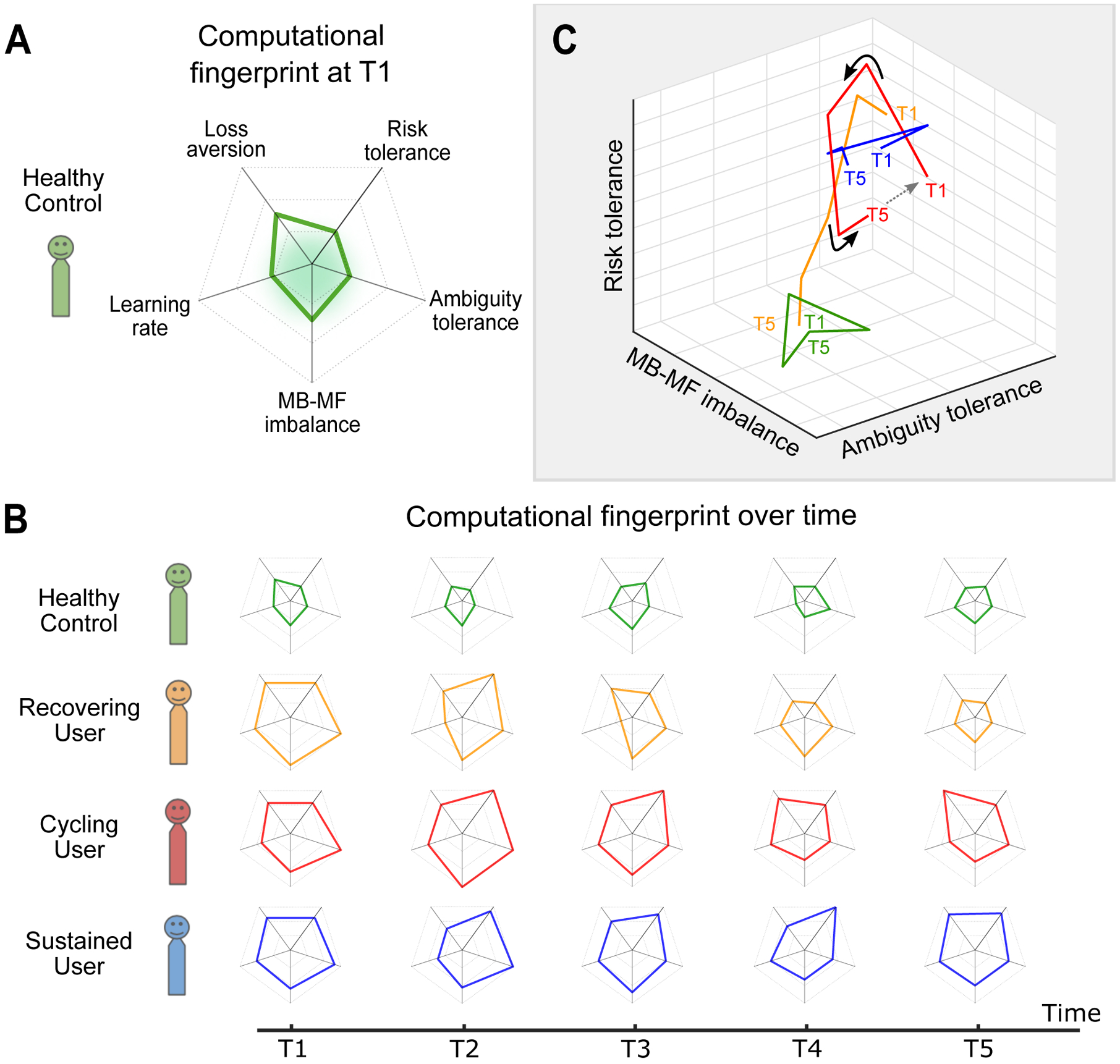
Computational psychiatry provides a powerful new approach for linking the behavioral manifestations of addiction to their precise cognitive and neurobiological substrates. However, this emerging area of research is still limited in important ways. While research has identified features of reinforcement learning and decision-making in substance users that differ from health, less emphasis has been placed on capturing addiction cycles/states dynamically, within-person. In addition, the focus on few behavioral variables at a time has precluded more detailed consideration of related processes and heterogeneous clinical profiles. We propose that a longitudinal and multidimensional examination of value-based processes, a type of dynamic "computational fingerprint", will provide a more complete understanding of addiction as well as aid in developing better tailored and timed interventions.
Conflict of interest statement
Conflict of interest statement Nothing declared.
Figures
References
Grants and funding
LinkOut - more resources
Full Text Sources