. 2021 Aug 23;4(1):997.
doi: 10.1038/s42003-021-02524-0.

Pulmonary immune cell trafficking promotes host defense against alcohol-associated Klebsiella pneumonia

Affiliations

Pulmonary immune cell trafficking promotes host defense against alcohol-associated Klebsiella pneumonia

Derrick R Samuelson et al. Commun Biol. .

Abstract

The intestinal microbiota generates many different metabolites which are critical for the regulation of host signaling pathways. In fact, a wide-range of diseases are associated with increased levels of local or systemic microbe-derived metabolites. In contrast, certain bacterial metabolites, such as tryptophan metabolites, are known to contribute to both local and systemic homeostasis. Chronic alcohol consumption is accompanied by alterations to intestinal microbial communities, and their functional capacities. However, little is known about the role of alcohol-associated dysbiosis on host defense against bacterial pneumonia. Our previous work using fecal transplantation demonstrated that alcohol-associated intestinal dysbiosis, independent of ethanol consumption, increased susceptibility to Klebsiella pneumonia. Here, we demonstrate that intestinal microbiota treatments mitigate the increased risk of alcohol-associated pneumonia. Treatment with the microbial metabolite indole or with probiotics reduced pulmonary and extrapulmonary bacterial burden, restored immune responses, and improved cellular trafficking required for host defense. Protective effects were, in part, mediated by aryl hydrocarbon receptors (AhR), as inhibition of AhR diminished the protective effects. Thus, alcohol appears to impair the production/processing of tryptophan catabolites resulting in immune dysregulation and impaired cellular trafficking. These data support microbiota therapeutics as novel strategies to mitigate the increased risk for alcohol-associated bacterial pneumonia.


Conflict of interest statement

The authors declare no competing interests.

Figures
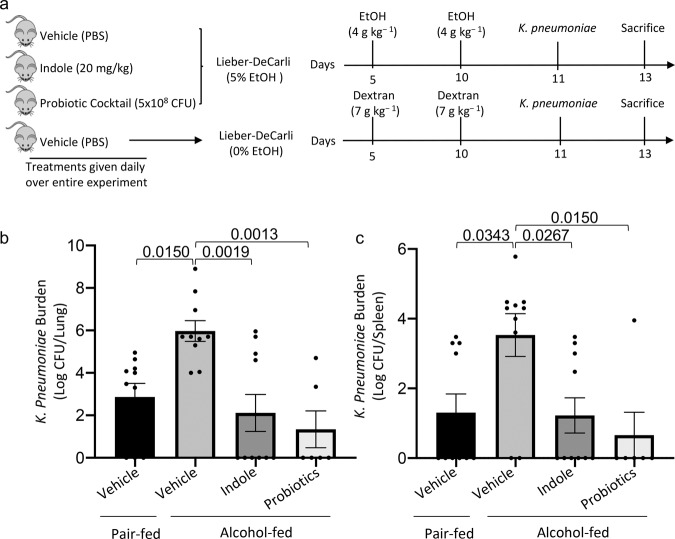
Fig. 1
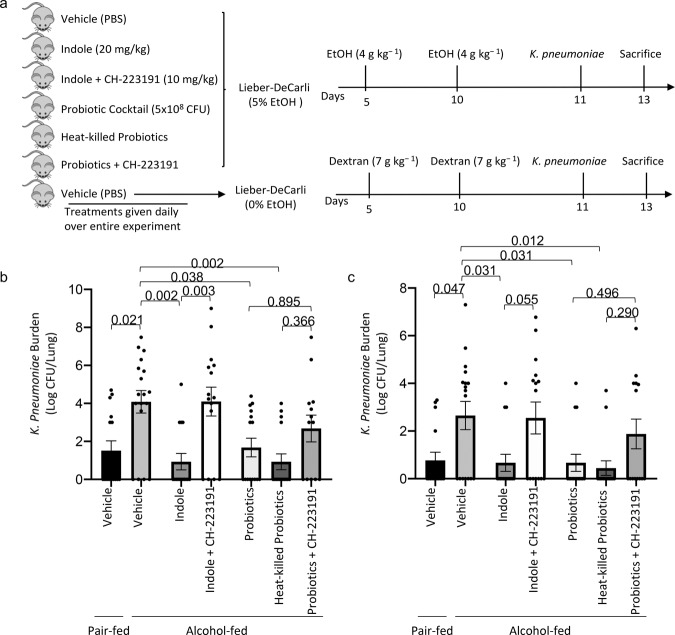
Fig. 1. Microbiota supplementation mitigates alcohol-associated pneumonia.
Binge-on-chronic alcohol-fed mice with and without treatment were infected with Klebsiella and sacrificed 48 h post-infection. a Experimental schema. b Klebsiella lung burden (Log CFU/ml). c Klebsiella splenic burden (Log CFU/ml). Bars represent the mean ± SEM and dots represent individual mice. P values are indicated in the figure and were determined by one‐way ANOVA with Sidak’s multiple comparison test. N = 10/group.
Fig. 2
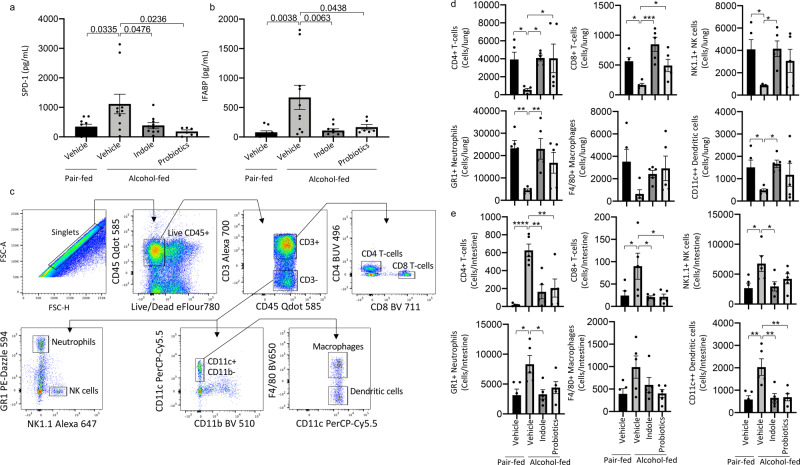
Fig. 2. Microbiota supplementation mitigates alcohol-associated permeability and immune dysfunction.
Binge-on-chronic alcohol-fed mice with and without treatment were infected with Klebsiella and sacrificed 48 h post-infection. a Levels of circulating surfactant protein D1 (SPD-1). b Levels of circulating intestinal fatty acid binding protein (IFABP). c Flow cytometry gating strategy. d Number of pulmonary immune cells in binge-on-chronic alcohol-fed mice with and without treatment infected with Klebsiella. e Number of intestinal immune cells in binge-on-chronic alcohol-fed mice with and without treatment infected with Klebsiella. Bars represent the mean ± SEM and dots represent individual mice. P values are indicated in the figure or denoted by *P < 0.05, **P < 0.001, ***P < 0.0001, ****P < 0.00001, $P < 0.000001, as determined by one‐way ANOVA with Sidak’s multiple comparison test. N = 10/group.
Fig. 3
Fig. 3. Indole and probiotic treatment mitigates alcohol-associated pneumonia via aryl hydrocarbon receptor signaling.
Binge-on-chronic alcohol-fed mice with and without treatment were infected with Klebsiella and sacrificed 48 h post-infection. a Experimental schema. b Klebsiella lung burden (Log CFU/ml). c Klebsiella splenic burden (Log CFU/ml). Bars represent the mean ± SEM and dots represent individual mice. P values are indicated in the figure and were determined by one‐way ANOVA with Sidak’s multiple comparison test. N = 10/group.
Fig. 4
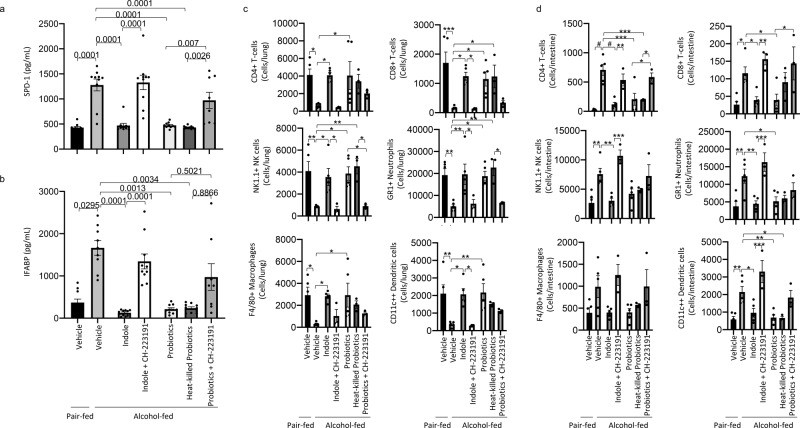
Fig. 4. Indole and probiotic treatment mitigates alcohol-associated permeability and immune dysfunction via aryl hydrocarbon receptor signaling.
Binge-on-chronic alcohol-fed mice with and without treatment were infected with Klebsiella and sacrificed 48 h post-infection. a Levels of circulating surfactant protein D1 (SPD-1). b Levels of circulating intestinal fatty acid binding protein (IFABP). c Number of pulmonary immune cells in binge-on-chronic alcohol-fed mice with and without treatment infected with Klebsiella. d Number of intestinal immune cells in binge-on-chronic alcohol-fed mice with and without treatment infected with Klebsiella. Bars represent the mean ± SEM and dots represent individual mice. P values are indicated in the figure or denoted by *P < 0.05, **P < 0.001, ***P < 0.0001, ****P < 0.00001, $P < 0.000001, as determined by one‐way ANOVA with Sidak’s multiple comparison test. N = 10/group.
Fig. 5
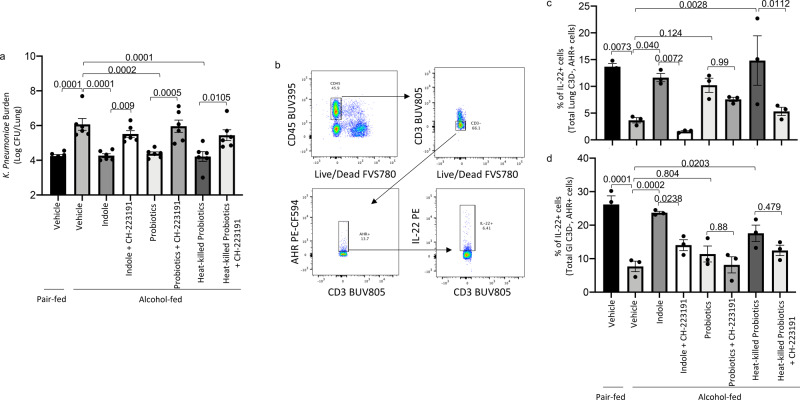
Fig. 5. Indole and probiotics treatment increase the frequency of IL-22+ immune cells in the lungs and small intestine.
Binge-on-chronic alcohol-fed mice with and without treatment were infected with Klebsiella and sacrificed 48 h post-infection. a Klebsiella lung burden (Log CFU/ml). b Flow cytometry gating strategy. c Percent of pulmonary IL-22+ immune cells (CD3− AhR+) in binge-on-chronic alcohol-fed mice with and without treatment infected with Klebsiella. d Percent of intestinal IL-22+ immune cells (CD3− AhR+) in binge-on-chronic alcohol-fed mice with and without treatment infected with Klebsiella. Bars represent the mean ± SEM and dots represent individual mice. P values are indicated in the figure, as determined by one‐way ANOVA with Sidak’s multiple comparison test. N = 3–6/group.
Fig. 6
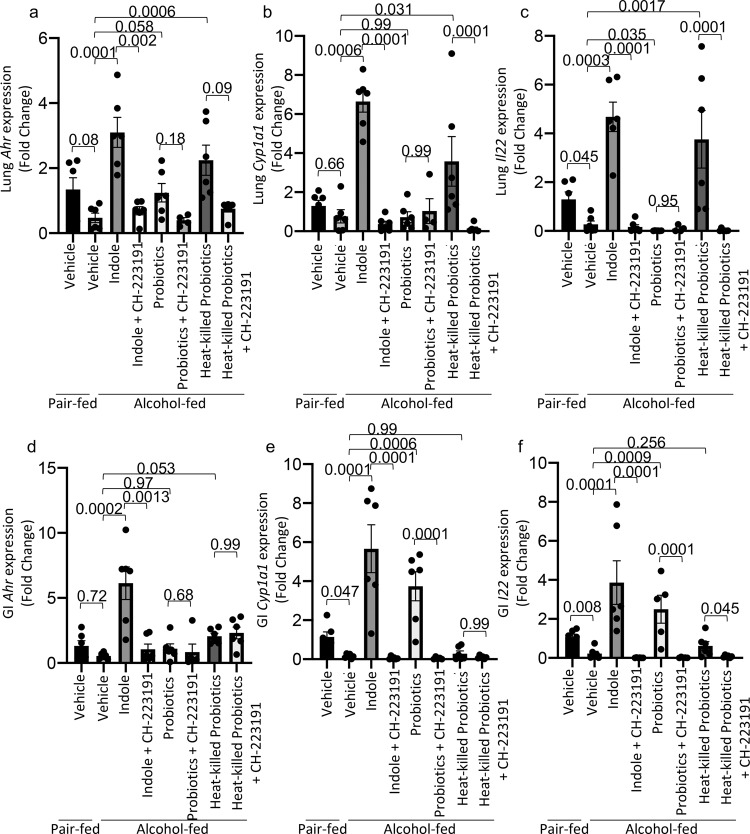
Fig. 6. Indole and probiotics treatment increase the expression of AhR dependent genes.
Binge-on-chronic alcohol-fed mice with and without treatment were infected with Klebsiella and sacrificed after 48 h of infection. Pulmonary expression (fold change) of a Ahr, b Cyp1a1, and c Il22 in binge-on-chronic alcohol-fed mice with and without treatment infected with Klebsiella. Small intestinal expression (fold change) of d Ahr, e Cyp1a1, and f Il22 in binge-on-chronic alcohol-fed mice with and without treatment infected with Klebsiella. The qPCR value was normalized to GAPDH, and gene expression levels are shown relative to those of control mice. Bars represent the mean ± SEM and dots represent individual mice. P values are indicated in the figure and were determined by one‐way ANOVA with Sidak’s multiple comparison test based off of delta delta CT values. N = 6/group.
Fig. 7
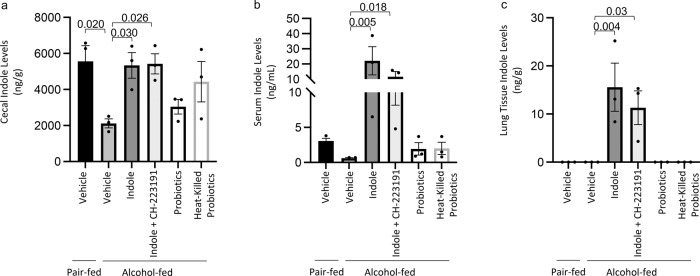
Fig. 7. Cecal, serum, and lung Indole concentrations.
Binge-on-chronic alcohol-fed mice with and without treatment were infected with Klebsiella and sacrificed 48 h post-infection and the indole concentrations in the a cecum, b serum, and c lung tissue were determined. Bars represent the mean ± SEM and dots represent individual mice. P values are indicated in the figure and were determined by one‐way ANOVA with Sidak’s multiple comparison test. N = 3/group.
Fig. 8
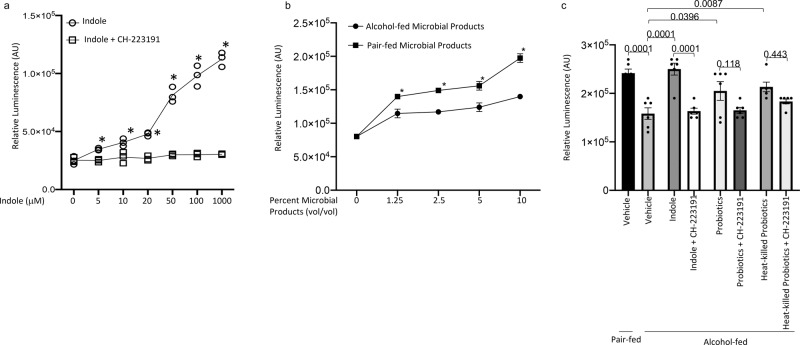
Fig. 8. Indole and intestinal microbial products from indole and probiotic treated mice increase AhR activation.
a Dose–response curves of indole in the DR-EcoScreen assay. DR-EcoScreen cells were treated with increasing concentrations of indole, to detect AhR agonistic activity. b Dose–response curves of intestinal microbial products in the DR-EcoScreen assay. c Intestinal microbial products were isolated from binge-on-chronic alcohol-fed mice with and without treatment AhR agonistic activity was determined using the DR-EcoScreen assay. Bars represent the mean ± SEM and dots represent individual mice. P values are indicated in the figure and were determined by one‐way ANOVA with Sidak’s multiple comparison test. N = 5–6/group.
Fig. 9
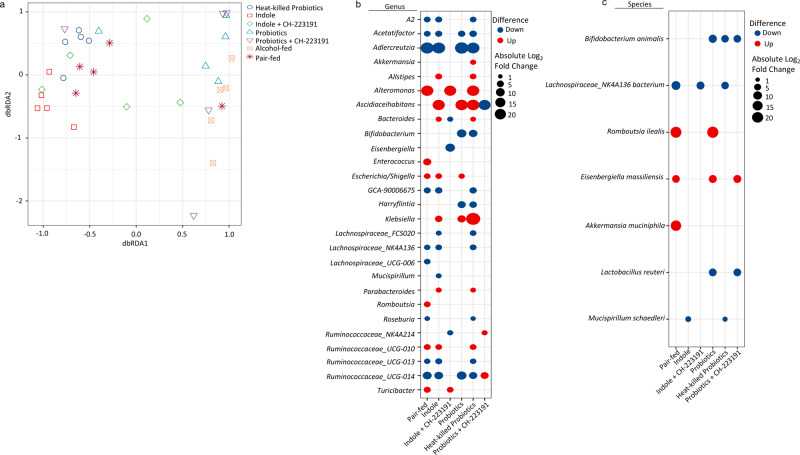
Fig. 9. Indole and probiotics alter the intestinal microbial structure of alcohol-fed mice.
Binge-on-chronic alcohol-fed mice with and without treatment were infected with Klebsiella and sacrificed 48 h post-infection. a Beta diversity of alcohol-fed mice with and without treatment, as determined by distance‐based redundancy analysis (dbRDA) on sample‐wise Bray–Curtis dissimilarity distances. Differentially abundant OTUs at the b genus or c species level as determined by DESeq2 using a negative binomial generalized linear models for each taxa and Wald test for significances. For each comparison (i.e., columns): taxa with a blue dot (down) indicates that the taxa is decreased in alcohol-fed animals compared to the indicated treatment (i.e., pair-fed, indole, etc.), while taxa with a red dot (up) indicates that the taxa is enriched in alcohol-fed mice compared to the indicated treatment. Absolute indicates the magnitude of the log2fold change. N = 5/group.
Fig. 10
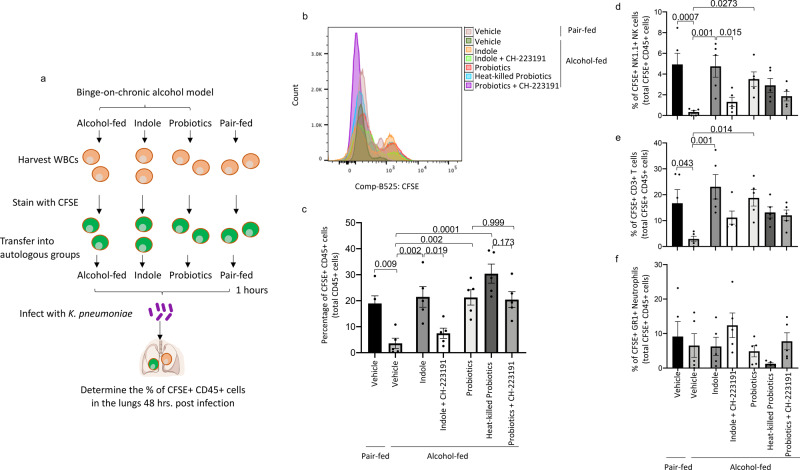
Fig. 10. Microbiota supplementation mitigates alcohol-associated impairment of immune cell trafficking.
Binge-on-chronic alcohol-fed mice with and without treatment were given CFSE labeled CD45+ immune cells, from autologous treatment donors, 1 h prior to infected with Klebsiella and sacrificed 48 h later. a Experimental schema. b Representative histograms of CFSE+ CD45+ immune cells in the lungs of mice after 48 h of post-infection, all treatments are overlaid. c The percentage of CFSE+ CD45+ immune cells in the lungs after 48 h of post-infection. The percentage of CFSE+ CD45+. d NK1.1+ natural killer cells. e CD3+ T-cells, and f GR1+ neutrophils in the lungs after 48 h of post-infection. Bars represent the mean ± SEM and dots represent individual mice. P values are indicated in the figure and were determined by one‐way ANOVA with Sidak’s multiple comparison test. N = 5/group.

References

    1. Alcohol Facts and Statistics | National Institute on Alcohol Abuse and Alcoholism (NIAAA), https://www.niaaa.nih.gov/alcohol-health/overview-alcohol-consumption/al... (2016).
    1. Alcohol Use Disorder | National Institute on Alcohol Abuse and Alcoholism (NIAAA), http://www.ncbi.nlm.nih.gov/pubmed/ (2016).
    1. Happel KI, Nelson S. Alcohol, immunosuppression, and the lung. Proc. Am. Thorac. Soc. 2005;2:428–432. doi: 10.1513/pats.200507-065JS. - DOI - PubMed
    1. Jong GM, Hsiue TR, Chen CR, Chang HY, Chen CW. Rapidly fatal outcome of bacteremic Klebsiella pneumoniae pneumonia in alcoholics. Chest. 1995;107:214–217. doi: 10.1378/chest.107.1.214. - DOI - PubMed
    1. Sisson JH. Alcohol and airways function in health and disease. Alcohol. 2007;41:293–307. doi: 10.1016/j.alcohol.2007.06.003. - DOI - PMC - PubMed

Publication types