


Dosimetric impact of edema on inguinal lymph node boost in locally advanced vulvar cancer
- PMID: 34432357
- PMCID: PMC8504581
- DOI: 10.1002/acm2.13372
Dosimetric impact of edema on inguinal lymph node boost in locally advanced vulvar cancer
Abstract
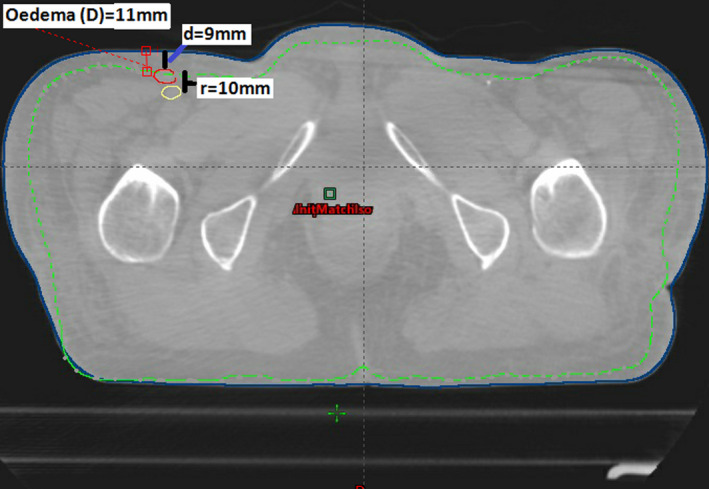
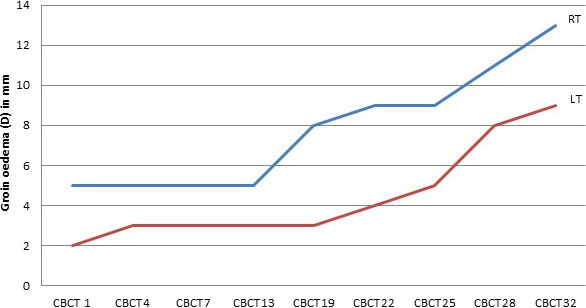
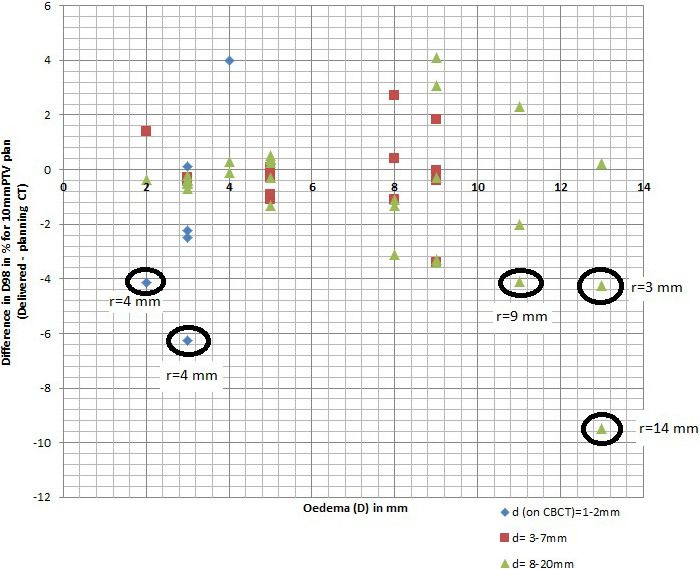
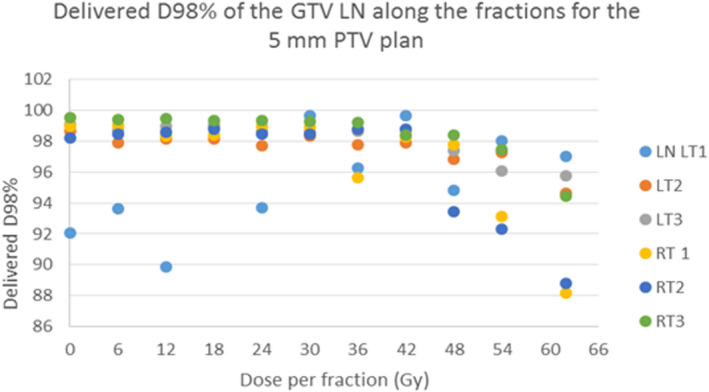
We aimed to evaluate the extent of groin edema and its dosimetric effect in boosted inguinal lymph nodes (LN) for vulvar cancer patients. The level of edema was determined in 10 patients treated with radical radiotherapy. A dosimetric evaluation of six LNs in the patient with the maximum level of edema was performed. The accumulated dose across CBCT fractions was acceptable for all six LNs (>94% of prescribed dose) even with the development of up to 13 mm of edema. The major contributor to fractional dose degradation was geographical displacement of the nodes. We suggest evaluation of edema on daily CBCT.
Keywords: VMAT; cancer vulva; daily CBCT; groin edema; image guided radiotherapy; inguinal lymph node boost.
© 2021 The Authors. Journal of Applied Clinical Medical Physics published by Wiley Periodicals LLC on behalf of American Association of Physicists in Medicine.
Figures
References
-
- Choi S, Sherertz T. Vulvar cancer. Handbook of evidence‐based radiation oncology (pp. 707–720). Springer International Publishing AG, part of Springer Nature; 2018.
-
- Maggino T, Landoni F, Sartori E, et al. Patterns of recurrence in patients with squamous cell carcinoma of the vulva: a multicenter CTF study. Cancer. 2000;89(1):116–122. - PubMed
-
- Ryan M, Stainton MC, Slaytor EK, Jaconelli C, Watts S, Mackenzie P. Aetiology and prevalence of lower limb lymphoedema following treatment for gynaecological cancer. Aust N Z J Obstet Gynaecol. 2003;43(2):148–151. - PubMed
-
- Dyer BA, Jenshus A, Mayadev JS. Medical Dosimetry Integrated skin flash planning technique for intensity‐modulated radiation therapy for vulvar cancer prevents marginal misses and improves superficial dose coverage. Med Dosim. 2019;44:7–10. - PubMed
MeSH terms
LinkOut - more resources
Full Text Sources
Medical
