


Factors associated with North-South research collaboration focusing on HIV/AIDS: lessons from ClinicalTrials.gov
- PMID: 34433475
- PMCID: PMC8385695
- DOI: 10.1186/s12981-021-00376-6
Factors associated with North-South research collaboration focusing on HIV/AIDS: lessons from ClinicalTrials.gov
Abstract
Background: A North-South (N-S) research collaboration is one way through which research capacity of developing countries can be strengthened. Whereas N-S collaboration in HIV/AIDS area may result in research capacity strengthening of Southern partners, it is not clear what factors are associated with this type of collaboration. The study aims to characterize N-S research collaboration focusing on HIV/AIDS and to determine factors associated with such N-S research collaborations.
Methods: Clinical trial data on HIV/AIDS-related studies conducted between 2000 and 2019 were obtained from ClinicalTrials.gov. Using these data, we characterized N-S collaborative studies focusing on HIV/AIDS and summarized them using frequencies and percentages. To determine factors associated with these studies, we used logistic regression and reported results as adjusted odds ratios with Wald 95% confidence intervals.
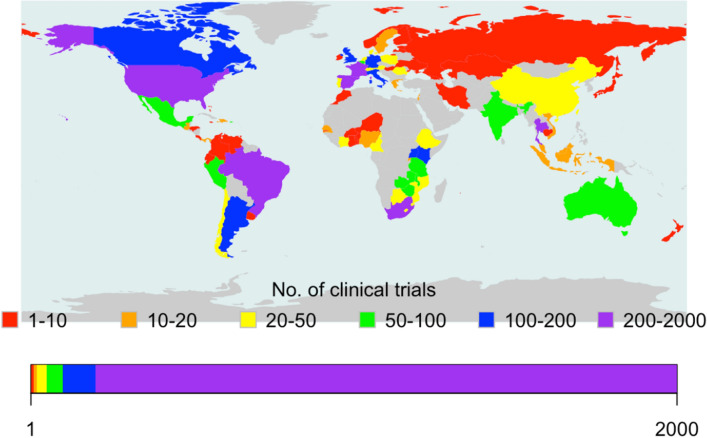
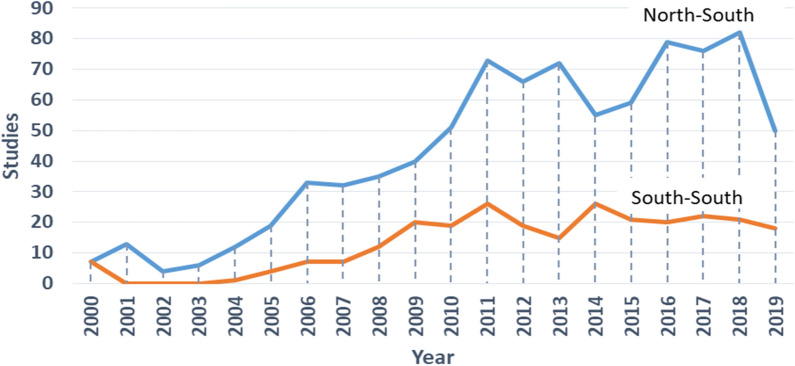
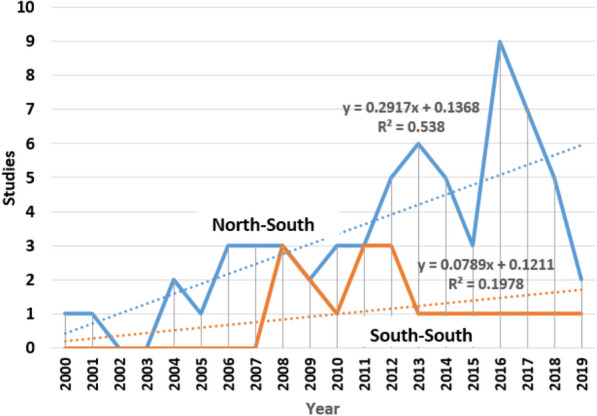
Results and discussion: Of the 4,832 HIV/AIDS-related studies retrieved from the registry, less than one-quarter (n = 1133, 23%) involved a Southern institution, with 77% of these studies classified as N-S collaborations. Majority of these studies have single PI (50%), are conducted at single location (39%); have large sample sizes (41%); are federally-funded (32%) or receive funding from other sources (32%); are intervention studies (64%); and involve a mixture of male and female participants (58%) and adult participants (54%). Single PIs (as opposed to multiple PIs) were more likely to be from the North than South institution (odds ratio = 5.59, 95%CI: 4.16 - 11.57). Trend analyses showed that N-S research collaborations produced HIV/AIDS-related studies at a faster rate than S-S research collaborations. N-S collaborations involving female or children produced HIV/AIDS-related studies between 2000 and 2019 at a significantly faster rate than S-S collaborations involving females and children during the same period. Holding other factors constant, N-S collaborative research focusing on HIV/AIDS are associated with: multiple PIs as opposed to single PI, multiple institutions as opposed to a single institution, multiple locations as opposed to a single location, large number of participants as opposed to small sample sizes, and public funding as opposed to industry funding. Almost half of these studies had a Northern PI only, about one-third had a Southern PI only, and much fewer had PIs from both North and South. However, these studies were less likely to receive funding from other sources than industry funding.
Conclusions: HIV/AIDS-related research is increasingly becoming a more collaborative global research involving more N-S collaborations than S-S collaborations. Factors associated with N-S collaborative studies focusing on HIV/AIDS include multiple PIs, institutions, and locations; large sample sizes; publicly funded; and involve vulnerable populations such as women and children. Whereas almost half of these studies have a Northern PI only, about one-third have a Southern PI only, and much fewer have PIs from both North and South. Our results inform future design and implementation of N-S research collaborations in this area. Suggestions for improvement of ClinicalTrials.gov registry are provided.
Keywords: Clinical trials; HIV/AIDS; Logistic regression; North–South collaborations; Research capacity strengthening.
© 2021. The Author(s).
Conflict of interest statement
The authors declare that they have no competing interests.
Figures

References
-
- Ghaffar A, IJsselmuiden C, Zicker F. Changing mindsets: Research capacity strengthening in low- and middle-income countries. Council on Health Research for Development (COHRED), Geneva, Switzerland; 2008.
-
- ESSENCE on Health Research.Seven principle for strengthening research capacity in low-and-middle-income countries: Simple ideas in a complex world ESSENCE Good practice document series. 2014. Retrieved July 29, 2021, from https://www.who.int/tdr/publications/Essence_report2014_OK.pdf?ua=1
Publication types
MeSH terms
Grants and funding
LinkOut - more resources
Full Text Sources
Medical
Research Materials
Miscellaneous
