


Anti-PD-1 and Anti-PD-L1 in Head and Neck Cancer: A Network Meta-Analysis
- PMID: 34434192
- PMCID: PMC8380817
- DOI: 10.3389/fimmu.2021.705096
Anti-PD-1 and Anti-PD-L1 in Head and Neck Cancer: A Network Meta-Analysis
Abstract
Objective: The monoclonal antibodies anti-programmed death protein-1 (anti-PD-1) nivolumab and pembrolizumab are the first immune checkpoint inhibitors (ICIs) approved for treatment of recurrent/metastatic head and neck carcinoma R/M HNSCC in first line and in platinum refractory disease. This network meta-analysis aims to investigate the efficacy of anti-PD-1- vs anti-PD-L1-based therapy in R/M HNSCC cancer patients through a systematic review of the literature to provide support for evidence-based treatment decisions. In particular, the effectiveness of ICIs for R/M HNSCC is analyzed according to the different mechanisms of action of the check-points inhibitory drugs in different subgroups of patients.
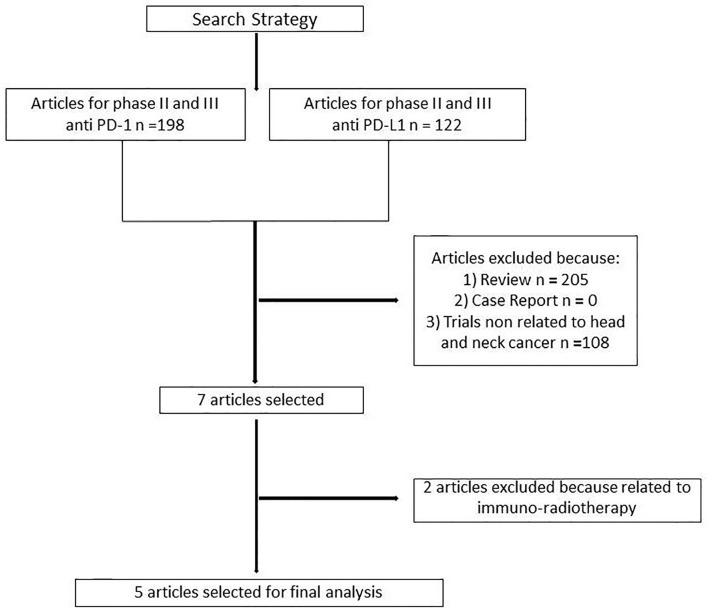
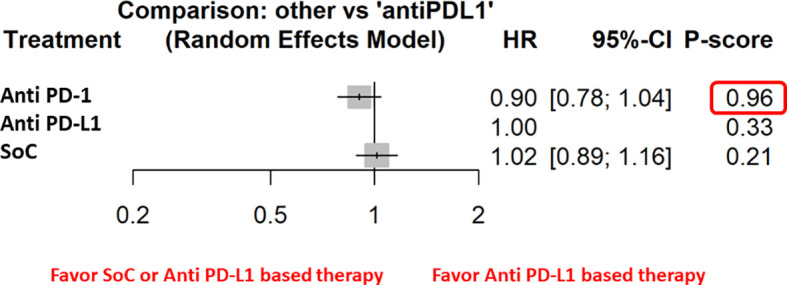
Methods: We did a systematic literature review and network meta-analysis (NMA) of randomized controlled trials (RCTs) in PubMed, ClinicalTrials.gov, Embase, Medline, the Cochrane Central Register of Controlled Trials, Web of Science. Our search identified a total of five randomized controlled trials: Keynote 040, Keynote 048, Eagle, Condor, Checkmate 141. These trials included 3001 patients. Treatment was sub-categorized into PD-L1-based, PD-1-based, and standard chemotherapy. Treatments were indirectly compared with anti-PD-L1-based therapy.
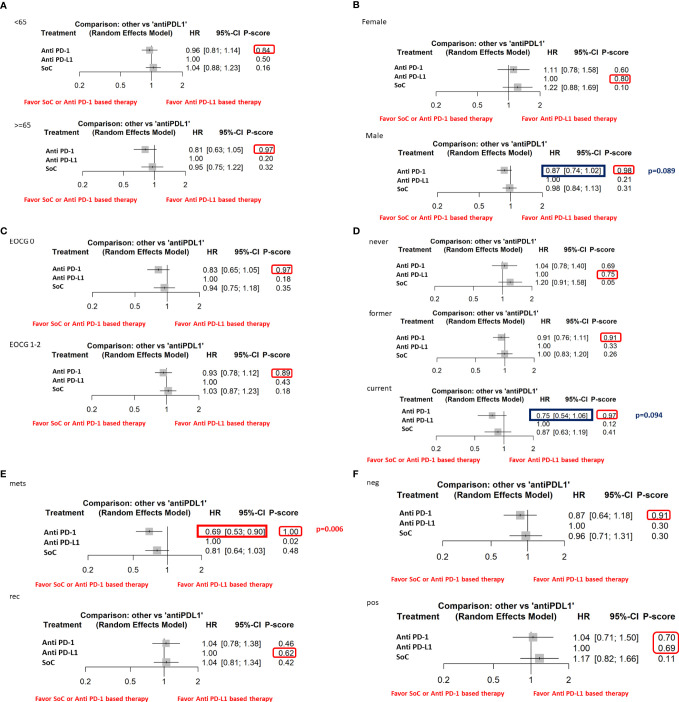
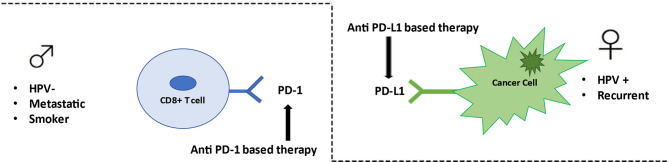
Results: The network meta-analysis demonstrated no significant differences in OS between different subgroups except for the metastatic patients in which anti-PD-1-based therapy was associated with significantly less risk of death. Furthermore, anti-PD-1-based therapy appeared to be effective in smoker patients and in human papilloma-negative (HPV) patients. Conversely, anti-PD-L1-based therapy seems to be better efficient in female patients, in locally recurrent setting and in HPV positive patients.
Conclusion: This is the first NMA study that aimed to indirectly compare anti-PD-1- and anti-PD-L1-based therapy in HNSCC patients. The results of our NMA could help define a profile of patient responder or resistant to specific classes of immune drugs and can be used to guide/design future studies in the novel scenario of precision immune-oncology.
Keywords: anti–PD-1; anti–PD-L1; immunotherapy; metastatic head and neck cancer; network meta-analysis.
Copyright © 2021 Botticelli, Cirillo, Strigari, Valentini, Cerbelli, Scagnoli, Cerbelli, Zizzari, Rocca, D’Amati, Polimeni, Nuti, Merlano, Mezi and Marchetti.
Conflict of interest statement
PM has/had a consultant/advisory role for BMS, RocheGenentech, MSD, Novartis, Amgen, Merck Serono, Pierre Fabre, and Incyte. The remaining authors declare that the research was conducted in the absence of any commercial or financial relationships that could be construed as a potential conflict of interest.
Figures
References
Publication types
MeSH terms
Substances
LinkOut - more resources
Full Text Sources
Other Literature Sources
Medical
Research Materials
