


Acid-Sensing Ion Channels in Zebrafish
- PMID: 34438928
- PMCID: PMC8388743
- DOI: 10.3390/ani11082471
Acid-Sensing Ion Channels in Zebrafish
Abstract
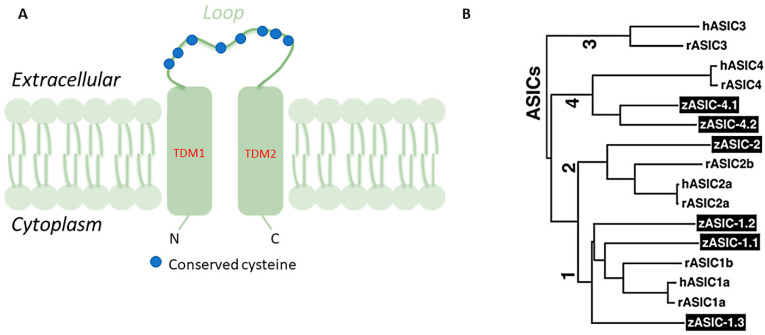
The ASICs, in mammals as in fish, control deviations from the physiological values of extracellular pH, and are involved in mechanoreception, nociception, or taste receptions. They are widely expressed in the central and peripheral nervous system. In this review, we summarized the data about the presence and localization of ASICs in different organs of zebrafish that represent one of the most used experimental models for the study of several diseases. In particular, we analyzed the data obtained by immunohistochemical and molecular biology techniques concerning the presence and expression of ASICs in the sensory organs, such as the olfactory rosette, lateral line, inner ear, taste buds, and in the gut and brain of zebrafish.
Keywords: ASICs; brain; gills; gut; ion channels; sensory organs; zebrafish.
Conflict of interest statement
The authors declare no conflict of interest.
Figures
References
-
- Kress M., Waldmann R. Current Topics in Membranes. Volume 57. Academic Press; Cambridge, MA, USA: 2006. Chapter 8 Acid Sensing Ionic Channels; pp. 241–276.
Publication types
LinkOut - more resources
Full Text Sources
