


Impact of Drying Processes on the Nutritional Composition, Volatile Profile, Phytochemical Content and Bioactivity of Salicornia ramosissima J. Woods
- PMID: 34439560
- PMCID: PMC8389250
- DOI: 10.3390/antiox10081312
Impact of Drying Processes on the Nutritional Composition, Volatile Profile, Phytochemical Content and Bioactivity of Salicornia ramosissima J. Woods
Abstract
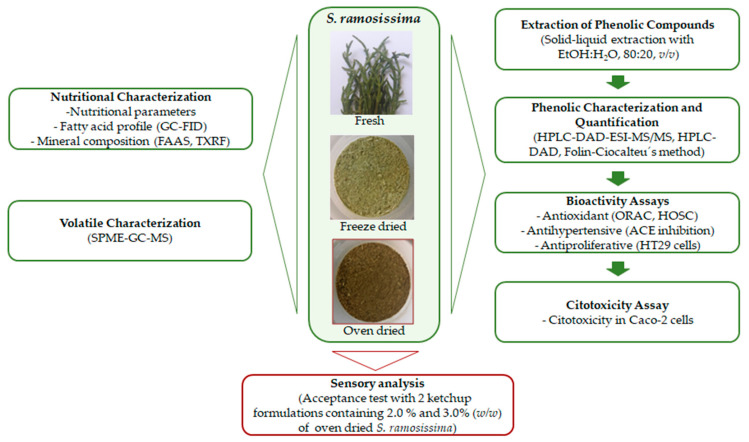
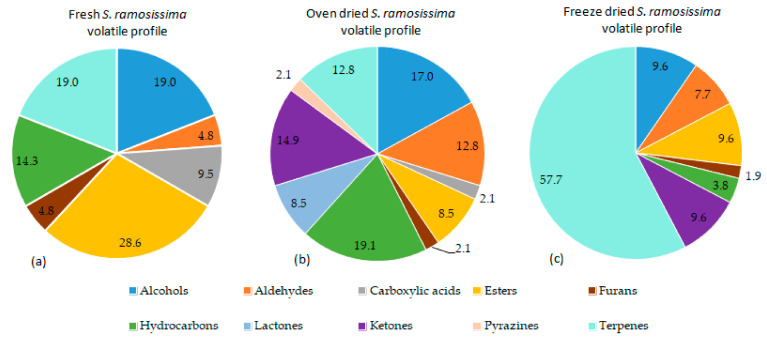
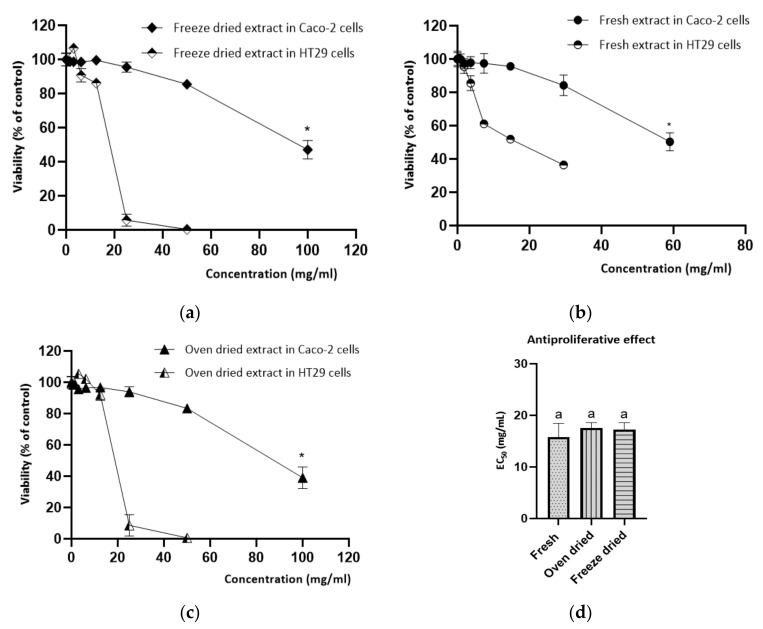
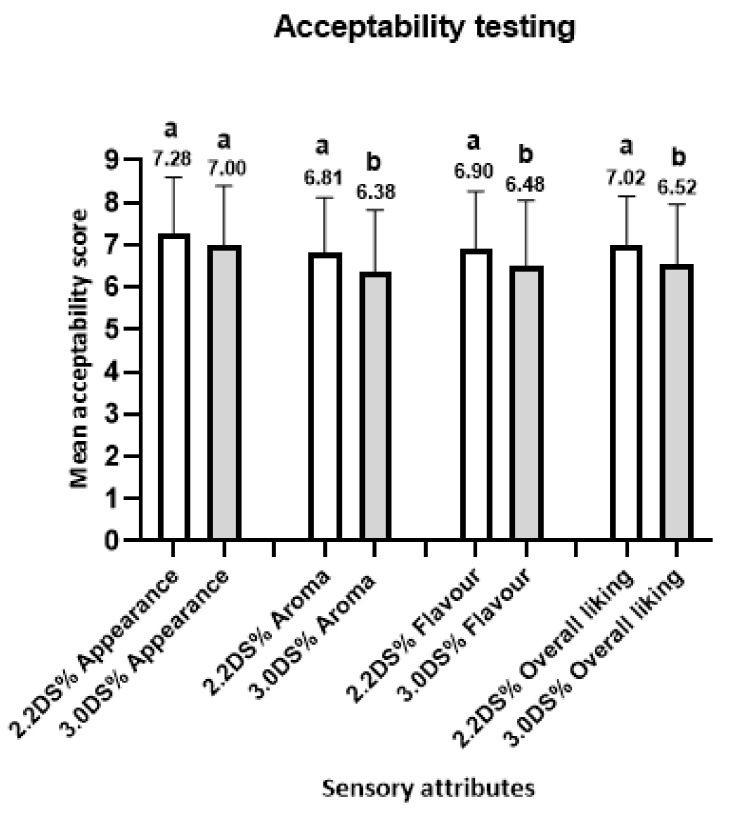
Salicornia ramosissima J. Woods is a halophyte plant recognized as a promising natural ingredient and will eventually be recognized a salt substitute (NaCl). However, its shelf-life and applicability in several food matrices requires the use of drying processes, which may have an impact on its nutritional and functional value. The objective of this study was to evaluate the effect of oven and freeze-drying processes on the nutritional composition, volatile profile, phytochemical content, and bioactivity of S. ramosissima using several analytical tools (LC-DAD-ESI-MS/MS and SPME-GC-MS) and bioactivity assays (ORAC, HOSC, and ACE inhibition and antiproliferative effect on HT29 cells). Overall, results show that the drying process changes the chemical composition of the plant. When compared to freeze-drying, the oven-drying process had a lower impact on the nutritional composition but the phytochemical content and antioxidant capacity were significantly reduced. Despite this, oven-dried and freeze-dried samples demonstrated similar antiproliferative (17.56 mg/mL and 17.24 mg/mL, respectively) and antihypertensive (24.56 mg/mL and 18.96 mg/mL, respectively) activities. The volatile composition was also affected when comparing fresh and dried plants and between both drying processes: while for the freeze-dried sample, terpenes corresponded to 57% of the total peak area, a decrease to 17% was observed for the oven-dried sample. The oven-dried S. ramosissima was selected to formulate a ketchup and the product formulated with 2.2% (w/w) of the oven-dried plant showed a good consumer acceptance score. These findings support the use of dried S. ramosissima as a promising functional ingredient that can eventually replace the use of salt.
Keywords: antioxidants; flavonoids; hypertension; minerals; volatile compounds.
Conflict of interest statement
The authors declare no conflict of interest.
Figures
References
-
- Panta S., Flowers T., Lane P., Doyle R., Haros G., Shabala S. Halophyte agriculture: Success stories. Environ. Exp. Bot. 2014;107:71–83. doi: 10.1016/j.envexpbot.2014.05.006. - DOI
-
- Duarte B., Santos D., Marques J.C., Caçador I. Ecophysiological adaptations of two halophytes to salt stress: Photosynthesis, PS II photochemistry and anti-oxidant feedback—Implications for resilience in climate change. Plant Physiol. Biochem. 2013;67:178–188. doi: 10.1016/j.plaphy.2013.03.004. - DOI - PubMed
-
- Pedro C.A., Santos M.S.S., Ferreira S.M.F., Gonçalves S.C. The influence of cadmium contamination and salinity on the survival, growth and phytoremediation capacity of the saltmarsh plant Salicornia ramosissima. Mar. Environ. Res. 2013;92:197–205. doi: 10.1016/j.marenvres.2013.09.018. - DOI - PubMed
Grants and funding
LinkOut - more resources
Full Text Sources
Other Literature Sources
Miscellaneous
