. 2021 Aug 13;11(8):1206.
doi: 10.3390/biom11081206.

Sex-Biased Expression of Pharmacogenes across Human Tissues

Affiliations

Sex-Biased Expression of Pharmacogenes across Human Tissues

Maria Laura Idda et al. Biomolecules. .

Abstract

Individual response to drugs is highly variable and largely influenced by genetic variants and gene-expression profiles. In addition, it has been shown that response to drugs is strongly sex-dependent, both in terms of efficacy and toxicity. To expand current knowledge on sex differences in the expression of genes relevant for drug response, we generated a catalogue of differentially expressed human transcripts encoded by 289 genes in 41 human tissues from 838 adult individuals of the Genotype-Tissue Expression project (GTEx, v8 release) and focused our analysis on relevant transcripts implicated in drug response. We detected significant sex-differentiated expression of 99 transcripts encoded by 59 genes in the tissues most relevant for human pharmacology (liver, lung, kidney, small intestine terminal ileum, skin not sun-exposed, and whole blood). Among them, as expected, we confirmed significant differences in the expression of transcripts encoded by the cytochromes in the liver, CYP2B6, CYP3A7, CYP3A5, and CYP1A1. Our systematic investigation on differences between male and female in the expression of drug response-related genes, reinforce the need to overcome the sex bias of clinical trials.

Keywords: drug metabolism; pharmacogenes; sex differences; sex-bias; transcripts.


Conflict of interest statement

The authors declare no conflict of interest.

Figures
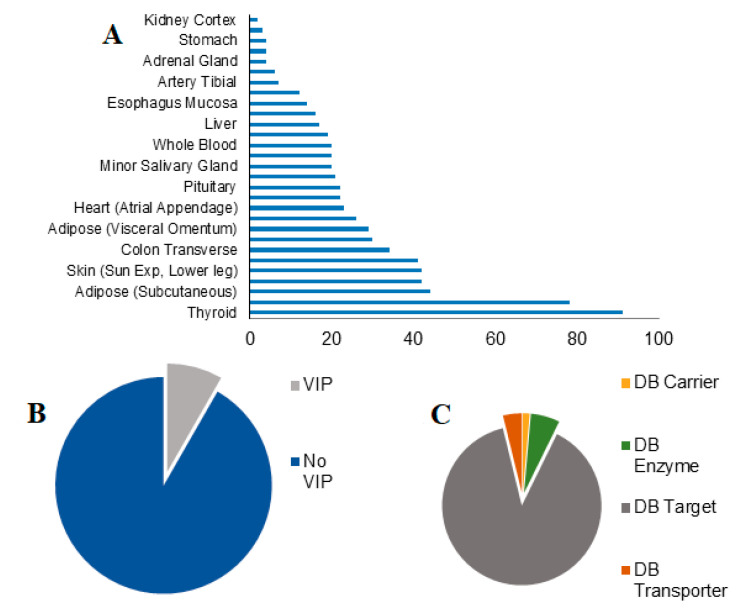
Figure 1
Figure 1
Sex-differential gene expression in pharmacogenes. (A) The number of sex-biased drug response genes (SBDR) identified per tissue (FDR < 0.05) are indicated. (B) Proportions of VIP and no VIP genes identified according to the PharmGKB classification. (C) Proportions of drug target, transporter, carrier, and enzymes identified according to DrugBank classification.
Figure 2
Figure 2
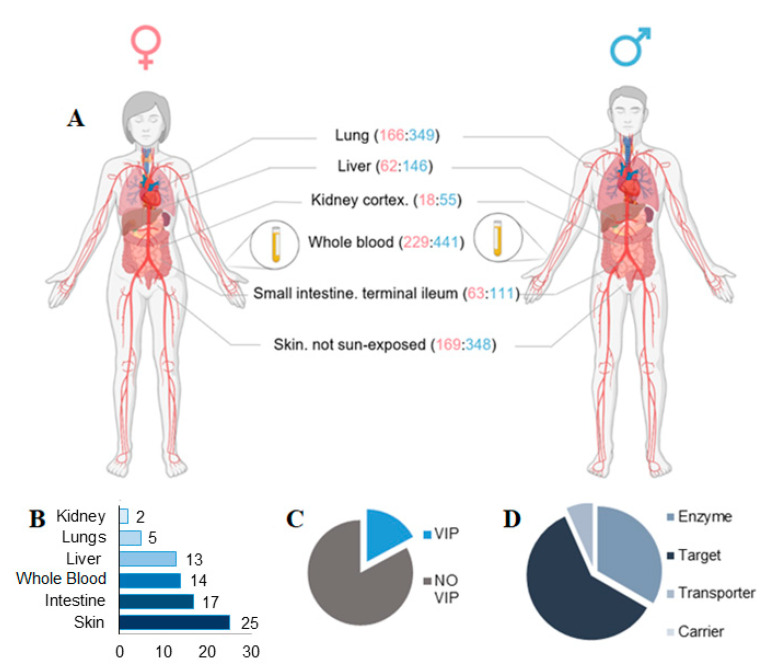
Sex-biases pharmacogenes identified in key tissue implicate in drug metabolism. (A) Tissue types relevant for drug metabolism are indicated, with sample numbers from GTEx v8 genotyped donors (females:males, in parentheses). (B) The number of SBDR identified in each tissue relevant for drug metabolism is indicated (FDR < 0.05). (C) Proportions of VIP genes and (D) drug target, transporter, carrier, and enzymes identified according to PharmGKB and DrugBank classification are indicate respectively. Panel A is created with BioRender.com.
Figure 3
Figure 3
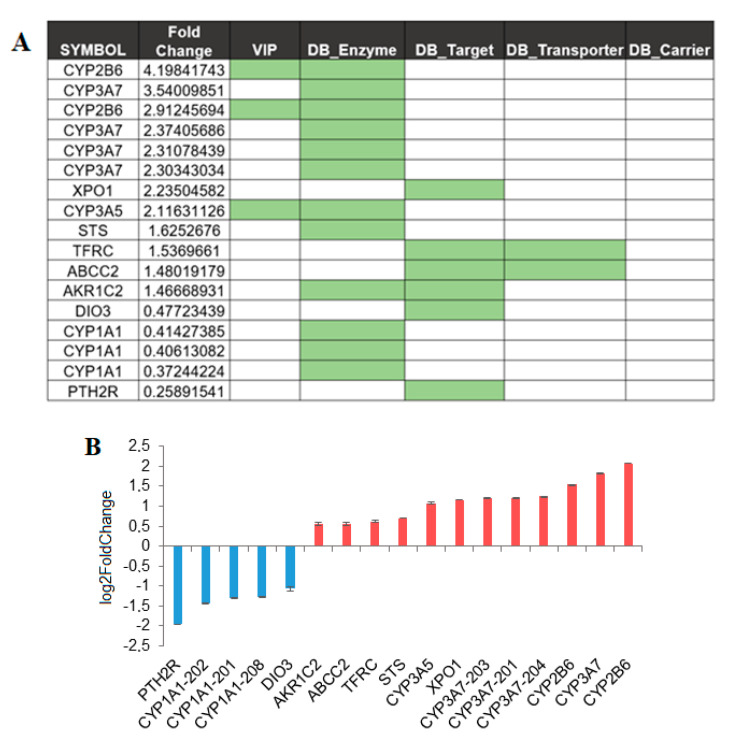
Sex affects gene expression in the liver. (A) SBDR transcript identified in liver, fold changes in female as compared to male are indicated. Transcripts that belong to one of the classes analyzed in this work, VIP and drug target, transporter, carrier, and enzymes are highlighted. (B) Transcripts showing differential abundance, which is at least 40% of up- or downregulation in females compared to males, were plotted.
Figure 4
Figure 4
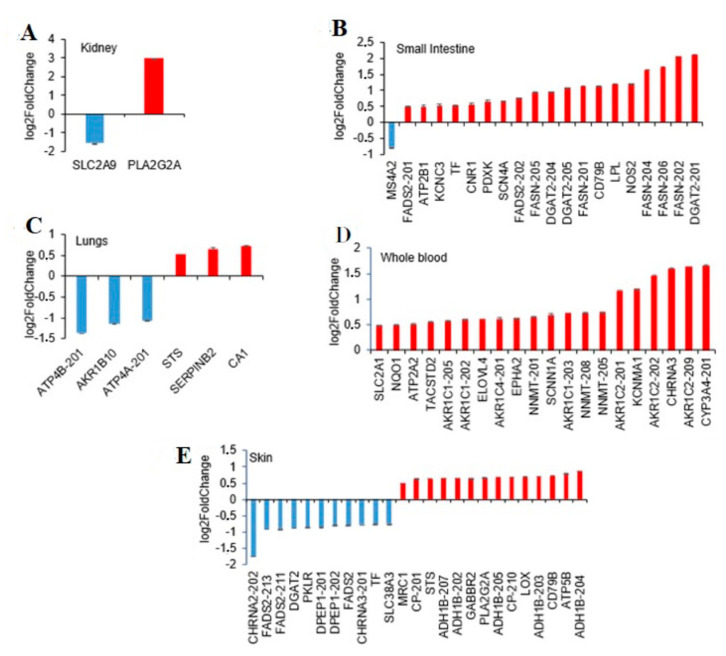
Sex-differential gene expression of pharmacogenes in relevant tissue for drug metabolism. Transcripts showing differential abundance, which are at least 40% of up- or downregulated in females compared to males, were plotted for the most relevant tissue implicated in drug metabolism. (A) Kidney. (B) Small intestine, terminal ileum. (C) Lungs. (D) Whole blood. (E) Skin, not exposed sun.

References

    1. Akhondzadeh S. Personalized Medicine: A Tailor Made Medicine. Avicenna J. Med. Biotechnol. 2014;6:191. - PMC - PubMed
    1. Sim S.C., Kacevska M., Ingelmansundberg M. Pharmacogenomics of drug-metabolizing enzymes: A recent update on clinical implications and endogenous effects. Pharmacogenom. J. 2013;13:1–11. doi: 10.1038/tpj.2012.45. - DOI - PubMed
    1. EUGenMed Cardiovascular Clinical Study Group. Regitz-Zagrosek V., Oertelt-Prigione S., Prescott E., Franconi F., Gerdts E., Foryst-Ludwig A., Maas A.H., Kautzky-Willer A., Knappe-Wegner D., et al. Gender in Cardiovascular Diseases: Impact on Clinical Manifestations, Management, and Outcomes. Eur. Heart J. 2016;37:24–34. - PubMed
    1. Franconi F., Campesi I. Sex Impact on Biomarkers, Pharmacokinetics and Pharmacodynamicsv. Curr. Med. Chem. 2017;24:2561–2575. doi: 10.2174/0929867323666161003124616. - DOI - PubMed
    1. Yang L., Li Y., Hong H., Chang C.W., Guo L.W., Lyn-Cook B., Shi L., Ning B. Sex Differences in the Expression of Drug-Metabolizing and Transporter Genes in Human Liver. J. Drug Metab. Toxicol. 2012;3:1000119. doi: 10.4172/2157-7609.1000119. - DOI - PMC - PubMed

Substances

LinkOut - more resources