Review
. 2021 Aug 12;11(8):1455.
doi: 10.3390/diagnostics11081455.

Uterine Fibroids and Infertility

Affiliations
Review

Uterine Fibroids and Infertility

Damaris Freytag et al. Diagnostics (Basel). .

Abstract

Infertility is a disease of the reproductive system defined by the failure to achieve a clinical pregnancy after 12 months or more of regular unprotected sexual intercourse. Uterine fibroids are the most common tumor in women, and their prevalence is high in patients with infertility. Fibroids may be the sole cause of infertility in 2-3% of women. Depending on their location in the uterus, fibroids have been implicated in recurrent pregnancy loss as well as infertility. Pregnancy and live birth rates appear to be low in women with submucosal fibroids; their resection has been shown to improve pregnancy rates. In contrast, subserosal fibroids do not affect fertility outcomes and their removal does not confer any benefit. Intramural fibroids appear to reduce fertility, but recommendations concerning their treatment remain unclear. Myomectomy should be discussed individually with the patient; other potential symptoms such as dysmenorrhea or bleeding disorders should be included in the indication for surgery.

Keywords: hysteroscopy; implantation; infertility; laparoscopy; pregnancy rates; uterine fibroids.


Conflict of interest statement

The authors declare no conflict of interest.

Figures
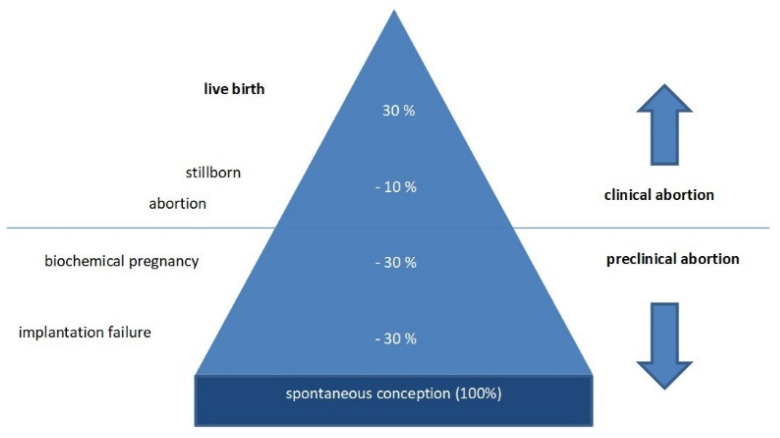
Figure 1
Figure 1
Human reproduction is an inefficient process. Only about 30% of conceptions (100%) result in a live birth. (modified according to [3]).
Figure 2
Figure 2
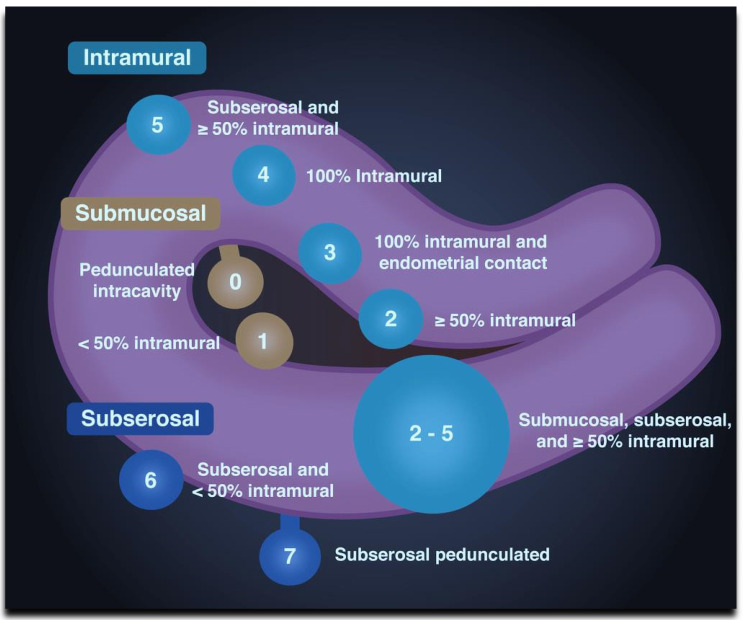
The International Federation of Gynecology and Obstetrics (FIGO) uses the above-depicted classification system of fibroids, organized according to the location between the submucosal, intramural, and subserosal layers of the uterus (modified according to Dr. Sachintha Hapugoda, Radiopaedia, Australia).
Figure 3
Figure 3
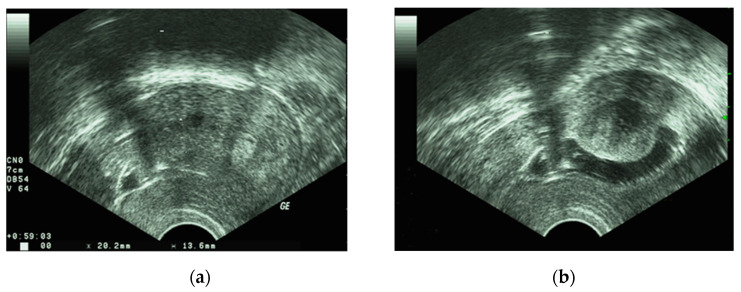
(a) fibroid on 2D ultrasound; (b) fibroid on hysterosonography.
Figure 4
Figure 4
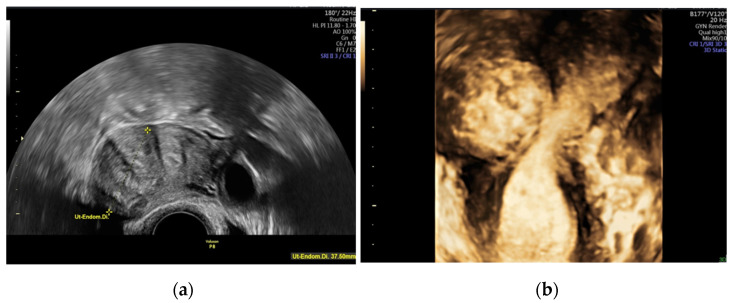
Presentation of an intramural myoma, affecting the cavum uteri, (a) with regular 2D vaginal ultrasound on the left-hand side and (b) with 3D vaginal ultrasound on the right-hand side.
Figure 5
Figure 5
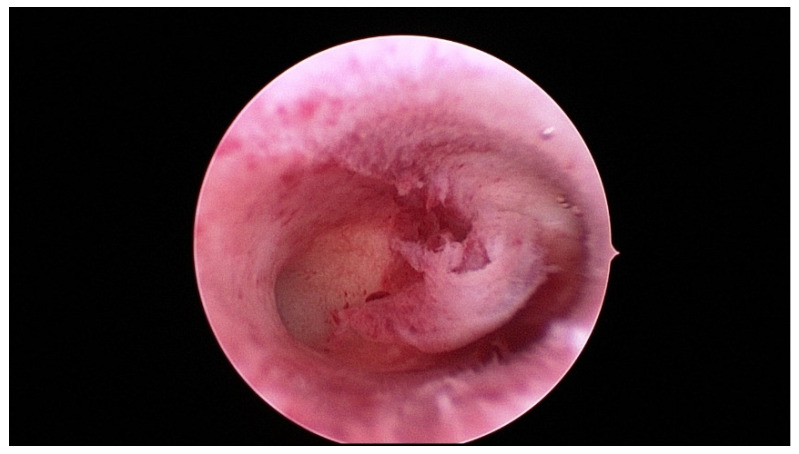
Hysteroscopic view of an inconspicuous cavum uteri with raised endometrium in the middle.
Figure 6
Figure 6
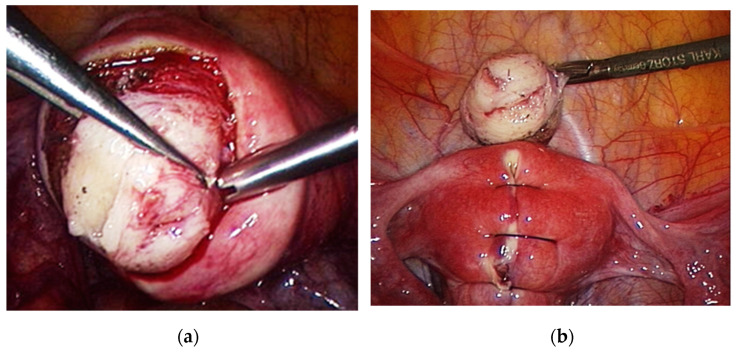
(a) laparoscopic enucleation of a fibroid with (b) reconstruction of the uterine wall.

References

    1. Nowak I., Wilczyńska K., Wilczyński J.R., Malinowski A., Radwan P., Radwan M., Kuśnierczyk P. KIR, LILRB and their Ligands’ Genes as Potential Biomarkers in Recurrent Implantation Failure. Arch. Immunol. Ther. Exp. 2017;65:391–399. doi: 10.1007/s00005-017-0474-6. - DOI - PMC - PubMed
    1. Zegers-Hochschild F., Adamson G.D., de Mouzon J., Ishihara O., Mansour R., Nygren K., Sullivan E., van der Poel S., on behalf of ICMART and WHO International Committee for Monitoring Assisted Reproductive Technology (ICMART) and the World Health Organization (WHO) revised glossary of ART terminology, 2009. Hum. Reprod. 2009;92:1520–1524. - PubMed
    1. Macklon N.S., Geraedts J.P., Fauser B.C. Conception to ongoing pregnancy: The ‘black box’ of early pregnancy loss. Hum. Reprod. Update. 2002;8:333–343. doi: 10.1093/humupd/8.4.333. - DOI - PubMed
    1. Coughlan C., Ledger W., Wang Q., Liu F., Demirol A., Gurgan T., Cutting R., Ong K., Sallam H., Li T.C. Recurrent implantation failure: Definition and management. Reprod. Biomed. Online. 2014;28:14–38. doi: 10.1016/j.rbmo.2013.08.011. - DOI - PubMed
    1. Koot Y.E., Teklenburg G., Salker M.S., Brosens J.J., Macklon N.S. Molecular aspects of implantation failure. Biochim. Biophys. Acta. 2012;1822:1943–1950. doi: 10.1016/j.bbadis.2012.05.017. - DOI - PubMed

LinkOut - more resources