Review
. 2021 Jul 30;9(8):969.
doi: 10.3390/healthcare9080969.

Recent Trends in Sedentary Time: A Systematic Literature Review

Affiliations
Review

Recent Trends in Sedentary Time: A Systematic Literature Review

Hui Fang et al. Healthcare (Basel). .

Abstract

This paper systematically reviews and synthesizes the relevant literature on sedentary time research. A bibliometric analysis was conducted to evaluate the publications from 2010 to 2020 in the Web of Science (WoS) core collection database. Derwent Data Analyzer software was used for the cleaning, mining, and visualization of the data. Historical trends of the topics, main contributors, leading countries, leading institutions, leading research areas, and journals were explored. A total of 3020 publications were studied. The United States, the United Kingdom, and Australia are the three most productive countries. The Australian institution Baker Heart and Diabetes Institute led the list of productive institutions, and Ekelund U published the most papers. Sedentary time raised the concerns of scholars from 106 research areas, and public health was the dominant field. Physical activity, accelerometer, children, and obesity were the most frequently used keywords. The findings suggest that sedentary time is rapidly emerging as a global issue that has detrimental effects on public health. The hotspots shifted in the past 10 years, and COVID-19 was the most popular topic of sedentary time research.

Keywords: COVID-19; bibliometric; children; physical activity; sedentary time.


Conflict of interest statement

The authors declare no conflict of interest.

Figures
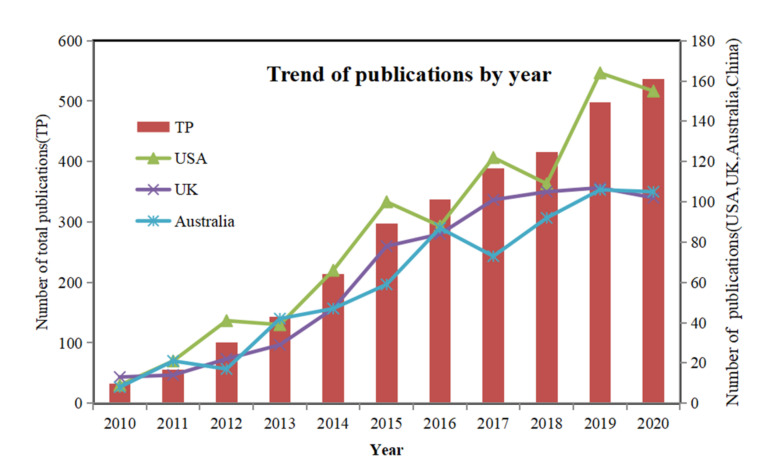
Figure 1
Figure 1
Trends in the number of published articles related to sedentary time by year.
Figure 2
Figure 2
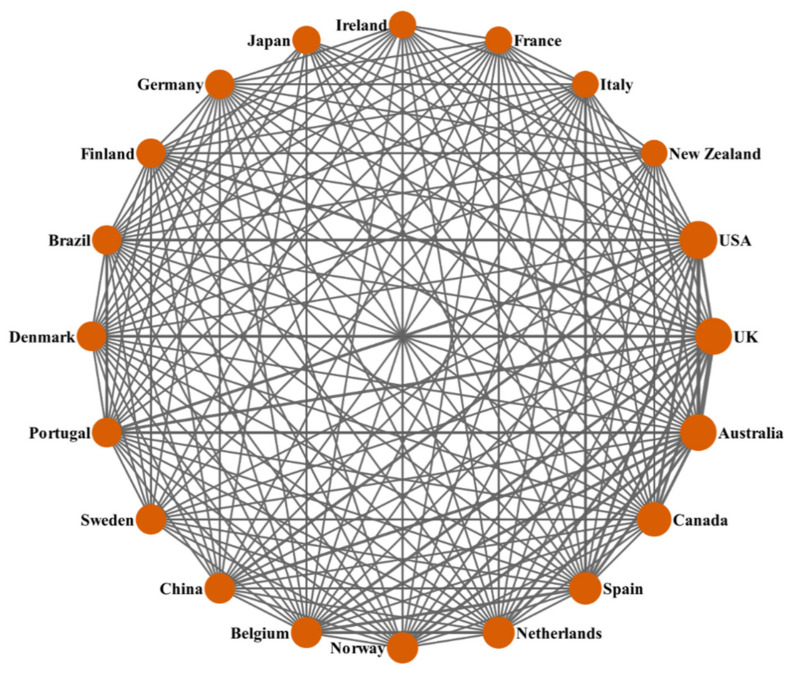
Collaboration matrix map among the top 20 productive countries/regions.
Figure 3
Figure 3
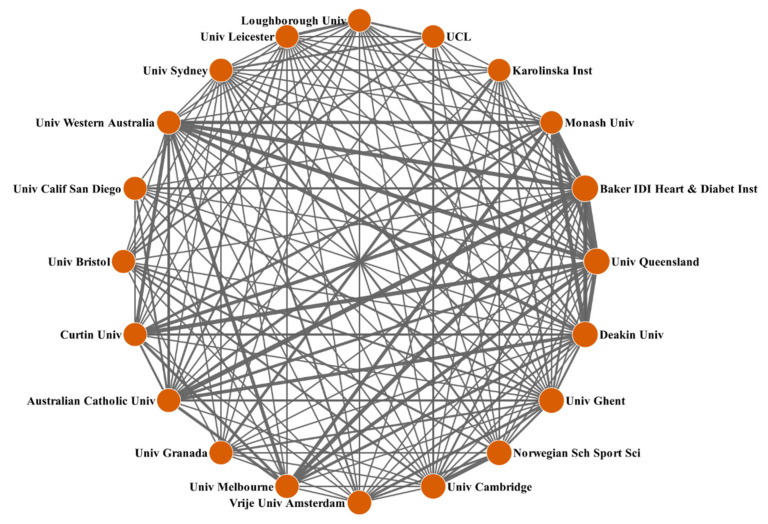
Collaboration matrix map among the top 20 productive institutions.
Figure 4
Figure 4
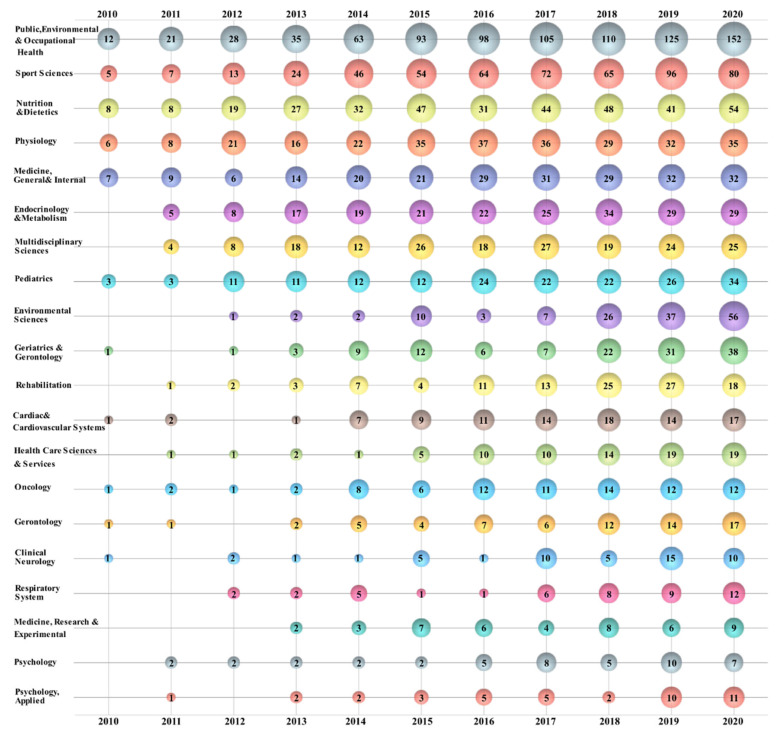
Bubble chart of top 20 sedentary time research areas.
Figure 5
Figure 5
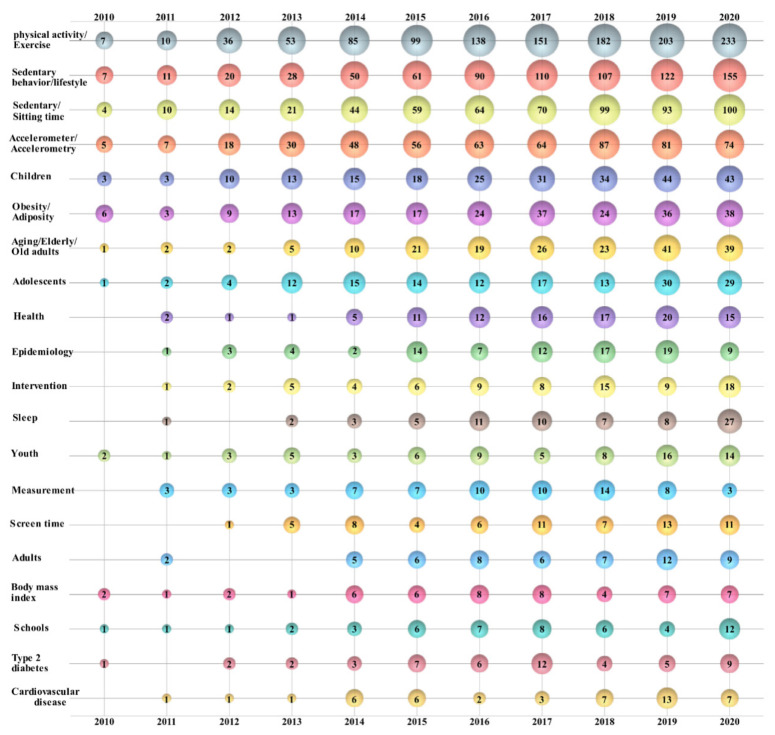
Bubble chart of the top 20 author keywords by year.
Figure 6
Figure 6
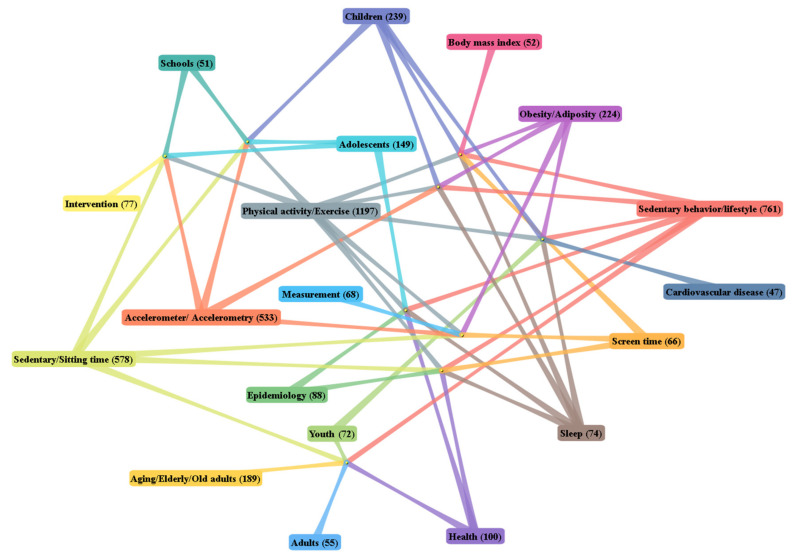
DDA cluster map of the top 20 author keywords.

References

    1. Maher C.A., Williams M., Olds T., Lane A. Physical and sedentary activity in adolescents with cerebral palsy. Dev. Med. Child Neurol. 2007;49:450–457. doi: 10.1111/j.1469-8749.2007.00450.x. - DOI - PubMed
    1. Owen N., Bauman A., Brown W.J. Too much sitting: A novel and important predictor of chronic disease risk? Br. J. Sports Med. 2008;43:81–83. doi: 10.1136/bjsm.2008.055269. - DOI - PubMed
    1. Yin X., Chen M., He R., Wu S., Xia H., Xie F., Wang H. Association of leisure sedentary time with common chronic disease risk factors: A longitudinal study of China Health and Nutrition Surveys. Int. J. Health Plan. Manag. 2021;36:100–112. doi: 10.1002/hpm.3070. - DOI - PubMed
    1. Chappel S.E., Aisbett B., Considine J., Ridgers N.D. Bidirectional associations between emergency nurses’ occupational and leisure physical activity: An observational study. J. Sports Sci. 2021;39:705–713. doi: 10.1080/02640414.2020.1841921. - DOI - PubMed
    1. Prince S.A., Roberts K.C., Melvin A., Butler G.P., Thompson W. Gender and education differences in sedentary behaviour in Canada: An analysis of national cross-sectional surveys. BMC Public Health. 2020;20:1170. doi: 10.1186/s12889-020-09234-y. - DOI - PMC - PubMed

LinkOut - more resources