. 2021 Aug 6;9(8):1673.
doi: 10.3390/microorganisms9081673.

Variation in Sodic Soil Bacterial Communities Associated with Different Alkali Vegetation Types

Affiliations

Variation in Sodic Soil Bacterial Communities Associated with Different Alkali Vegetation Types

Andrea K Borsodi et al. Microorganisms. .

Abstract

In this study, we examined the effect of salinity and alkalinity on the metabolic potential and taxonomic composition of microbiota inhabiting the sodic soils in different plant communities. The soil samples were collected in the Pannonian steppe (Hungary, Central Europe) under extreme dry and wet weather conditions. The metabolic profiles of microorganisms were analyzed using the MicroResp method, the bacterial diversity was assessed by cultivation and next-generation amplicon sequencing based on the 16S rRNA gene. Catabolic profiles of microbial communities varied primarily according to the alkali vegetation types. Most members of the strain collection were identified as plant associated and halophilic/alkaliphilic species of Micrococcus, Nesterenkonia, Nocardiopsis, Streptomyces (Actinobacteria) and Bacillus, Paenibacillus (Firmicutes) genera. Based on the pyrosequencing data, the relative abundance of the phyla Proteobacteria, Actinobacteria, Acidobacteria, Gemmatimonadetes and Bacteroidetes also changed mainly with the sample types, indicating distinctions within the compositions of bacterial communities according to the sodic soil alkalinity-salinity gradient. The effect of weather extremes was the most pronounced in the relative abundance of the phyla Actinobacteria and Acidobacteria. The type of alkali vegetation caused greater shifts in both the diversity and activity of sodic soil microbial communities than the extreme aridity and moisture.

Keywords: 16S rRNA gene; Pannonian steppe; bacterial diversity; catabolic activity; cultivation; pyrosequencing.


Conflict of interest statement

The authors declare no competing interests.

Figures
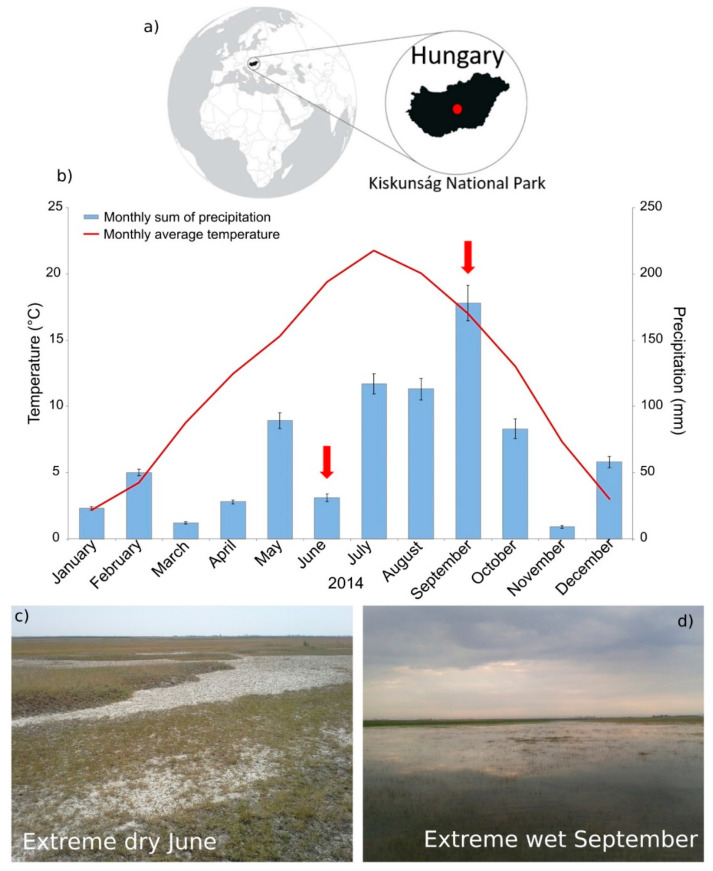
Figure 1
Figure 1
(a) Location of sampling sites in Europe and in the area of Kiskunság National Park, Hungary. The maps in the figure were redrawn after Anda et al. 2020 [18]. (b) Changes in weather conditions in the year of sampling based on monthly average air temperature (°C) and monthly sum of precipitation (mm) in the Pannonian steppe, Kiskunság NP, Hungary (Red arrows mark sampling dates.). Error bars show the standard deviations calculated from the daily differences of precipitations. Data obtained from the public database of the Hungarian Meteorological Services. Photos show the Puccinellia sward sampling site AP during (c) the extreme dry June and (d) the extreme wet September.
Figure 2
Figure 2
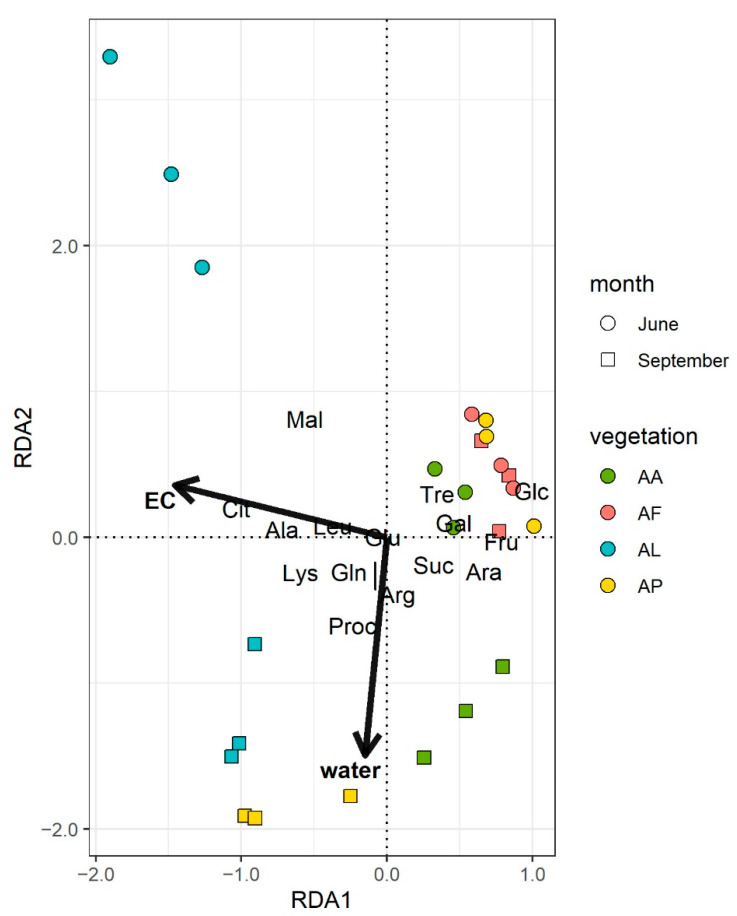
Redundancy analysis plot of the final model for the catabolic profiles. The lengths of arrows for environmental variables were multiplied by 1.5 for better visibility. (EC: electrical conductivity (µS cm−1), water: soil water content (m/m%). Sample identifiers are presented in Table 1). The meaning of the abbreviated substrate names are in the Materials and Methods in Section 2.4.
Figure 3
Figure 3
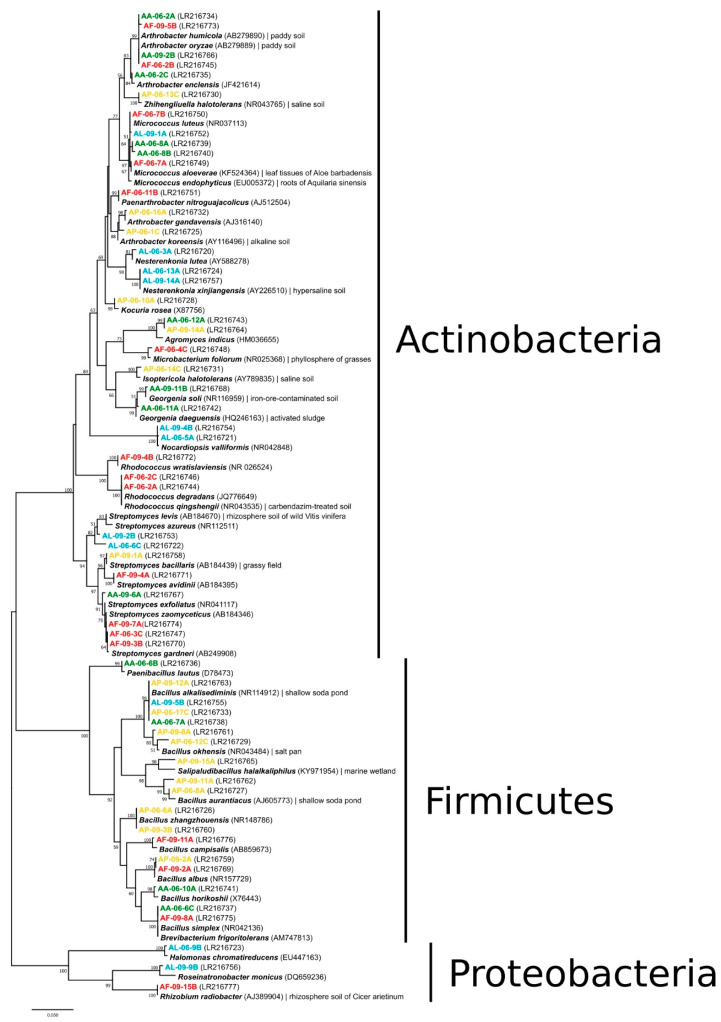
16S rRNA gene sequence-based phylogenetic relations of bacterial strains isolated from the sodic soil samples originated from different alkali vegetation types. GenBank accession numbers are given in parentheses. Only bootstrap values above 50% are shown (500 replications). Bar, 1 nucleotide substitution per 50 nucleotides. For color codes, see Figure 2.
Figure 4
Figure 4
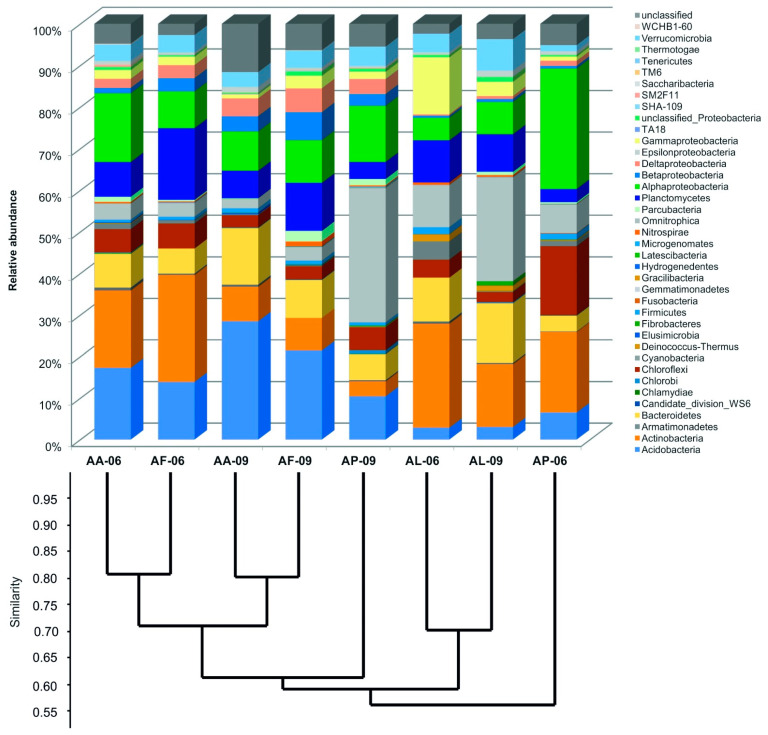
Percentage distribution of 16S rRNA gene amplicon sequences among recognized phyla and candidate divisions together with the results of Bray–Curtis similarity index-based cluster analysis created according to the distribution of OTUs in the sodic soil samples originated from different alkali vegetation. Sample identifiers are presented in Table 1.
Figure 5
Figure 5
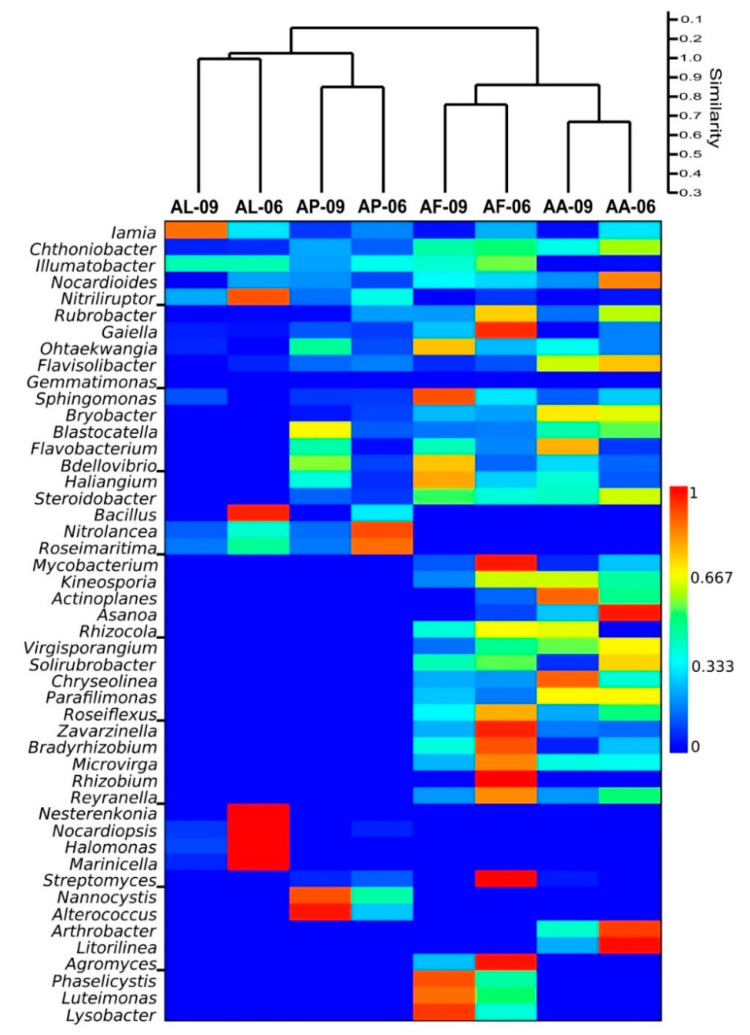
Similarity heatmap of the bacterial genera revealed from pyrosequencing among samples. Sampling sites are given in Table 1.
Figure 6
Figure 6
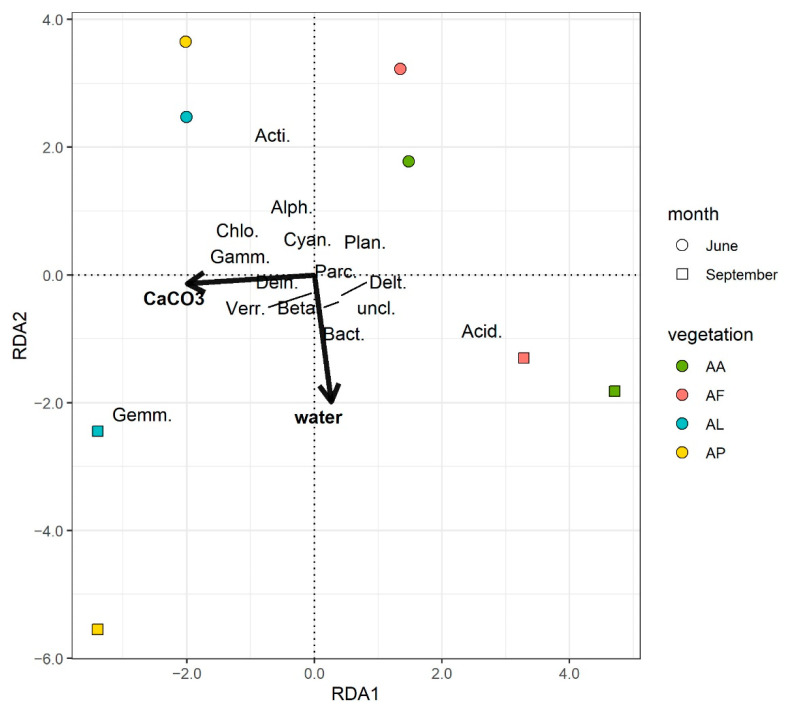
Redundancy analysis plot of the final model for the phylogenetic (NGS) data. All taxa were included in the analysis, but for better readability only those that had at least a 0.1 absolute value for both axes are depicted on the plot. The lengths of the arrows for the environmental variables were also doubled for visibility purposes. CaCO3: percentage of CaCO3, water: water content of the soil samples (m/m%), Acid.: Acidobacteria, Acti.:Actinobacteria, Bact.: Bacteriodetes, Chlo.: Chloroflexi, Cyan.: Cyanobacteria, Dein.: Deinococcue-Thermus, Gemm.: Gemmatoidetes, Parc.: Parcubacteria, Plan.: Planctomycetes, Alph.: Alphaproteobacteria, Beta.: Betaproteobacteria, Delt.: Deltaproteobacteria, Gamm.: Gammaproteobacteria, Verr.: Verrucomicrobia, uncl.: Unclassified bacteria.

References

    1. Flowers T.J., Muscolo A. Introduction to the special issue: Halophytes in a changing world. AoB Plants. 2015;7:1–5. doi: 10.1093/aobpla/plv020. - DOI - PMC - PubMed
    1. IUSS Working Group . World Reference Base for Soil Resources. FAO; Rome, Italy: 2015. [(accessed on 3 August 2021)]. International soil classification system for naming soils and creating legends for soil maps. Available online: http://www.fao.org/3/i3794en/I3794en.pdf.
    1. Dagar J.C., Yadav R.K., Singh A., Singh N.T. Historical Perspectives and Dynamics of Nature, Extent, Classification and Management of Salt-affected Soils and Waters. In: Dagar J.C., Yadav R.K., Sharma P.C., editors. Research Developments in Saline Agriculture. Springer; Singapore: 2019. pp. 3–52. - DOI
    1. Mukhtar S., Malik K.A., Mehnaz S. Microbiome of Halophytes: Diversity and Importance for Plant Health and Productivity. Microbiol. Biotechnol. Lett. 2019;47:1–10. doi: 10.4014/mbl.1804.04021. - DOI
    1. Parida A.K., Das A.B. Salt tolerance and salinity effects on plants: A review. Ecotoxicol. Environ. Saf. 2005;60:324–349. doi: 10.1016/j.ecoenv.2004.06.010. - DOI - PubMed

LinkOut - more resources