


Conservative and Surgical Treatment of Talar Fractures: A Systematic Review and Meta-Analysis on Clinical Outcomes and Complications
- PMID: 34444022
- PMCID: PMC8393919
- DOI: 10.3390/ijerph18168274
Conservative and Surgical Treatment of Talar Fractures: A Systematic Review and Meta-Analysis on Clinical Outcomes and Complications
Abstract
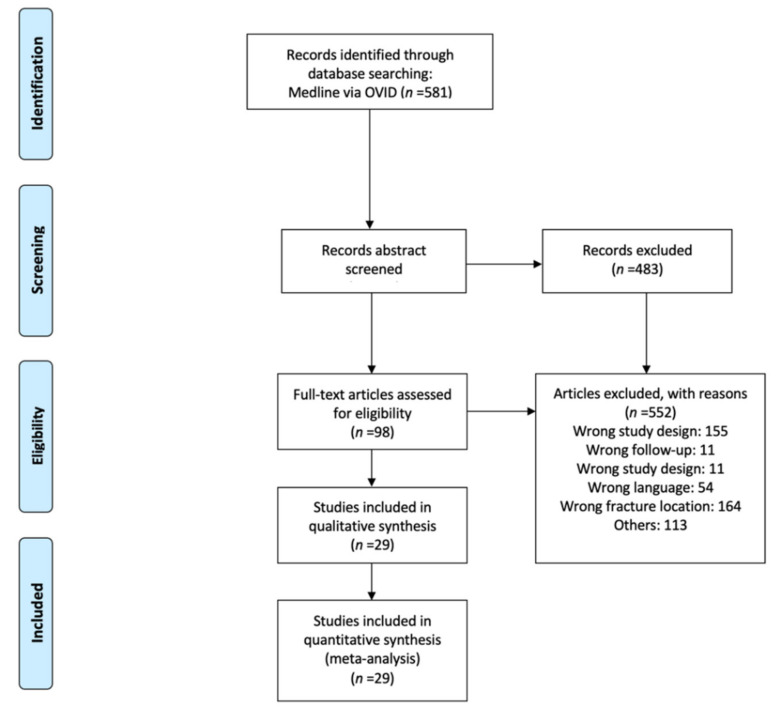
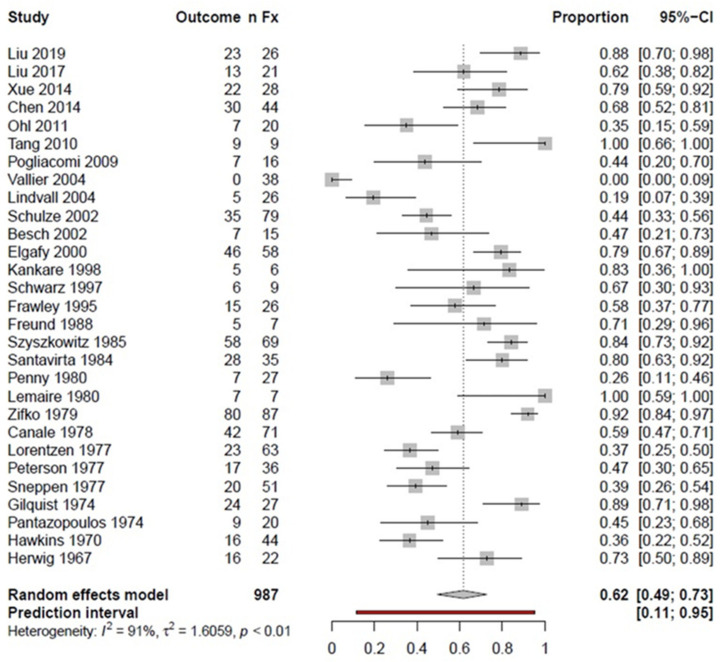
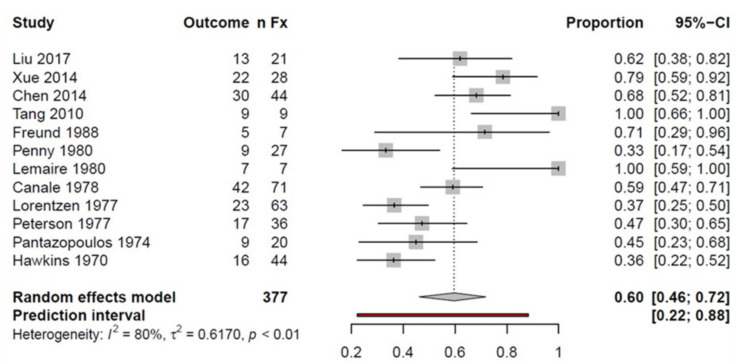
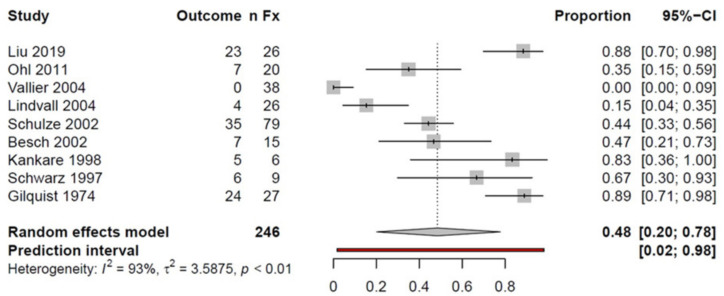
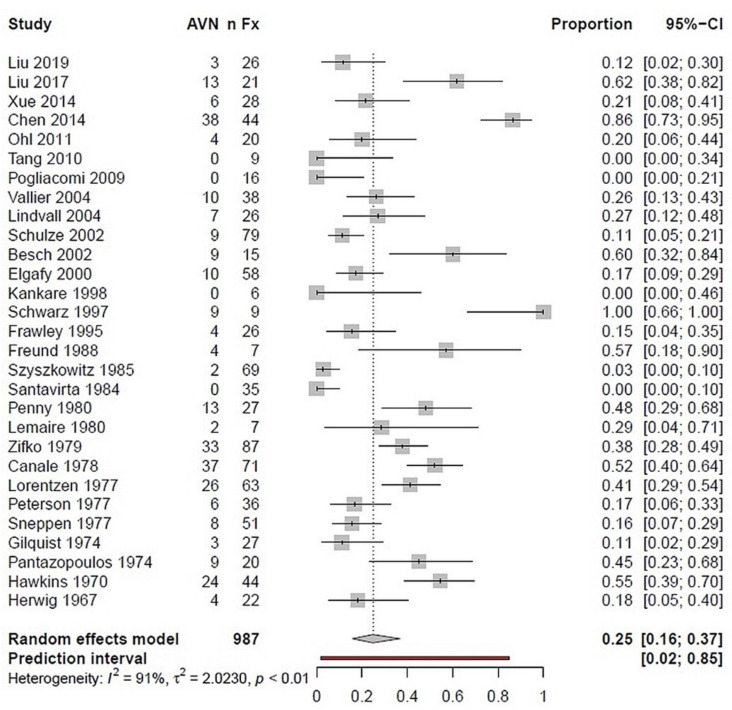
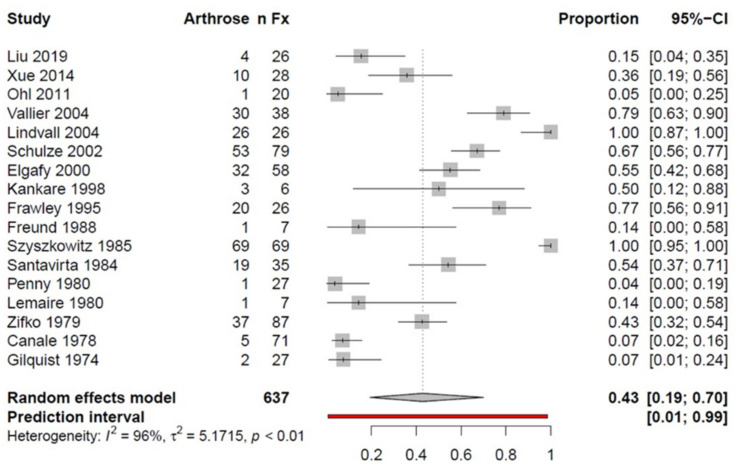
The integrity of the talus is crucial for the physiologic function of the feet. The present study sought to summarize the available evidence on clinical outcomes and complications following conservative and surgical treatment of talar fractures. We systematically searched Medline via OVID to find relevant studies with a follow-up of at least six months. Hereafter, the success and complication rates were extracted and analyzed in a random effects proportion meta-analysis. Complications were defined as avascular bone necrosis (AVN) and posttraumatic osteoarthritis (OA). Additionally, a subgroup analysis was performed for fracture localization (talar neck fractures (TN) and combined talar body/neck fractures (TN/TB)) and severity of the fracture. The quality of the included studies was assessed utilizing the Coleman Methodology Score (CMS). A total of 29 retrospective studies, including 987 fractures with a mean follow-up of 49.9 months, were examined. Success rates were 62%, 60%, and 50% for pooled fractures, TN, and TN/TB, respectively. The overall complication rate for AVN was 25%. The rate was higher for TN (43%) than TN/TB (25%). Talar fractures revealed a 43% posttraumatic osteoarthritis (OA) rate in our meta-analysis. Success rates showed an association with fracture severity, and were generally low in complex multi-fragmentary fractures. The mean CMS was 34.3 (range: 19-47), indicating a moderate methodological quality of the studies. The present systematic review on clinical outcomes of patients undergoing conservative or surgical treatment for talar fractures reveals a lack of reliable prospective evidence. Talar fractures are associated with relatively poor postoperative outcomes, high rates of AVN, and posttraumatic osteoarthritis. Poor outcomes revealed a positive association with fracture severity. Prospective studies investigating predictors for treatment success and/or failure are urgently needed to improve the overall quality of life and function of patients undergoing surgical treatment due to talar fractures.
Keywords: ankle fractures; ankle injuries; osteoarthritis; osteonecrosis; systematic review; talus.
Conflict of interest statement
The authors declare no conflict of interest. The funders had no role in the design of the study, in the collection, analyses, or interpretation of data, in the writing of the manuscript, or in the decision to publish the results.
Figures
References
-
- Richter M., Zech S. Behandlung der Talusfraktur. OP J. 2007;23:104–109. doi: 10.1055/s-2007-991911. - DOI
-
- Zwipp H. Chirurgie des Fußes. Springer; Vienna, Hungary: 1994.
Publication types
MeSH terms
LinkOut - more resources
Full Text Sources
Medical
