Meta-Analysis
. 2021 Jul 22;13(8):2498.
doi: 10.3390/nu13082498.

The Effect of Amino Acids on Wound Healing: A Systematic Review and Meta-Analysis on Arginine and Glutamine

Affiliations
Meta-Analysis

The Effect of Amino Acids on Wound Healing: A Systematic Review and Meta-Analysis on Arginine and Glutamine

Elena Arribas-López et al. Nutrients. .

Abstract

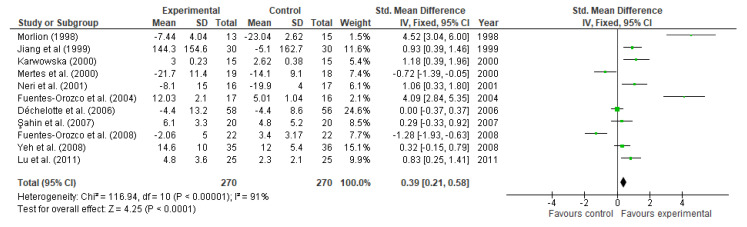
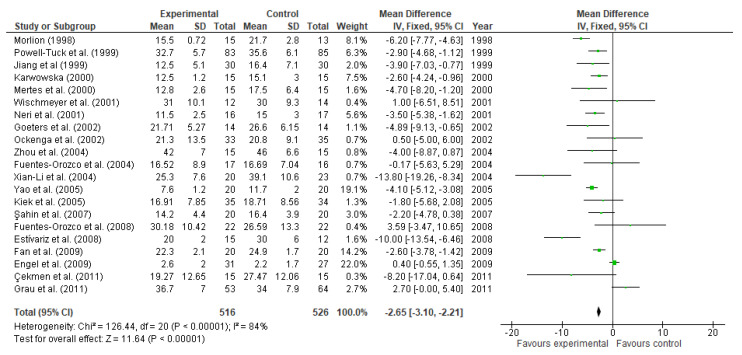
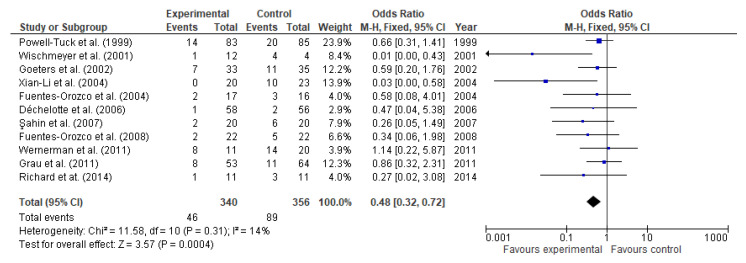
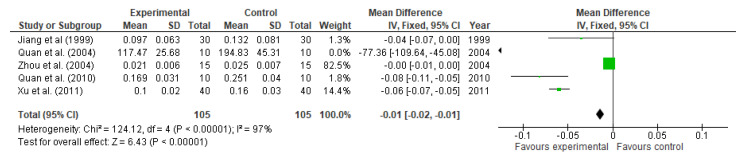
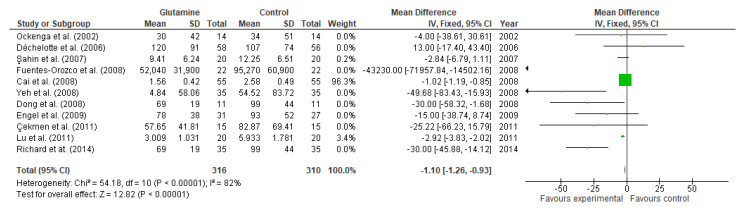
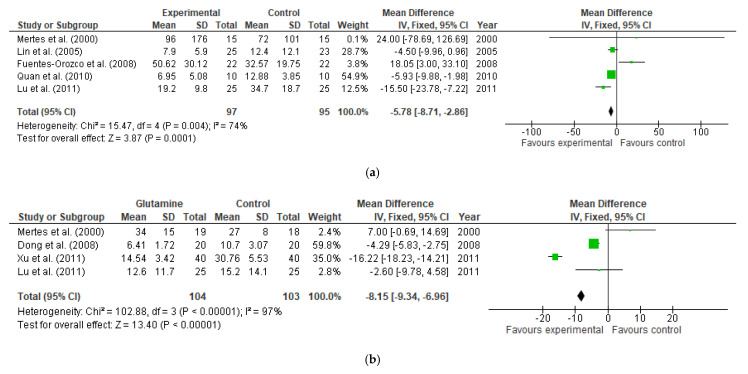
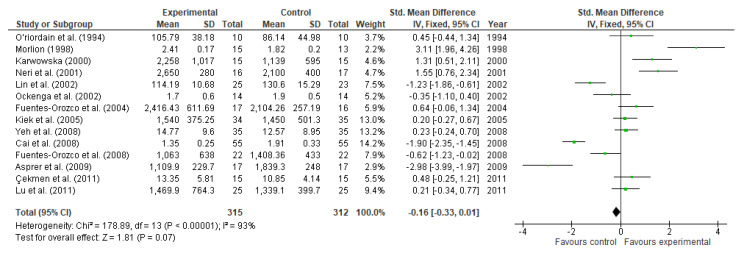
Under stress conditions, the metabolic demand for nutrients increases, which, if not met, may slow down or indeed stop the wound from healing, thus, becoming chronic wounds. This study aims to perform a systematic review and meta-analysis of the effect of arginine and glutamine supplementation on wound healing. PRISMA (Preferred Reporting Items for Systematic Reviews and Meta-Analyses) guidelines were followed for the systematic review and ten electronic databases were used. Five and 39 human studies met the inclusion criteria for arginine and glutamine, respectively. The overall meta-analysis demonstrated a significant effect of arginine supplementation on hydroxyproline content (MD: 4.49, 95% CI: 3.54, 4.45, p < 0.00001). Regarding glutamine supplementation, there was significant effect on nitrogen balance levels (MD: 0.39, 95% CI: 0.21, 0.58, p < 0.0001), IL-6 levels (MD: -5.78, 95% CI: -8.71, -2.86, p = 0.0001), TNFα levels (MD: -8.15, 95% CI: -9.34, -6.96, p < 0.00001), lactulose/mannitol (L/M) ratio (MD: -0.01, 95% CI: -0.02, -0.01, p < 0.00001), patient mortality (OR: 0.48, 95% CI: 0.32, 0.72, p = 0.0004), C-reactive protein (CRP) levels (MD: -1.10, 95% CI: -1.26, -0.93, p < 0.00001) and length of hospital stay (LOS) (MD: -2.65, 95% CI: -3.10, -2.21, p < 0.00001). Regarding T-cell lymphocytes, a slight decrease was observed, although it failed to reach significance (MD: -0.16, 95% CI: -0.33, 0.01, p = 0.07). Conclusion: The wound healing might be enhanced in one or at various stages by nutritional supplementation in the right dose.

Keywords: arginine; collagen deposition; contraction; food; glutamine; growth factor; gut permeability; interleukin; re-epithelialization; wound healing.


Conflict of interest statement

The authors declare that there are no conflict of interest.

Figures
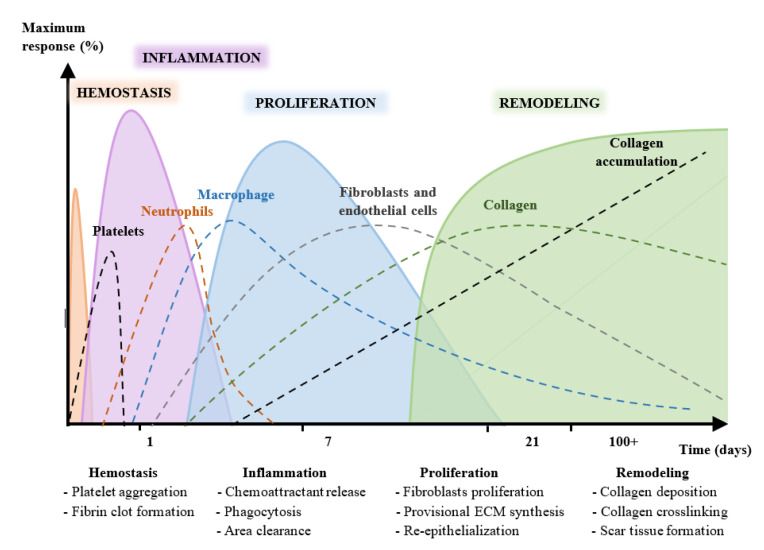
Figure 1
Figure 1
Stages of skin wound healing (hemostasis, inflammation, proliferation, and repair and remodeling) over time.
Figure 2
Figure 2
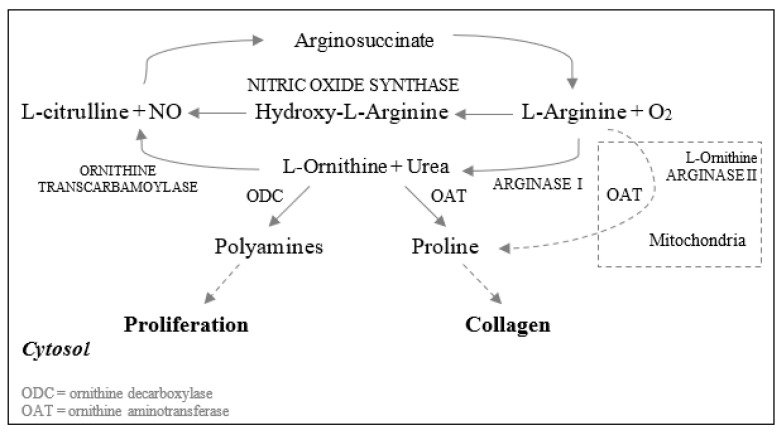
Metabolism of L-Arginine to produce NO and metabolites involved in the wound healing process. Arginine can be catabolized via the NO synthase pathway. Here, L-Arginine can be converted to L-ornithine and urea by arginase I. Then, by the action of ornithine aminotransferase, ornithine is transformed into proline, which is needed for collagen synthesis. L-ornithine can also be converted to polyamines, which are required for cell proliferation by ornithine decarboxylase [22].
Figure 3
Figure 3
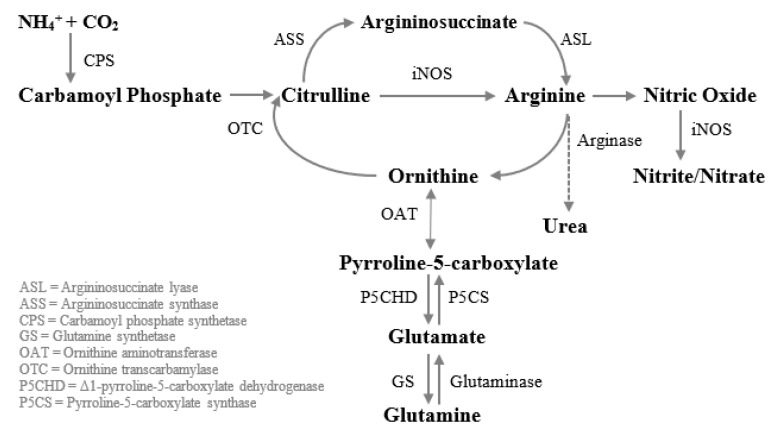
Metabolism of glutamine to arginine in human macrophages. Carbamoyl phosphate when combined with ornithine via OTC is converted to citrulline. Then citrulline is transformed into argininosuccinate and then into arginine by the action of ASS and ASL, respectively. Arginine can then be turned into nitric oxide or ornithine. Ornithine can be transformed into glutamine, and vice versa, via glutamate and pyrroline-5-carboxylate.
Figure 4
Figure 4
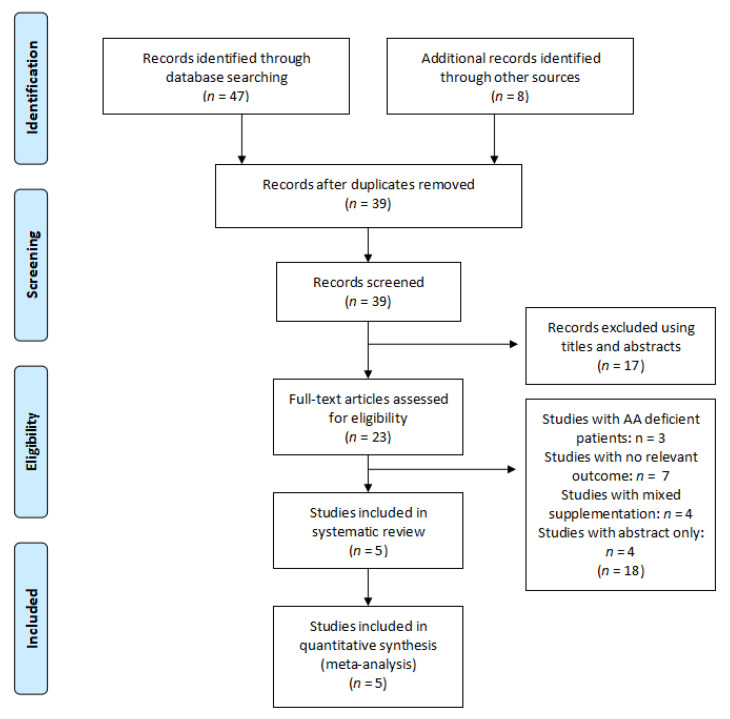
Flow diagram of the search strategy for arginine.
Figure 5
Figure 5
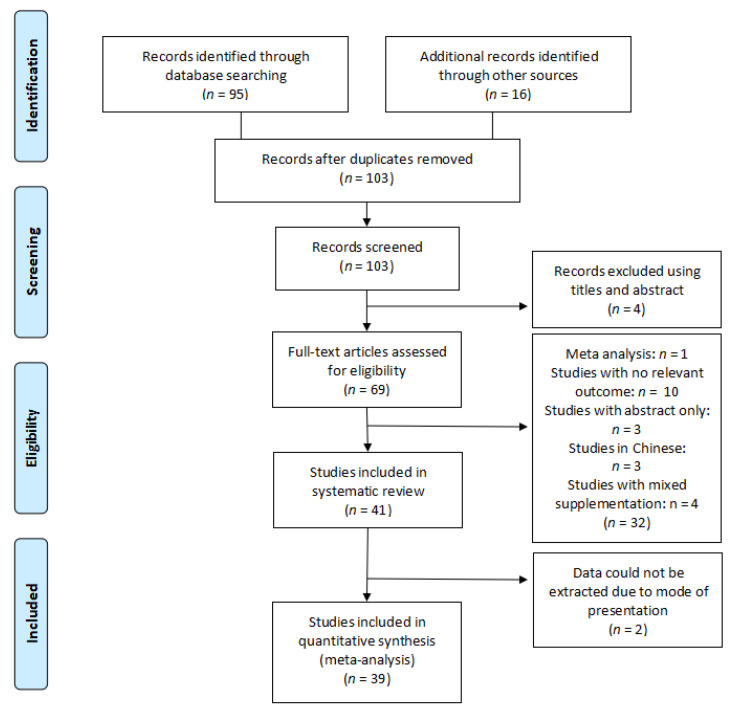
Flow diagram of the search strategy for glutamine.
Figure 6
Figure 6
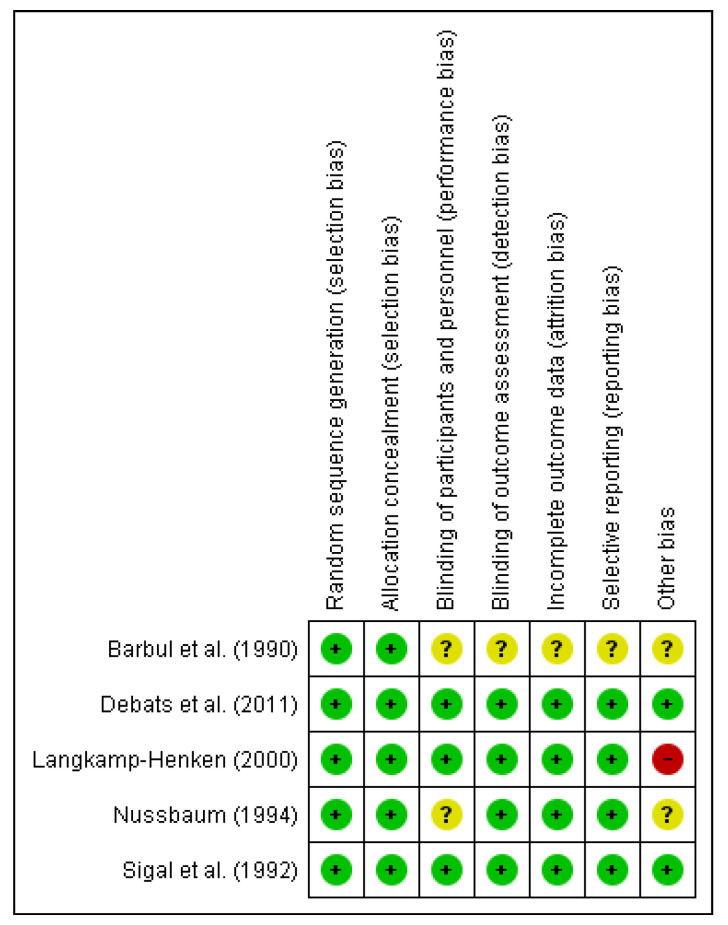
Risk of bias summary for the included studies on arginine. Low risk of bias (+), unclear risk of bias (?), and high risk of bias (−).
Figure 7
Figure 7
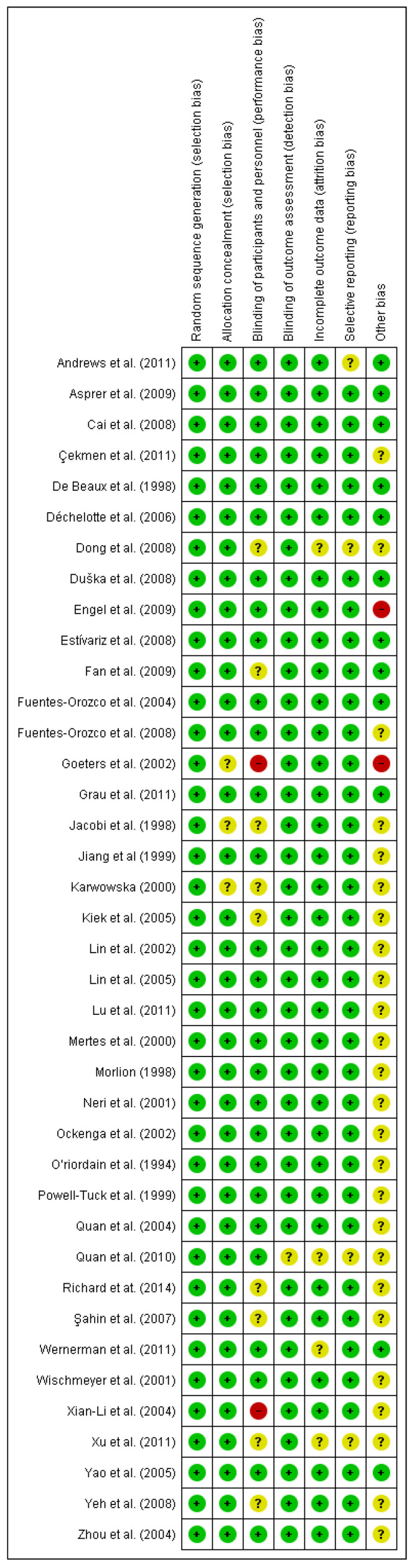
Risk of bias summary for the included studies on glutamine. Low risk of bias (+), unclear risk of bias (?), and high risk of bias (−).
Figure 8
Figure 8
Hydroxyproline content: fixed-effects meta-analysis and forest plot from studies providing supplementation of arginine.
Figure 9
Figure 9
Nitrogen balance: fixed-effects meta-analysis and forest plot from studies providing supplementation of glutamine.
Figure 10
Figure 10
Length of hospital stay: fixed-effects meta-analysis and forest plot from studies providing supplementation of glutamine.
Figure 11
Figure 11
Patient mortality: fixed-effects meta-analysis and forest plot from studies providing supplementation of glutamine.
Figure 12
Figure 12
Lactulose/mannitol ratio: fixed-effects meta-analysis and forest plot from studies providing supplementation of glutamine.
Figure 13
Figure 13
C-reactive protein: fixed-effects meta-analysis and forest plot from studies providing supplementation of glutamine.
Figure 14
Figure 14
(a) IL-6 levels: fixed-effects meta-analysis and forest plot from studies providing supplementation of glutamine (b) TNFα levels: fixed-effects meta-analysis and forest plot from studies providing supplementation of glutamine.
Figure 15
Figure 15
T-cell lymphocytes: fixed-effects meta-analysis and forest plot from studies providing supplementation of glutamine.

References

    1. Armstrong G.D., Meyr A.J. Basic Principles of Wound Management. Atlas Small Anim. Wound Manag. Reconstr. Surg. 2018;4:33–52.
    1. The Editors of Encyclopaedia Britannica [(accessed on 11 June 2021)];Encycl. Br. 2019 Available online: https://www.britannica.com/science/wound.
    1. Gonzalez A.C.D.O., Andrade Z.D.A., Costa T.F., Medrado A.R.A.P. Wound healing-A literature review. An. Bras. Dermatol. 2016;91:614–620. doi: 10.1590/abd1806-4841.20164741. - DOI - PMC - PubMed
    1. Orr J.W., Taylor P.T. Complications in Gynecological Surgery: Prevention, Recognition, and Management. J. B. Lippincott & Co.; Philadelphia, PA, USA: 2018. Wound healing.
    1. Skover G.R. Cellular and biochemical dynamics of wound repair. Wound environment in collagen regeneration. Clin. Podiatr. Med. Surg. 1991;8:723–756. - PubMed

MeSH terms