


Oat Intake and Risk of Type 2 Diabetes, Cardiovascular Disease and All-Cause Mortality: A Systematic Review and Meta-Analysis
- PMID: 34444718
- PMCID: PMC8398256
- DOI: 10.3390/nu13082560
Oat Intake and Risk of Type 2 Diabetes, Cardiovascular Disease and All-Cause Mortality: A Systematic Review and Meta-Analysis
Abstract
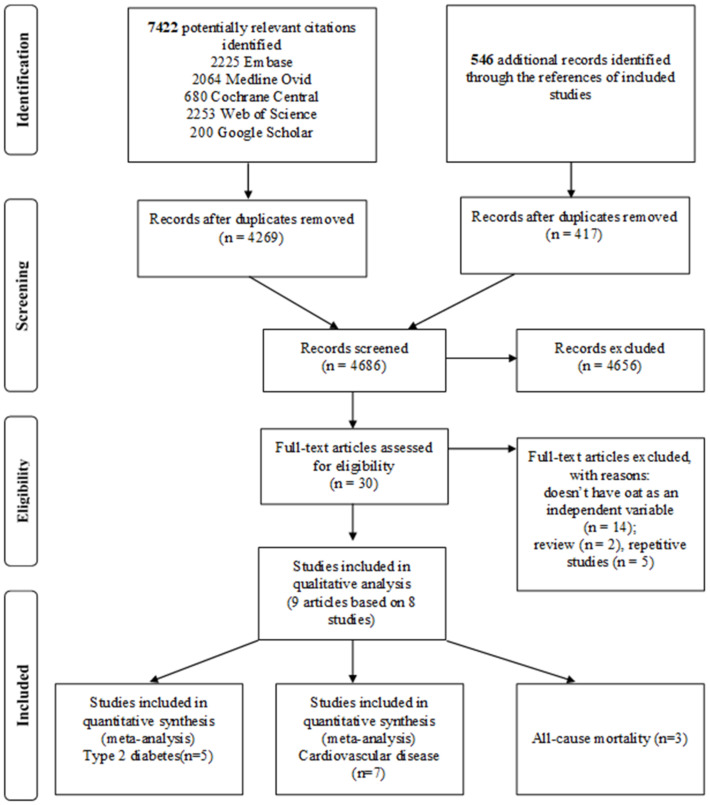
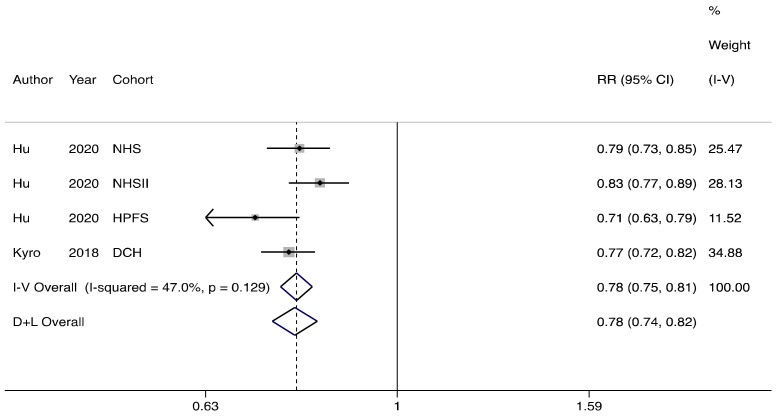
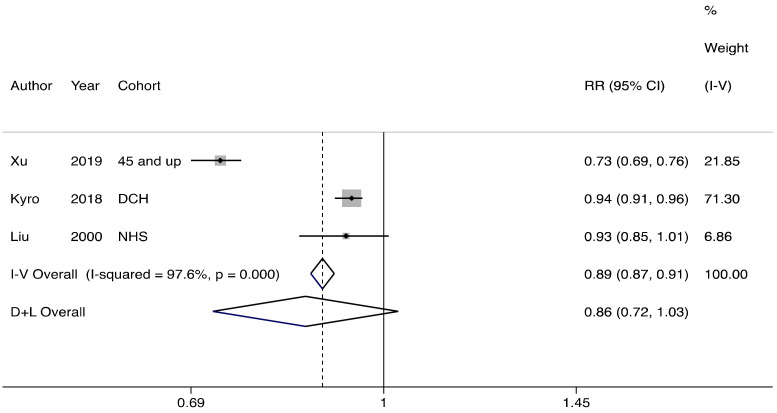
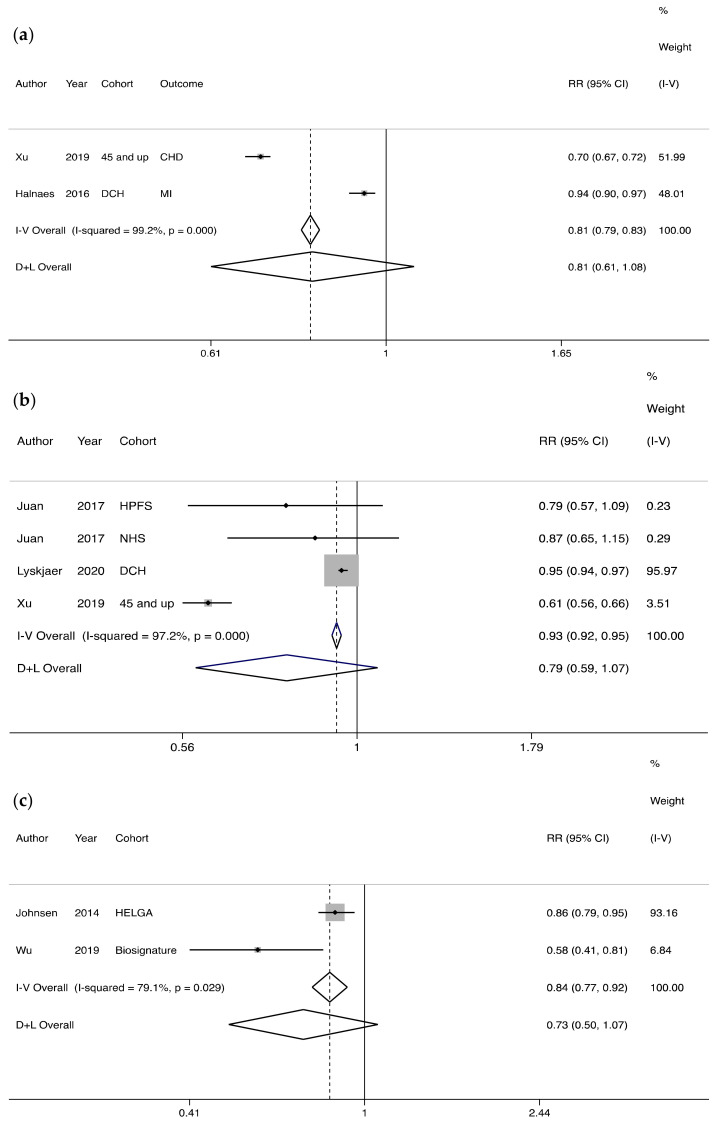
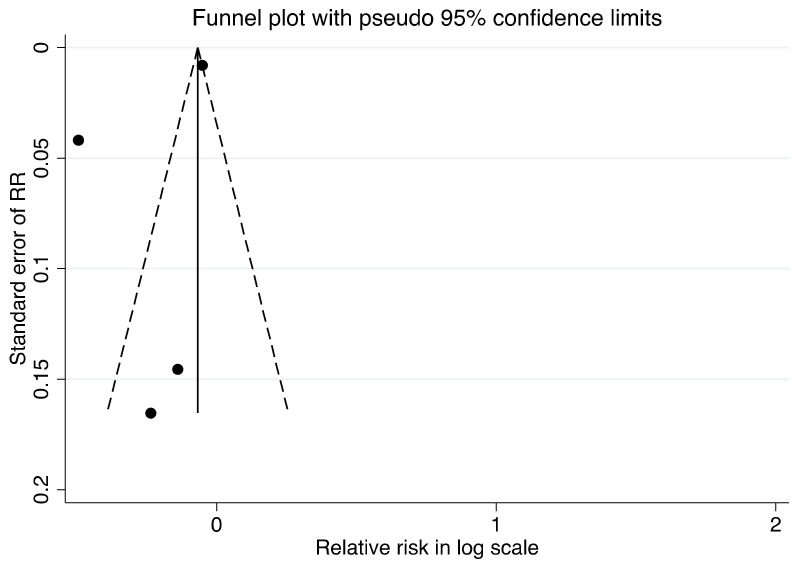
Cardiovascular disease (CVD) and type 2 diabetes (T2D) remain the top disease and mortality burdens worldwide. Oats have been shown to benefit cardiovascular health and improve insulin resistance. However, the evidence linking oat consumption with CVD, T2D and all-cause mortality remains inconclusive. We conducted a comprehensive systematic review and meta-analysis of prospective cohort studies to evaluate the associations between oat consumption and risks of T2D, CVD and all-cause mortality in the general population. Five electronic databases were searched until September, 2020. Study specific relative risks (RR) were meta-analyzed using random effect models. Of 4686 relevant references, we included 9 articles, based on 8 unique studies and 471,157 participants. Comparing oat consumers versus non-consumers, RRs were 0.86 (95% CI 0.72-1.03) for T2D incidence and 0.73 (95% CI 0.5-1.07) for combined CVD incidence. Comparing participants with highest versus lowest oat intake, RRs were 0.78 (95% CI 0.74-0.82) for T2D incidence, 0.81 (95% CI 0.61-1.08) for CHD incidence and 0.79 (95% CI 0.59-1.07) for stroke. For all-cause mortality one study based on three cohorts found RR for men and women were 0.76 (95% CI 0.69-0.85) and 0.78 (95% CI 0.70-0.87), respectively. Most studies (n = 6) were of fair to good quality. This meta-analysis suggests that consumption of oat could reduce the risk for T2D and all-cause mortality, while no significant association was found for CVD. Future studies should address a lack of standardized methods in assessing overall oat intake and type of oat products, and investigate a dose-dependent response of oat products on cardiometabolic outcomes in order to introduce oat as preventive and treatment options for the public.
Keywords: cardiovascular disease; mortality; oat; type 2 diabetes.
Conflict of interest statement
This research was supported by Standard Process, a whole food based nutritional supplement company. The funder, Standard Process, provided support in the form of personal fee for author TM, salaries for HK, WB, and BM, and paid the fee for the publication, but did not have any additional role in the study design, data collection and analysis, decision to publish, or preparation of the manuscript. The specific roles of these authors are articulated in the ‘author contributions’ section. Other authors have nothing to disclose.
Figures
References
-
- FAOSTAT FAOSTAT. [(accessed on 8 October 2020)];2019 Available online: http://www.fao.org/faostat/en/#data/QC.
-
- Von Noorden C. Hafercuren bei schwerem diabetes mellitus. Klin Wochenschr. 1903;36:817–821.
