


Stigmatization toward People with Anorexia Nervosa, Bulimia Nervosa, and Binge Eating Disorder: A Scoping Review
- PMID: 34444994
- PMCID: PMC8400545
- DOI: 10.3390/nu13082834
Stigmatization toward People with Anorexia Nervosa, Bulimia Nervosa, and Binge Eating Disorder: A Scoping Review
Abstract
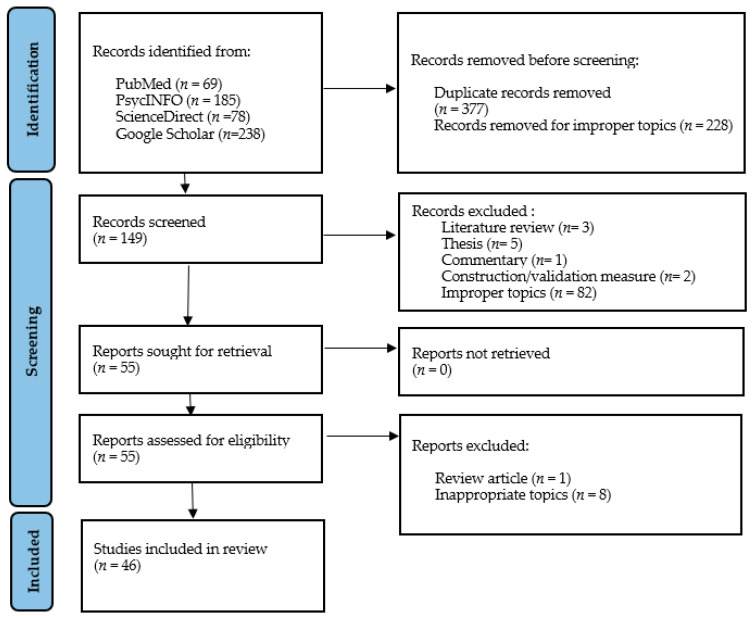
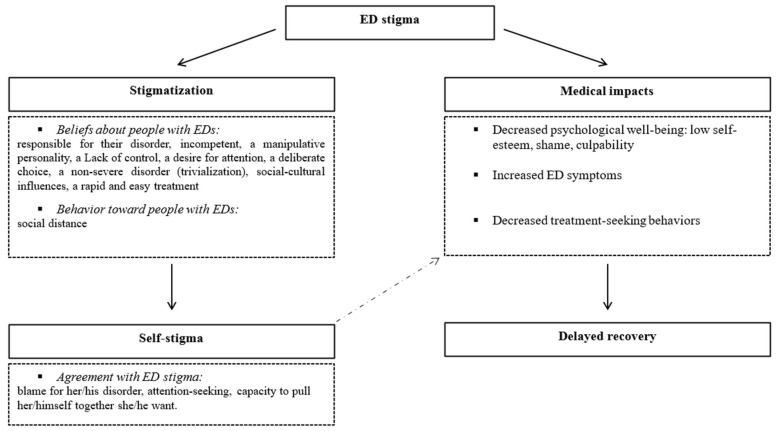
Research about stigmatization in eating disorders (EDs) has highlighted stereotypes, prejudices, and discrimination against people with EDs, as well as their harmful effects on them, including self-stigma and a difficult recovery process. Whereas a recent review focused on the consequences of ED stigma, our work aimed to provide a broader synthesis of ED stigma, including its consequences, but also its content and distribution. More precisely, we focused on three EDs-namely, anorexia nervosa, bulimia nervosa, and binge eating disorder. Based on a systematic search of four major databases in psychology, the present scoping review includes 46 studies published between 2004 and 2021. We did not conduct any quality assessment of the studies included, because our aim was to provide a wide-ranging overview of these topics instead of an appraisal of evidence answering a precise research question. The review confirmed the existence of a common ED stigma: all individuals affected by EDs reviewed here were perceived as responsible for their situation, and elicited negative emotions and social distance. However, our review also depicted a specific stigma content associated with each ED. In addition, the demographic characteristics of the stigmatizing individuals had a notable influence on the extent of ED stigma: men, young adults, and low-income individuals appeared to be the most stigmatizing toward individuals with EDs. It is important to note that ED stigma had a negative effect on individuals' eating disorders, psychological wellbeing, and treatment-seeking behavior. There is an urgent need for further research on the adverse effects of ED stigma and its prevention.
Keywords: anorexia nervosa; binge eating disorder; bulimia nervosa; eating disorders; stigmatization; treatment compliance.
Conflict of interest statement
The authors declare no conflict of interest.
Figures
References
-
- Thörel N., Thörel E., Tuschen-Caffier B. Differential stigmatization in the context of eating disorders: Less blame might come at the price of greater social rejection. Stigma. Health. 2021;6:100–112. doi: 10.1037/sah0000274. - DOI
Publication types
MeSH terms
LinkOut - more resources
Full Text Sources
Medical
