


From Fighting Critters to Saving Lives: Polyphenols in Plant Defense and Human Health
- PMID: 34445697
- PMCID: PMC8396434
- DOI: 10.3390/ijms22168995
From Fighting Critters to Saving Lives: Polyphenols in Plant Defense and Human Health
Abstract
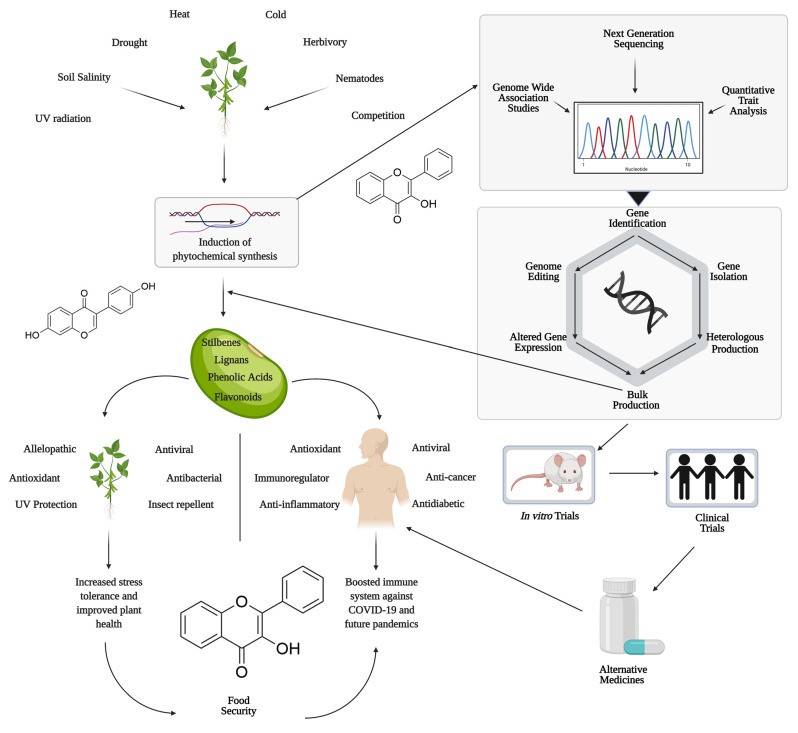
Polyphenols, such as flavonoids and phenolic acids, are a group of specialized metabolites in plants that largely aid in plant defense by deterring biotic stressors and alleviating abiotic stress. Polyphenols offer a wide range of medical applications, acting as preventative and active treatments for diseases such as cancers and diabetes. Recently, researchers have proposed that polyphenols may contribute to certain applications aimed at tackling challenges related to the COVID-19 pandemic. Understanding the beneficial impacts of phytochemicals, such as polyphenols, could potentially help prepare society for future pandemics. Thus far, most reviews have focused on polyphenols in cancer prevention and treatment. This review aims to provide a comprehensive discussion on the critical roles that polyphenols play in both plant chemical defense and human health based on the most recent studies while highlighting prospective avenues for future research, as well as the implications for phytochemical-based applications in both agricultural and medical fields.
Keywords: anti-virals; chemical defense; crop improvement; disease prevention; immune system; phytochemicals.
Conflict of interest statement
The authors declare no conflict of interest.
Figures
References
-
- Huang Y., Xiao D., Burton-Freeman B.M., Edirisinghe I. Reference Module in Food Science. Elsevier; Amsterdam, The Netherlands: 2016. Chemical changes of bioactive phytochemicals during thermal processing.
Publication types
MeSH terms
Substances
Grants and funding
LinkOut - more resources
Full Text Sources
