


Effects of Abiotic Stress on Soil Microbiome
- PMID: 34445742
- PMCID: PMC8396473
- DOI: 10.3390/ijms22169036
Effects of Abiotic Stress on Soil Microbiome
Abstract
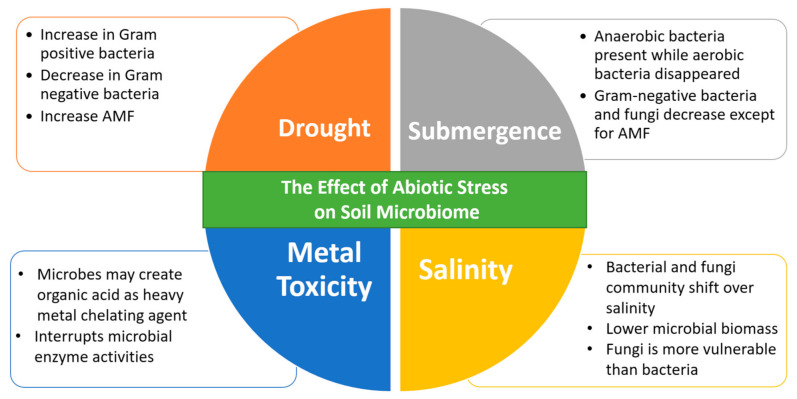
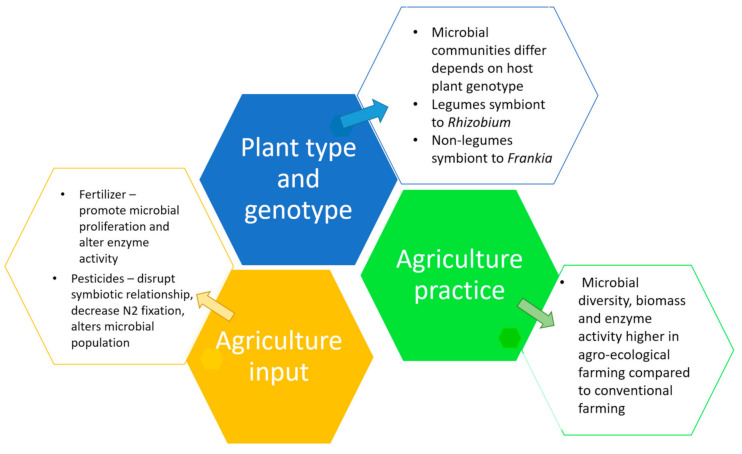
Rhizospheric organisms have a unique manner of existence since many factors can influence the shape of the microbiome. As we all know, harnessing the interaction between soil microbes and plants is critical for sustainable agriculture and ecosystems. We can achieve sustainable agricultural practice by incorporating plant-microbiome interaction as a positive technology. The contribution of this interaction has piqued the interest of experts, who plan to do more research using beneficial microorganism in order to accomplish this vision. Plants engage in a wide range of interrelationship with soil microorganism, spanning the entire spectrum of ecological potential which can be mutualistic, commensal, neutral, exploitative, or competitive. Mutualistic microorganism found in plant-associated microbial communities assist their host in a number of ways. Many studies have demonstrated that the soil microbiome may provide significant advantages to the host plant. However, various soil conditions (pH, temperature, oxygen, physics-chemistry and moisture), soil environments (drought, submergence, metal toxicity and salinity), plant types/genotype, and agricultural practices may result in distinct microbial composition and characteristics, as well as its mechanism to promote plant development and defence against all these stressors. In this paper, we provide an in-depth overview of how the above factors are able to affect the soil microbial structure and communities and change above and below ground interactions. Future prospects will also be discussed.
Keywords: abiotic stress; beneficial microbes; microbial population; rhizosphere; soil microbiome.
Conflict of interest statement
The authors declare no conflict of interest. The funders had no role in the design of the study; in the collection, analyses, or interpretation of data; in the writing of the manuscript, or in the decision to publish the results.
Figures
References
-
- Mbow C.C., Rosenzweig L.G., Barioni T.G., Benton M., Herrero M., Krishnapillai E., Liwenga P., Pradhan M.G., Rivera-Ferre T., Sapkota F.N., et al. Special Report on Climate Change, Desertification, Land Degradation, Sustainable Land Management, Food Security, and Greenhouse Gas Fluxes in Terrestrial Ecosystems. IPCC; Geneva, Switzerland: 2019. pp. 437–550.
-
- Chowdhary K., Sharma S. Plant-Microbe Interactions in Agro-Ecological Perspectives. Volume 1. Springer; Singapore: 2017. Potential of fungal endophytes in plant growth and disease management; pp. 291–310.
Publication types
MeSH terms
Substances
Grants and funding
LinkOut - more resources
Full Text Sources
Other Literature Sources
Research Materials
