


COVID-19 in conflict region: the arab levant response
- PMID: 34445976
- PMCID: PMC8390061
- DOI: 10.1186/s12889-021-11580-4
COVID-19 in conflict region: the arab levant response
Abstract
Background: COVID-19 has hit the world in an unprecedented way causing serious repercussions on several aspects of our life. Multiple determinants have affected various nations' level of success in their responses towards the pandemic. The Arab Levant region in the Middle East, notoriously known for repeated wars and conflicts, has been affected, similarly to other regions, by this pandemic. The combination of war, conflict, and a pandemic brings too much of a burden for any nation to handle.
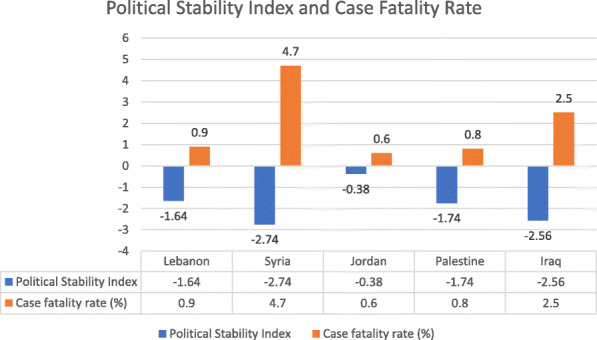
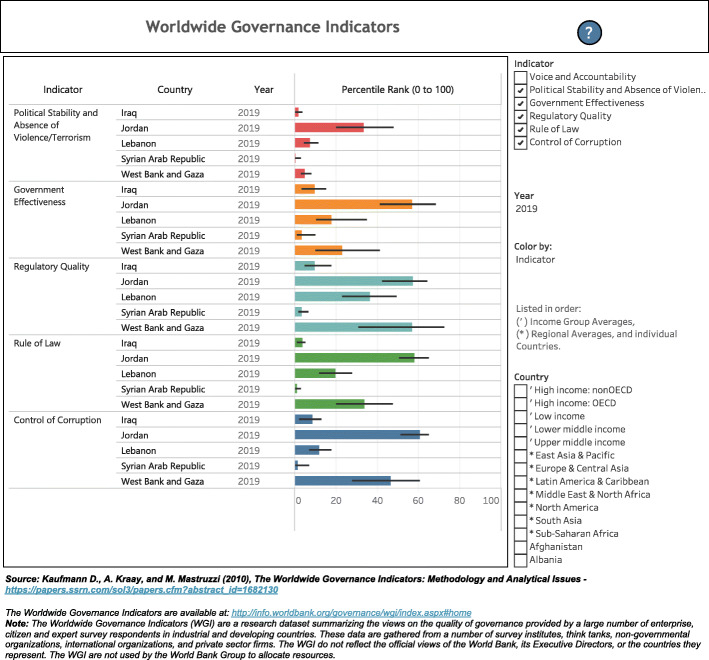
Methods: A descriptive analysis of data obtained from the health departments of various Arab Levant Countries (ALC) was performed. ALC include Lebanon, Syria, Jordan, Iraq and Palestine. The data collected involves incidence, recovery rate, case fatality rate and number of tests performed per million population, Global Health Security index, government stringency index, and political stability index. The information obtained was compared and analyzed among the ALC and compared to global figures. An extensive electronic literature search to review all relevant articles and reports published from the region was conducted. The 2019 Global Health Security (GHS) index was obtained from the "GHS index" website which was made by John Hopkins University's center for health security, the Nuclear threat Initiative (NTI) and the Economist Intelligence Unit (EIU). Government stringency index and political stability index were obtained from the University of Oxford and the website of "The Global Economy", respectively. Other world governance indicators such as government effectiveness were obtained from the World Bank website.
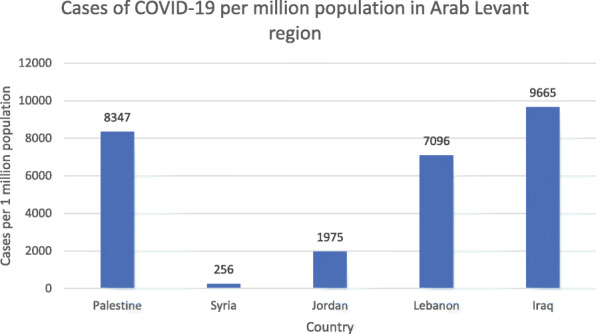
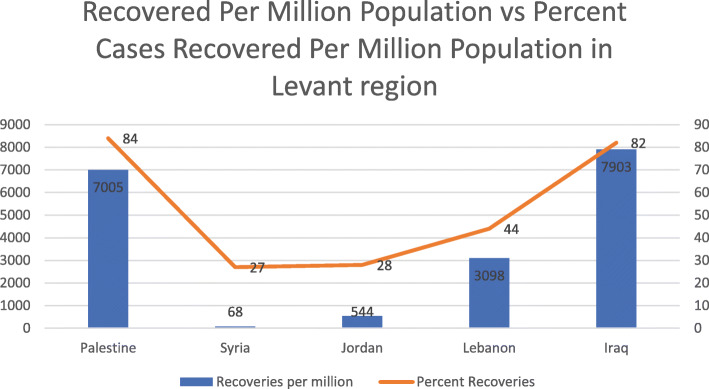
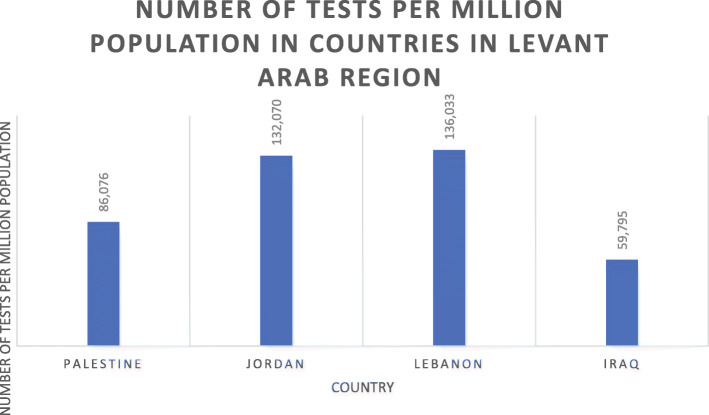
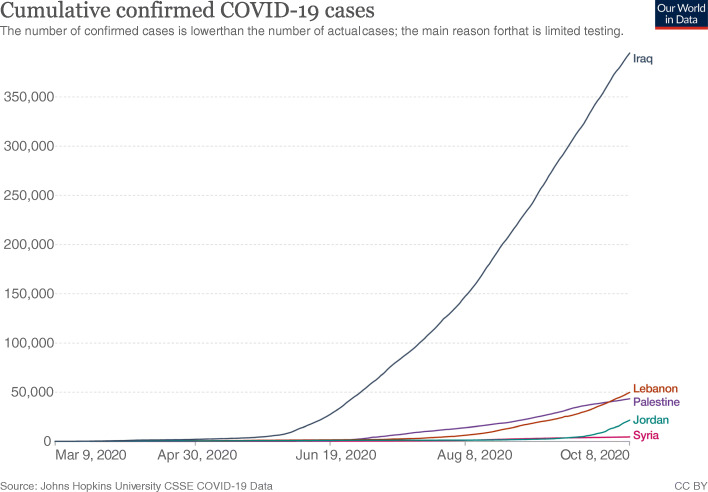
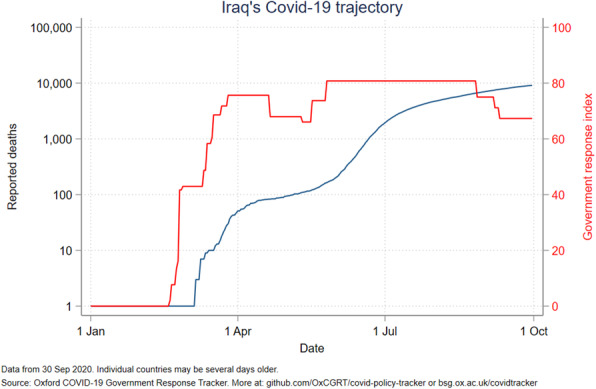
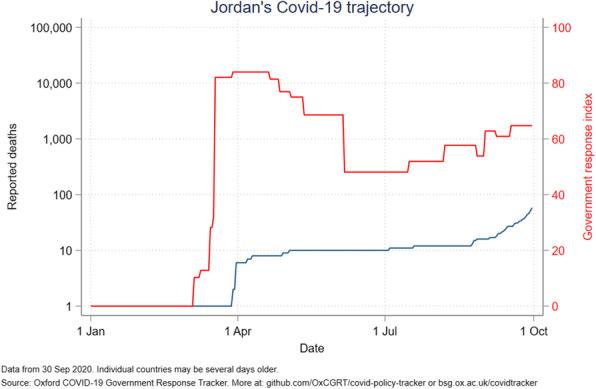
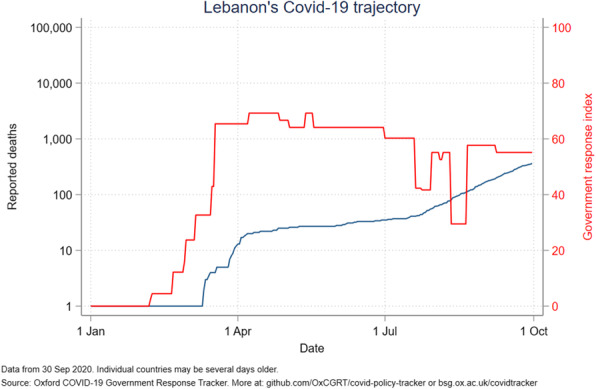
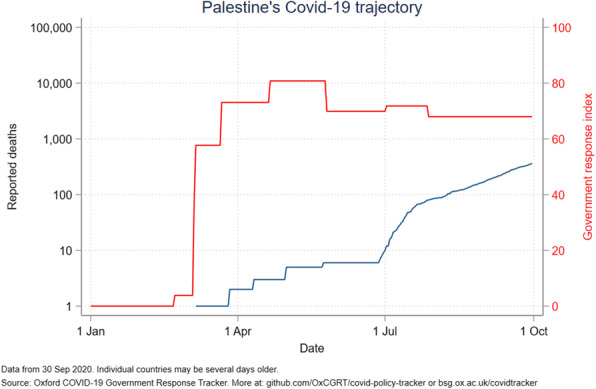
Results: In terms of incidence of COVID-19, Iraq has the highest with 9665 per one million population, Syria the lowest at 256 per million. Deaths per million population was highest in Iraq at 237, and the lowest in Syria at 12. As for number of tests per million population, Lebanon ranked first at 136,033 with Iraq fourth at 59,795. There is no data available for the tests administered in Syria and subsequently no value for tests per million population. In terms of recoveries from COVID-19 per million population, Iraq had the highest number at 7903 per million, and Syria the lowest at 68 per million. When compared as percent recovery per million, Palestine ranked first (84%) and Syria last (27%). The government response stringency index shows that Jordan had the highest index (100) early in the pandemic among the other countries. Palestine's index remained stable between 80 and 96. The other countries' indices ranged from 50 to 85, with Lebanon seeing a drop to 24 in mid-August. Even with improved stringency index, Iraq reported an increased number of deaths.
Conclusion: In countries devastated by war and conflict, a pandemic such as COVID-19 can easily spread. The Arab Levant countries represent a breeding ground for pandemics given their unstable political and economic climate that has undoubtedly affected their healthcare systems. In the era of COVID-19, looking at healthcare systems as well as political determinants is needed to assess a country's readiness towards the pandemic. The unrest in Lebanon, the uprising in Iraq, the restrictions placed on Syria, and the economic difficulties in Palestine are all examples of determinants affecting pandemic management. Jordan, on the contrary, is a good example of a stable state, able to implement proper measures. Political stability index should be used as a predictor for pandemic management capacity, and individual measures should be tailored towards countries depending on their index.
Keywords: Arab Levant; COVID-19; Conflict; Iraq; Jordan; Lebanon; Palestine; Syria; War; political climate; political stability index; world governance indicators.
© 2021. The Author(s).
Conflict of interest statement
The authors declare that they have no competing interests.
Figures



References
-
- Conde C, Pataud A. COVID-19 crisis response in MENA countries. [Internet]. Organisation for Economic Co-operation and Development. [Updated November 2020; cited July 25, 2020]. Available from http://www.oecd.org/coronavirus/policy-responses/covid-19-crisis-respons....
-
- Craven M, Liu L. COVID-19: Implications for business. [Internet]. McKinsey & Company. [Updated August 4, 2021; cited August 8, 2020]. Available from https://www.mckinsey.com/business-functions/risk/our-insights/covid-19-i...
-
- World Health Organization, World Bank Group, OECD. Delivering Quality Health Services: A Global Imperative for Universal Health Coverage [book on the Internet]. Geneva: World Health Organization, OECD, and the World Bank. Available from: https://openknowledge.worldbank.org/handle/109.
MeSH terms
LinkOut - more resources
Full Text Sources
Medical
