


Hematopoietic Cell Transplantation for Severe Combined Immunodeficiency Patients: a Japanese Retrospective Study
- PMID: 34448087
- PMCID: PMC8390179
- DOI: 10.1007/s10875-021-01112-5
Hematopoietic Cell Transplantation for Severe Combined Immunodeficiency Patients: a Japanese Retrospective Study
Abstract
Purpose: Hematopoietic cell transplantation (HCT) is a curative therapy for patients with severe combined immunodeficiency (SCID). Here, we conducted a nationwide study to assess the outcome of SCID patients after HCT in Japan.
Methods: A cohort of 181 SCID patients undergoing their first allogeneic HCT in 1974-2016 was studied by using the Japanese national database (Transplant Registry Unified Management Program, TRUMP).
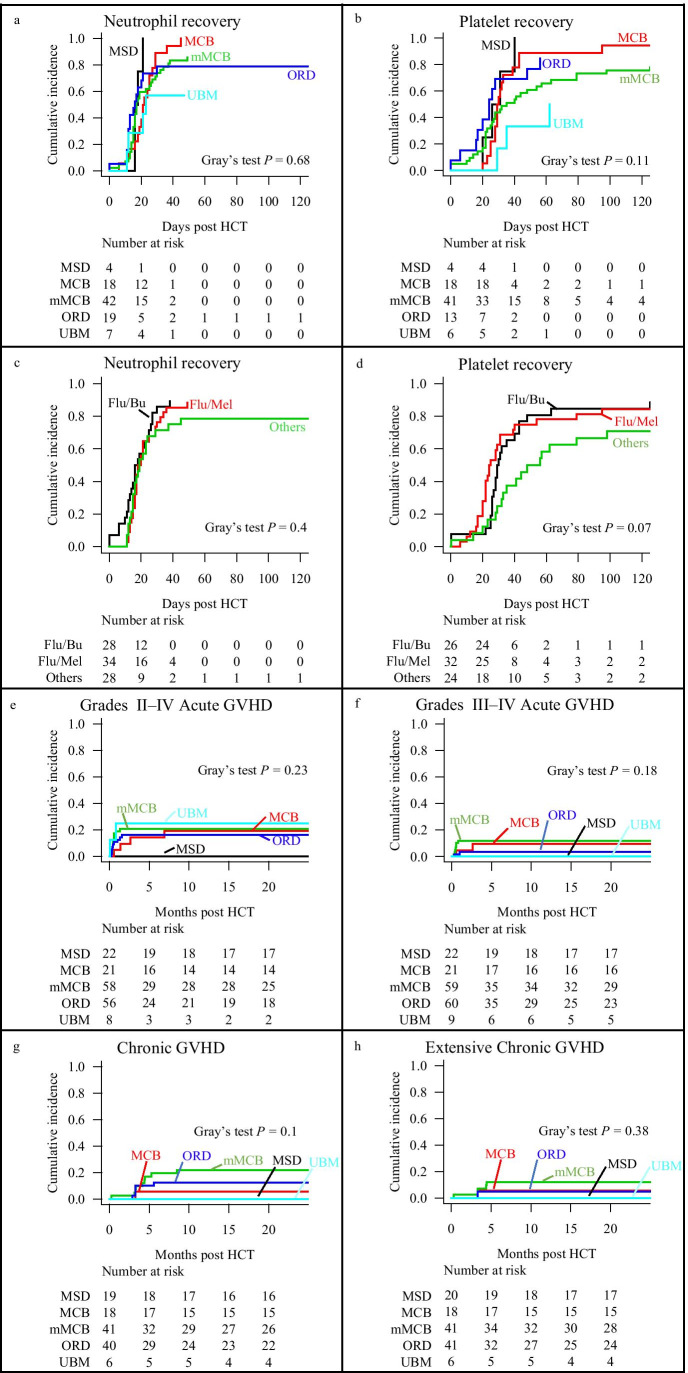
Results: The 10-year overall survival (OS) of the patients who received HCT in 2006-2016 was 67%. Umbilical cord blood (UCB) transplantation was performed in 81 patients (45%). The outcomes of HCT from HLA-matched UCB (n = 21) and matched sibling donors (n = 22) were comparable, including 10-year OS (91% vs. 91%), neutrophil recovery (cumulative incidence at 30 days, 89% vs. 100%), and platelet recovery (cumulative incidence at 60 days, 89% vs. 100%). Multivariate analysis of the patients who received HCT in 2006-2016 demonstrated that the following factors were associated with poor OS: bacterial or fungal infection at HCT (hazard ratio (HR): 3.8, P = 0.006), cytomegalovirus infection prior to HCT (HR: 9.4, P = 0.03), ≥ 4 months of age at HCT (HR: 25.5, P = 0.009), and mismatched UCB (HR: 19.8, P = 0.01).
Conclusion: We showed the potential of HLA-matched UCB as a donor source with higher priority for SCID patients. We also demonstrated that early age at HCT without active infection is critical for a better prognosis, highlighting the importance of newborn screening for SCID.
Keywords: Cord blood transplantation; Hematopoietic cell transplantation; Japan; Newborn screening; Retrospective study; Severe combined immunodeficiency.
© 2021. The Author(s), under exclusive licence to Springer Science+Business Media, LLC, part of Springer Nature.
Conflict of interest statement
The authors declare no competing interest.
Figures

References
-
- Tangye SG, Al-Herz W, Bousfiha A, Chatila T, Cunningham-Rundles C, Etzioni A, et al. Human inborn errors of immunity: 2019 update on the classification from the International Union of Immunological Societies Expert Committee. J Clin Immunol. 2020;40:24–64. doi: 10.1007/s10875-020-00758-x. - DOI - PMC - PubMed
Publication types
MeSH terms
LinkOut - more resources
Full Text Sources
Medical
Research Materials
