


Protein-, (Poly)peptide-, and Amino Acid-Based Nanostructures Prepared via Polymerization-Induced Self-Assembly
- PMID: 34451144
- PMCID: PMC8402019
- DOI: 10.3390/polym13162603
Protein-, (Poly)peptide-, and Amino Acid-Based Nanostructures Prepared via Polymerization-Induced Self-Assembly
Abstract
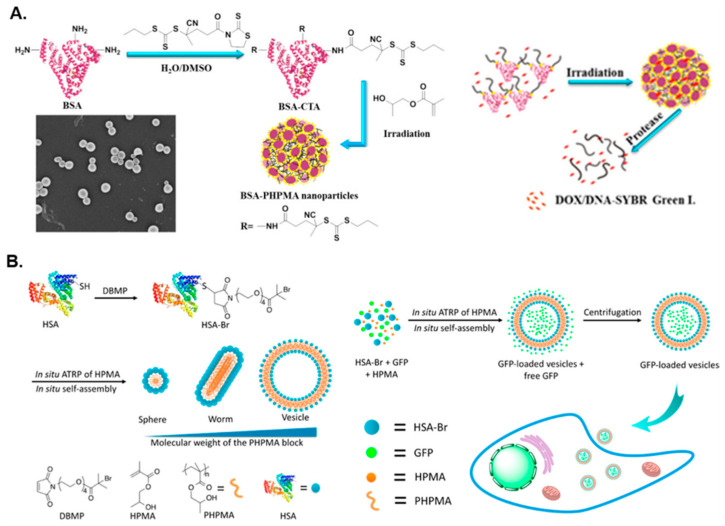
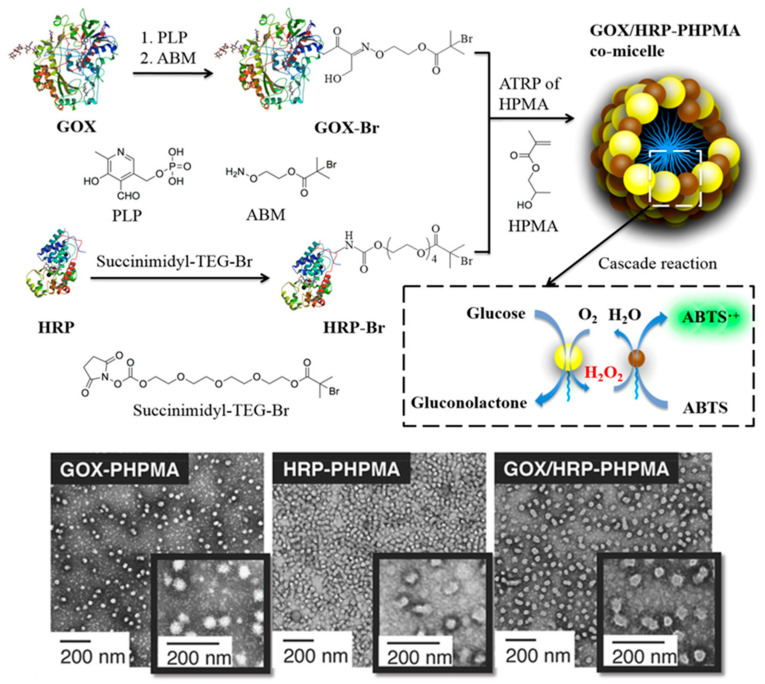
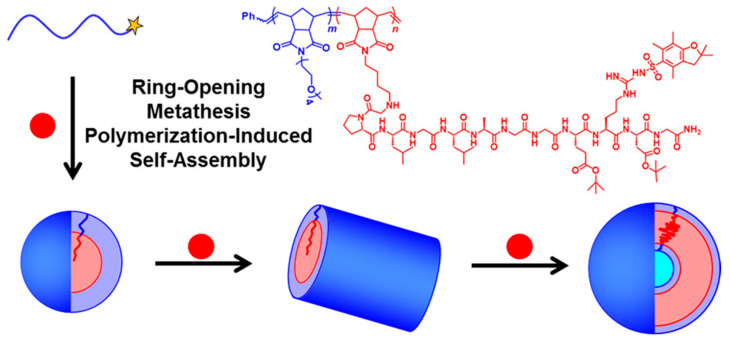
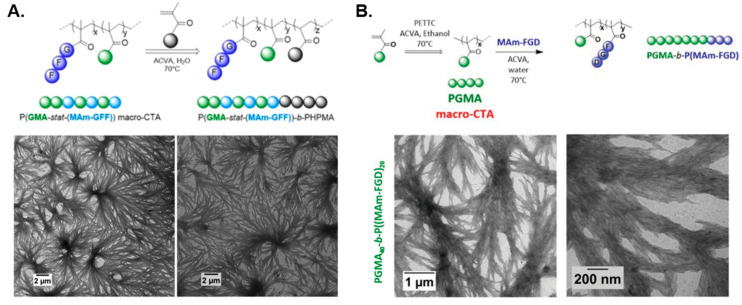
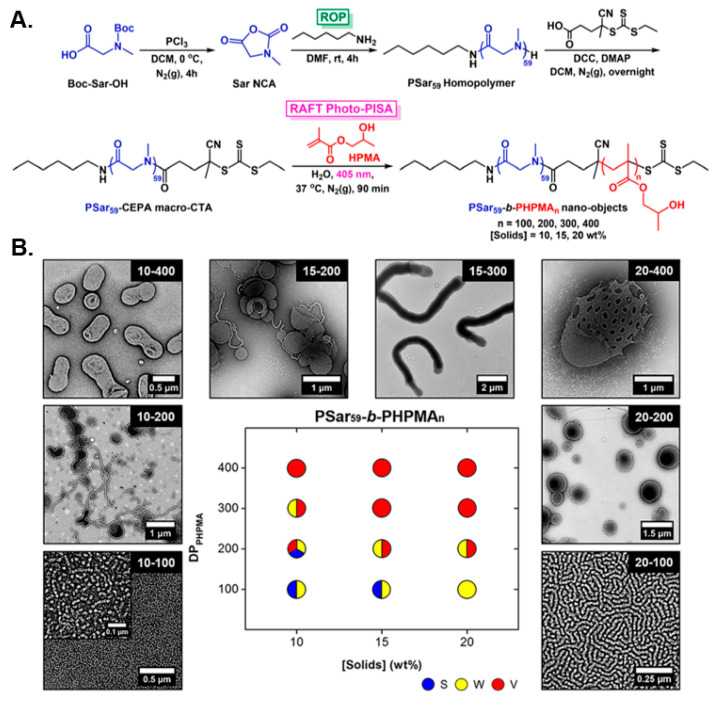
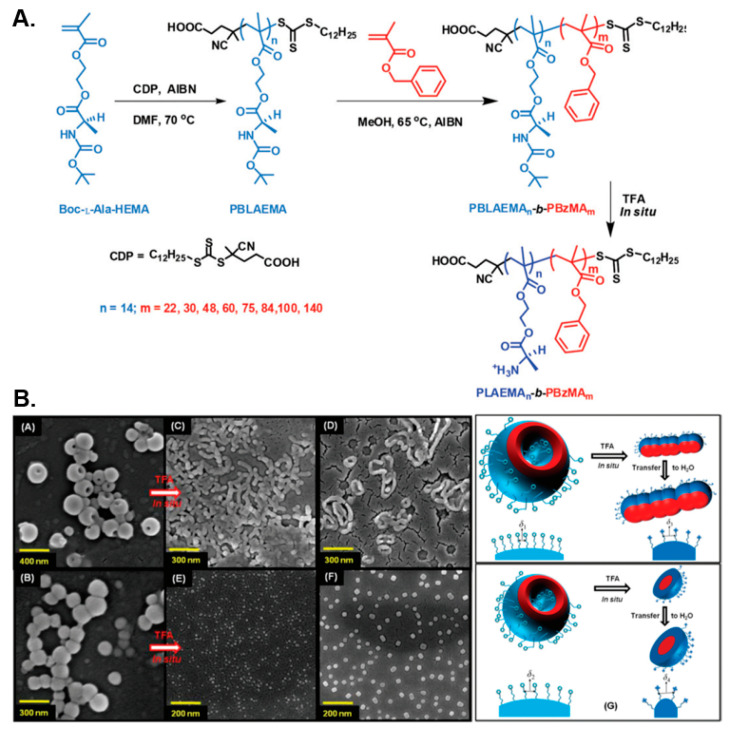
Proteins and peptides, built from precisely defined amino acid sequences, are an important class of biomolecules that play a vital role in most biological functions. Preparation of nanostructures through functionalization of natural, hydrophilic proteins/peptides with synthetic polymers or upon self-assembly of all-synthetic amphiphilic copolypept(o)ides and amino acid-containing polymers enables access to novel protein-mimicking biomaterials with superior physicochemical properties and immense biorelevant scope. In recent years, polymerization-induced self-assembly (PISA) has been established as an efficient and versatile alternative method to existing self-assembly procedures for the reproducible development of block copolymer nano-objects in situ at high concentrations and, thus, provides an ideal platform for engineering protein-inspired nanomaterials. In this review article, the different strategies employed for direct construction of protein-, (poly)peptide-, and amino acid-based nanostructures via PISA are described with particular focus on the characteristics of the developed block copolymer assemblies, as well as their utilization in various pharmaceutical and biomedical applications.
Keywords: biomaterials; block copolymers; nanostructures; polymerization-induced self-assembly; polypeptides; proteins; protein–polymer conjugates; α-amino acids.
Conflict of interest statement
The authors declare no conflict of interest.
Figures
References
Publication types
Grants and funding
LinkOut - more resources
Full Text Sources
