


The Influence of Modified Experimental Dental Resin Composites on the Initial In Situ Biofilm-A Triple-Blinded, Randomized, Controlled Split-Mouth Trial
- PMID: 34451352
- PMCID: PMC8400102
- DOI: 10.3390/polym13162814
The Influence of Modified Experimental Dental Resin Composites on the Initial In Situ Biofilm-A Triple-Blinded, Randomized, Controlled Split-Mouth Trial
Abstract
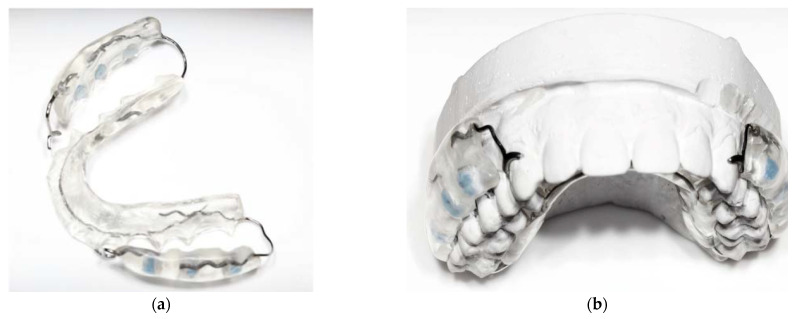
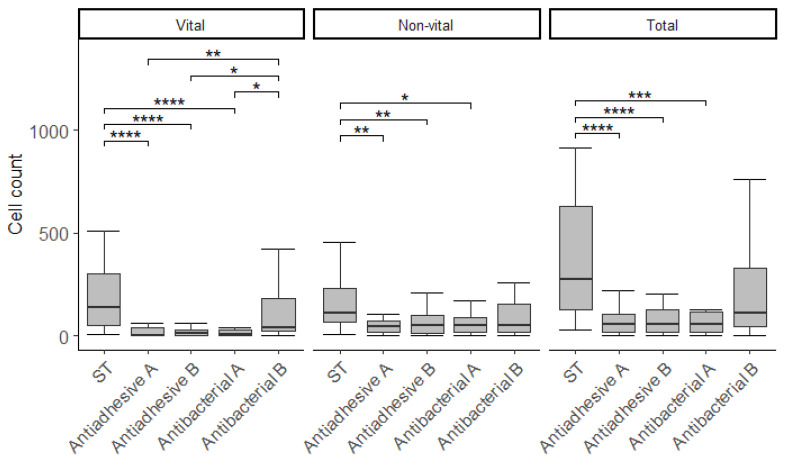
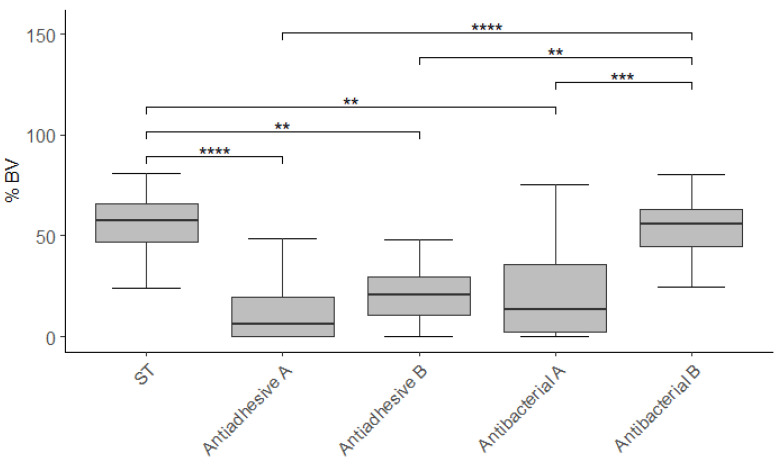
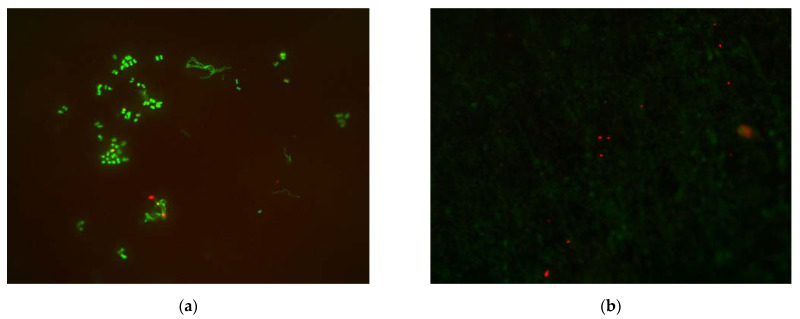
The purpose of the study was to investigate the bacterial viability of the initial biofilm on the surface of experimental modified dental resin composites. Twenty-five healthy individuals with good oral hygiene were included in this study. In a split-mouth design, they received acrylic splints with five experimental composite resin specimens. Four of them were modified with either a novel polymeric hollow-bead delivery system or methacrylated polymerizable Irgasan (Antibacterial B), while one specimen served as an unmodified control (ST). A delivery system based on Poly-Pore® was loaded with one of the active agents: Tego® Protect 5000 (Antiadhesive A), Dimethicone (Antiadhesive B), or Irgasan (Antibacterial A). All study subjects refrained from toothbrushing during the study period. Specimens were detached from the splints after 8 h and given a live/dead staining before fluorescence microscopy. A Friedman test and a post hoc Nemenyi test were applied with a significance level at p < 0.05. In summary, all materials but Antibacterial B showed a significant antibacterial effect compared to ST. The results suggested the role of the materials' chemistry in the dominance of cell adhesion. In conclusion, dental resin composites with Poly-Pore-loaded active agents showed antibacterial effectiveness in situ.
Keywords: Poly-Pore; antiadhesive composites; antibacterial composites; bacterial viability; clinical trial; live/dead staining; split-mouth.
Conflict of interest statement
The authors declare no conflict of interest. The funders had no role in the design of the study; in the collection, analyses, or interpretation of data; in the writing of the manuscript; or in the decision to publish the results.
Figures
References
-
- Mjor I.A., Toffenetti F. Secondary caries: A literature review with case reports. Quintessence Int. 2000;31:165–179. - PubMed
Grants and funding
LinkOut - more resources
Full Text Sources
