


Genotypic Characterization of Clinical Isolates of Staphylococcus aureus from Pakistan
- PMID: 34451382
- PMCID: PMC8400278
- DOI: 10.3390/pathogens10080918
Genotypic Characterization of Clinical Isolates of Staphylococcus aureus from Pakistan
Abstract
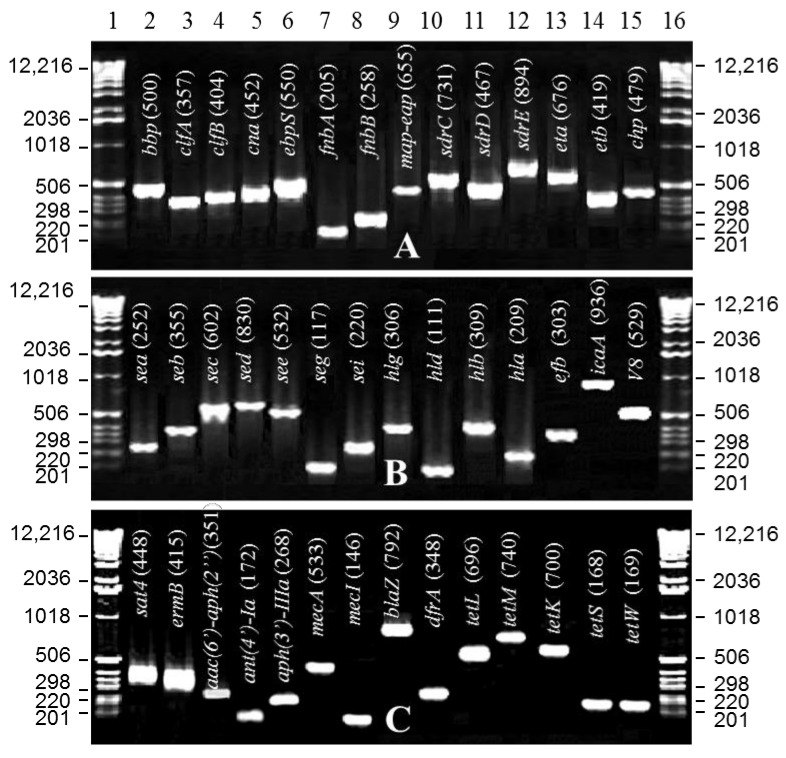
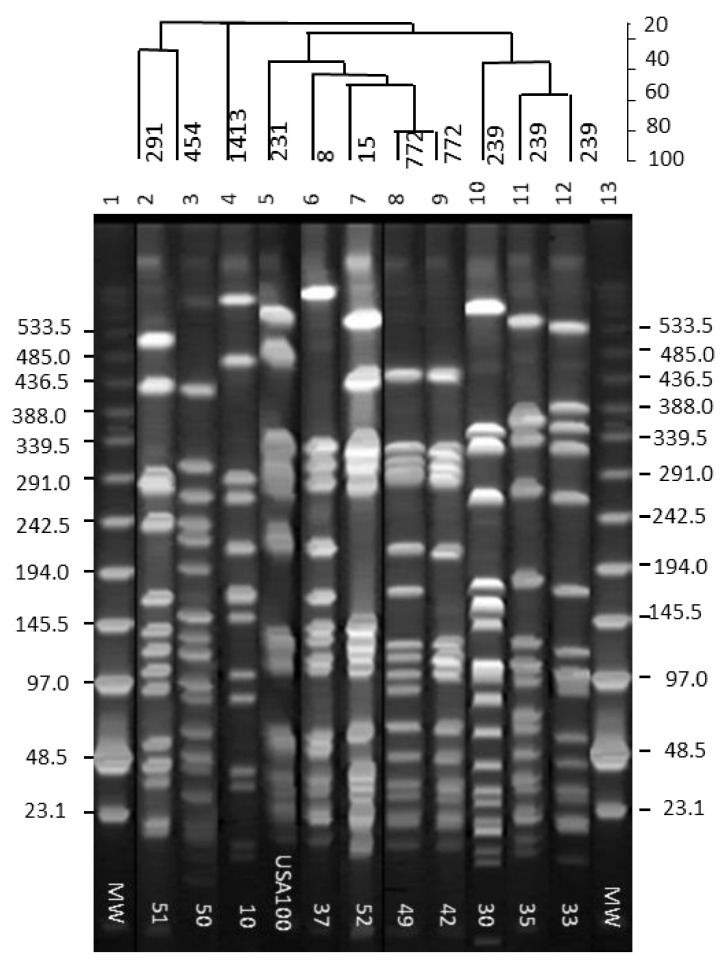
In this study, we compared pulsed-field gel electrophoretic (PFGE), multilocus sequence typing (MLST), Staphylococcal cassette chromosome mec (SCCmec), spa typing, and virulence gene profiles of 19 Panton-Valentine leucocidin (PVL)-positive, multidrug-, and methicillin-resistant clinical Staphylococcus aureus (MRSA) isolates obtained from a hospital intensive care unit in Pakistan. The isolates exhibited 10 pulsotypes, contained eight adhesin genes (bbp, clfA, clfB, cna, fnbA, fnbB, map-eap, and spa), 10 toxin genes (hla, hlb, hld, hlg, pvl, sed, see, seg, seh, and tst), and two other virulence genes (cfb, v8) that were commonly present in all isolates. The spa-typing indicated seven known spa types (t030, t064, t138, t314, t987, t1509, and t5414) and three novel spa types. MLST analysis indicated eight ST types (ST8, ST15, ST30, ST239, ST291, ST503, ST772, and ST1413). All isolates belonged to the agr group 1. Most of the isolates possessed SCCmec type III, but some isolates had it in combination with types SCCmec IV and V. The presence of multidrug-resistant MRSA isolates in Pakistan indicates poor hygienic conditions, overuse of antibiotics, and a lack of rational antibiotic therapy that have led to the evolution and development of hypervirulent MRSA clones. The study warrants development of a robust epidemiological screening program and adoption of effective measures to stop their spread in hospitals and the community.
Keywords: MLST; SCCmec; Staphylococcus aureus; evolution; genes; methicillin resistance; virulence.
Conflict of interest statement
The authors declare no conflict of interest.
Figures
References
-
- Fey P.D., Said-Salim B., Rupp M.E., Hinrichs S.H., Boxrud D.J., Davis C.C., Kreiswirth B.N., Schlieveret P.M. Comparative molecular analysis of community- or hospital-acquired methicillin-resistant Staphylococcus aureus. Antimicrob. Agents Chemother. 2003;47:196–203. doi: 10.1128/AAC.47.1.196-203.2003. - DOI - PMC - PubMed
-
- Fukuta Y., Cunningham C.A., Harris P.L., Wagener M.M., Muder R.R. Identifying the risk factors for hospital-acquired methicillin-resistant Staphylococcus aureus (MRSA) infection among patients colonized with MRSA on admission. Infect. Control Hosp. Epidemiol. 2012;33:1219–1225. doi: 10.1086/668420. - DOI - PubMed
-
- Eriksen K.R. “Celbenin”-resistant staphylococci. Ugeskr. Laeger. 1961;123:384–386. - PubMed
-
- Ahmad M.K., Asrar A. Prevalence of methicillin resistant Staphylococcus aureus in pyogenic community and hospital acquired skin and soft tissues infections. J. Pak. Med. Assoc. 2014;64:892–895. - PubMed
Grants and funding
LinkOut - more resources
Full Text Sources
Research Materials
Miscellaneous
