


Activity of Anthracenediones and Flavoring Phenols in Hydromethanolic Extracts of Rubia tinctorum against Grapevine Phytopathogenic Fungi
- PMID: 34451572
- PMCID: PMC8399478
- DOI: 10.3390/plants10081527
Activity of Anthracenediones and Flavoring Phenols in Hydromethanolic Extracts of Rubia tinctorum against Grapevine Phytopathogenic Fungi
Abstract
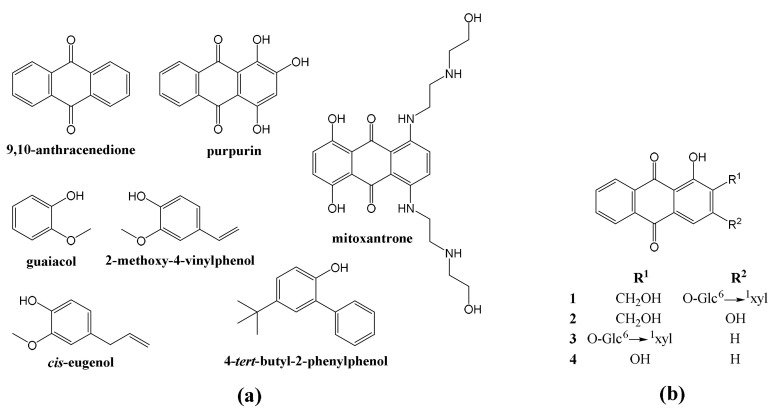
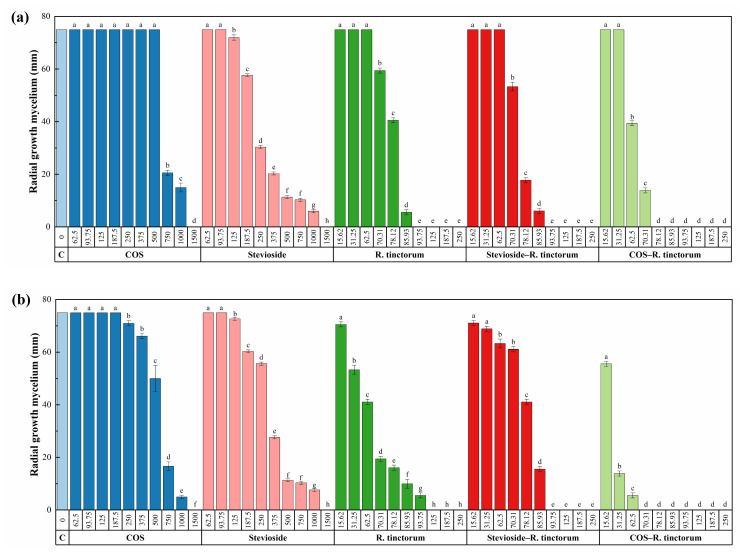
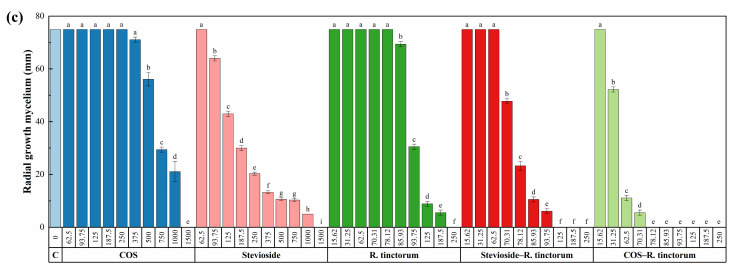
In this work, the chemical composition of Rubia tinctorum root hydromethanolic extract was analyzed by GC-MS, and over 50 constituents were identified. The main phytochemicals were alizarin-related anthraquinones and flavoring phenol compounds. The antifungal activity of this extract, alone and in combination with chitosan oligomers (COS) or with stevioside, was evaluated against the pathogenic taxa Diplodia seriata, Dothiorella viticola and Neofusicoccum parvum, responsible for the so-called Botryosphaeria dieback of grapevine. In vitro mycelial growth inhibition tests showed remarkable activity for the pure extract, with EC50 and EC90 values as low as 66 and 88 μg·mL-1, respectively. Nonetheless, enhanced activity was attained upon the formation of conjugate complexes with COS or with stevioside, with synergy factors of up to 5.4 and 3.3, respectively, resulting in EC50 and EC90 values as low as 22 and 56 μg·mL-1, respectively. The conjugate with the best performance (COS-R. tinctorum extract) was then assayed ex situ on autoclaved grapevine wood against D. seriata, confirming its antifungal behavior on this plant material. Finally, the same conjugate was evaluated in greenhouse assays on grafted grapevine plants artificially inoculated with the three aforementioned fungal species, resulting in a significant reduction in the infection rate in all cases. This natural antifungal compound represents a promising alternative for developing sustainable control methods against grapevine trunk diseases.
Keywords: Botryosphaeriaceae; GTDs; Vitis vinifera; antifungal; chitosan; madder; stevioside.
Conflict of interest statement
The authors declare no conflict of interest. The funders had no role in the design of the study; in the collection, analyses, or interpretation of data; in the writing of the manuscript, or in the decision to publish the results.
Figures
References
-
- Coufal N., Farnaes L. Anthracyclines and anthracenediones. In: Minev B., editor. Cancer Management in Man: Chemotherapy, Biological Therapy, Hyperthermia and Supporting Measures. Springer; Dordrecht, The Netherlands: 2011. pp. 87–102. - DOI
-
- Wuthi-udomlert M., Kupittayanant P., Gritsanapan W. In vitro evaluation of antifungal activity of anthraquinone derivatives of Senna alata. J. Health Res. 2010;24:117–122.
Grants and funding
- VA258P18/Junta de Castilla y León
- IV Convocatoria de Ayudas de la Cátedra AgroBank para la transferencia del conocimiento al sector agroalimentario/Cátedra Agrobank
- Convocatoria Fundación Ibercaja-Universidad de Zaragoza de proyectos de investigación, desa-rrollo e innovación para jóvenes investigadores/Fundación Ibercaja-Universidad de Zaragoza
LinkOut - more resources
Full Text Sources
Miscellaneous
