


Structural Characterization of the Millennial Antibacterial (Fluoro)Quinolones-Shaping the Fifth Generation
- PMID: 34452252
- PMCID: PMC8399897
- DOI: 10.3390/pharmaceutics13081289
Structural Characterization of the Millennial Antibacterial (Fluoro)Quinolones-Shaping the Fifth Generation
Abstract
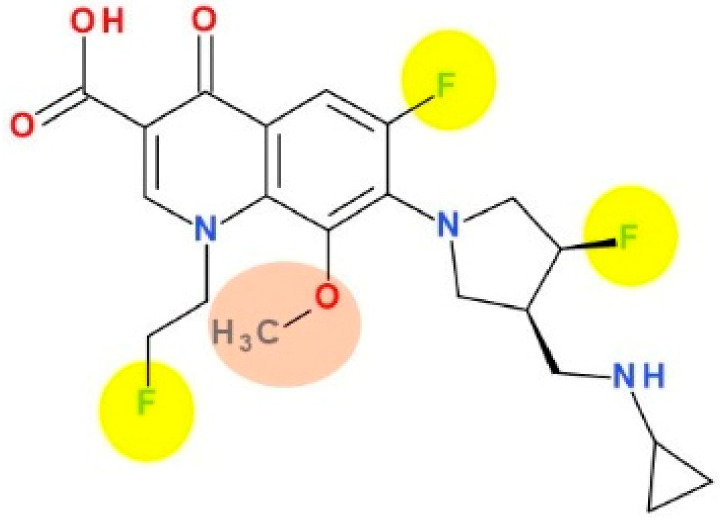
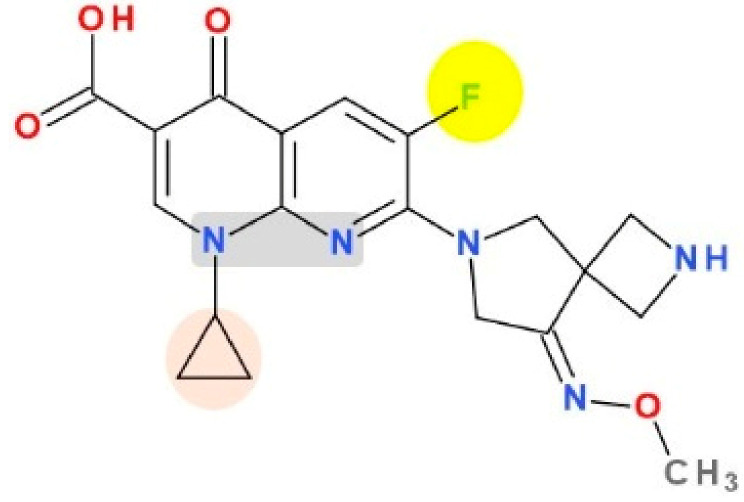
The evolution of the class of antibacterial quinolones includes the introduction in therapy of highly successful compounds. Although many representatives were withdrawn due to severe adverse reactions, a few representatives have proven their therapeutical value over time. The classification of antibacterial quinolones into generations is a valuable tool for physicians, pharmacists, and researchers. In addition, the transition from one generation to another has brought new representatives with improved properties. In the last two decades, several representatives of antibacterial quinolones received approval for therapy. This review sets out to chronologically outline the group of approved antibacterial quinolones since 2000. Special attention is given to eight representatives: besifloxacin, delafoxacin, finafloxacin, lascufloxacin, nadifloxacin and levonadifloxacin, nemonoxacin, and zabofloxacin. These compounds have been characterized regarding physicochemical properties, formulations, antibacterial activity spectrum and advantageous structural characteristics related to antibacterial efficiency. At present these new compounds (with the exception of nadifloxacin) are reported differently, most often in the fourth generation and less frequently in a new generation (the fifth). Although these new compounds' mechanism does not contain essential new elements, the question of shaping a new generation (the fifth) arises, based on higher potency and broad spectrum of activity, including resistant bacterial strains. The functional groups that ensured the biological activity, good pharmacokinetic properties and a safety profile were highlighted. In addition, these new representatives have a low risk of determining bacterial resistance. Several positive aspects are added to the fourth fluoroquinolones generation, characteristics that can be the basis of the fifth generation. Antibacterial quinolones class continues to acquire new compounds with antibacterial potential, among other effects. Numerous derivatives, hybrids or conjugates are currently in various stages of research.
Keywords: DNA gyrase; antibacterial activity; fluoroquinolones; quinolones; structure-activity relationship; topoisomerase IV.
Conflict of interest statement
The authors declare no conflict of interest.
Figures




References
-
- Sheehan G., Chew N.S.Y. The history of quinolones. In: Ronald A.R., Low D.E., editors. Fluoroquinolone Antibiotics. Birkhäuser; Basel, Switzerland: 2003. pp. 1–10. Milestones in Drug Therapy.
-
- Oliphant C.M., Green G.M. Quinolones: A Comprehensive Review. Am. Fam. Physician. 2002;65:455–464. - PubMed
-
- Ball P. Chapter 1-The Quinolones: History and Overview. In: Andriole V.T., editor. The Quinolones. 3rd ed. Academic Press; San Diego, CA, USA: 2000. pp. 1–31.
Publication types
LinkOut - more resources
Full Text Sources
