


Retrospective Enhanced Bat Lyssavirus Surveillance in Germany between 2018-2020
- PMID: 34452403
- PMCID: PMC8402685
- DOI: 10.3390/v13081538
Retrospective Enhanced Bat Lyssavirus Surveillance in Germany between 2018-2020
Abstract
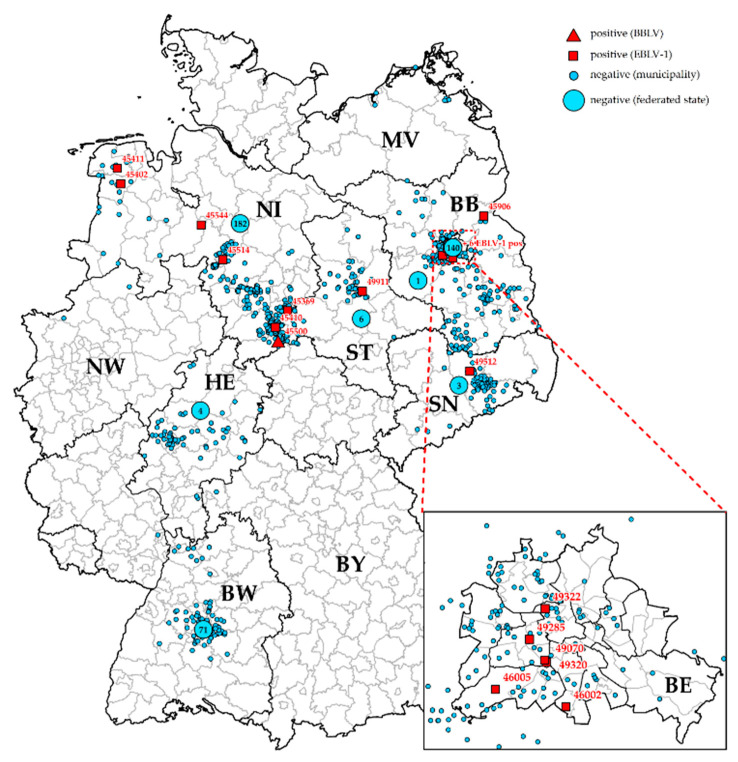
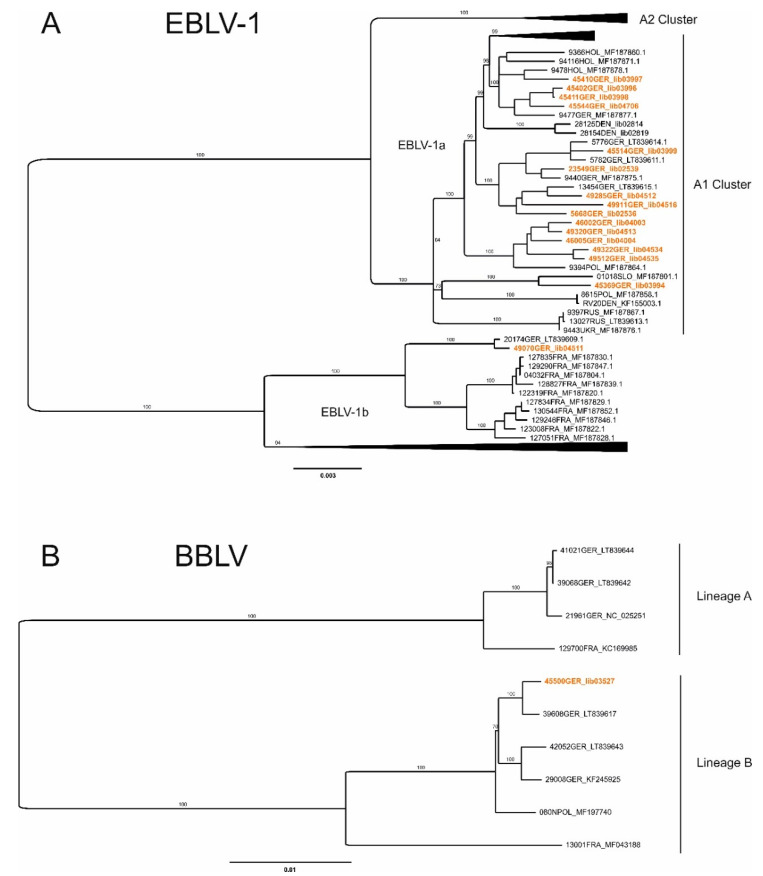
Lyssaviruses are the causative agents for rabies, a zoonotic and fatal disease. Bats are the ancestral reservoir host for lyssaviruses, and at least three different lyssaviruses have been found in bats from Germany. Across Europe, novel lyssaviruses were identified in bats recently and occasional spillover infections in other mammals and human cases highlight their public health relevance. Here, we report the results from an enhanced passive bat rabies surveillance that encompasses samples without human contact that would not be tested under routine conditions. To this end, 1236 bat brain samples obtained between 2018 and 2020 were screened for lyssaviruses via several RT-qPCR assays. European bat lyssavirus type 1 (EBLV-1) was dominant, with 15 positives exclusively found in serotine bats (Eptesicus serotinus) from northern Germany. Additionally, when an archived set of bat samples that had tested negative for rabies by the FAT were screened in the process of assay validation, four samples tested EBLV-1 positive, including two detected in Pipistrellus pipistrellus. Subsequent phylogenetic analysis of 17 full genomes assigned all except one of these viruses to the A1 cluster of the EBLV-1a sub-lineage. Furthermore, we report here another Bokeloh bat lyssavirus (BBLV) infection in a Natterer's bat (Myotis nattereri) found in Lower Saxony, the tenth reported case of this novel bat lyssavirus.
Keywords: Bokeloh bat lyssavirus (BBLV); European bat lyssavirus 1 (EBLV-1); bat lyssavirus; bat rabies surveillance; zoonosis.
Conflict of interest statement
The authors declare no conflict of interest.
Figures
References
Publication types
MeSH terms
Substances
LinkOut - more resources
Full Text Sources
