


Meal patterning and the onset of spontaneous labor
- PMID: 34453454
- PMCID: PMC8810608
- DOI: 10.1111/birt.12583
Meal patterning and the onset of spontaneous labor
Abstract
Background: There is a lack of consensus in the literature about the association between meal patterning during pregnancy and birth outcomes. This study examined whether maternal meal patterning in the week before birth was associated with an increased likelihood of imminent spontaneous labor.
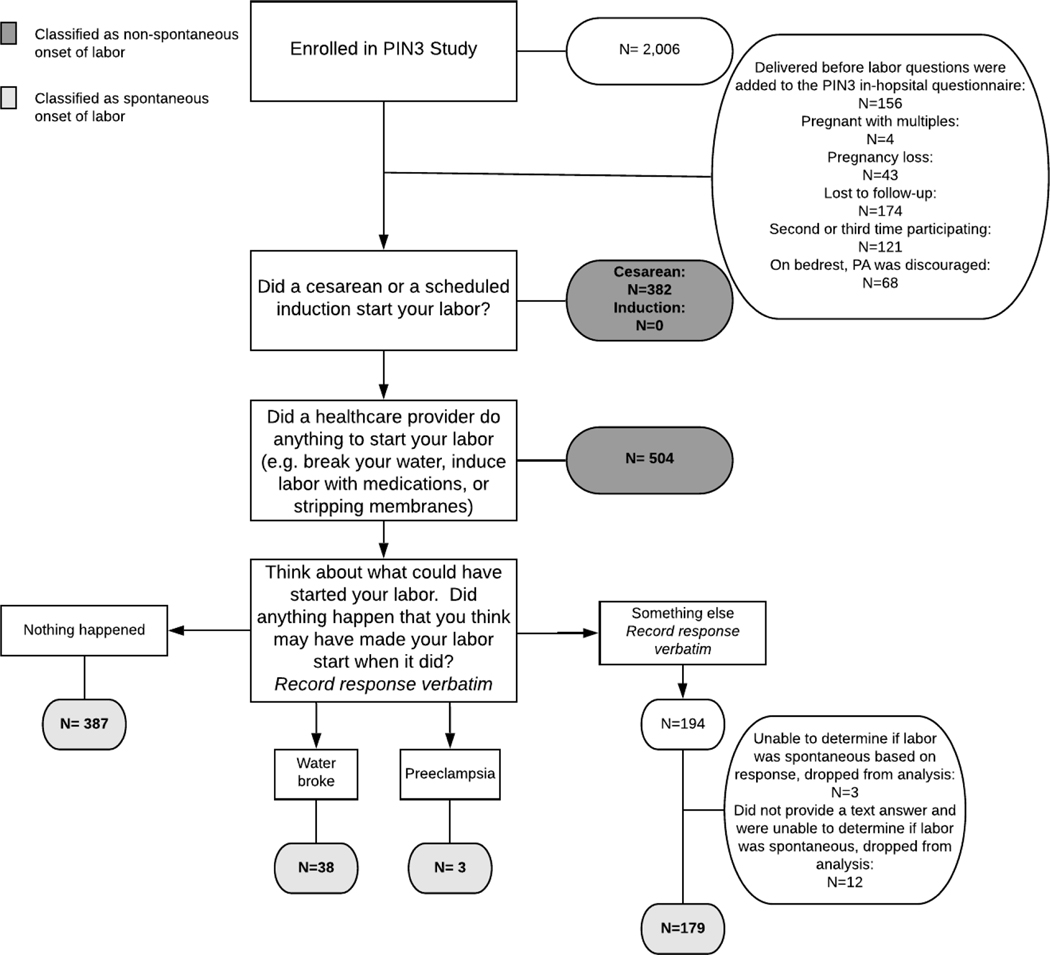
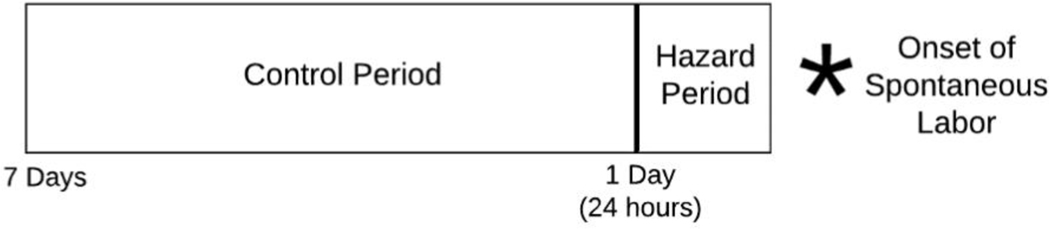
Methods: Data came from 607 participants in the third phase of the Pregnancy, Infection, and Nutrition Study (PIN3). Data were collected through an interviewer-administered questionnaire after birth, before hospital discharge. Questions included the typical number of meals and snacks consumed daily, during both the week before labor onset and the 24-hour period before labor onset. A self-matched, case-crossover study design examined the association between skipping one or more meals and the likelihood of spontaneous labor onset within the subsequent 24 hours.
Results: Among women who experienced spontaneous labor, 87.0% reported routinely eating three daily meals (breakfast, lunch, and dinner) during the week before their labor began, but only 71.2% reported eating three meals during the 24-hour period before their labor began. Compared with the week before their labor, the odds of imminent spontaneous labor were 5.43 times as high (95% CI: 3.41-8.65) within 24 hours of skipping 1 or more meals. The association between skipping 1 or more meals and the onset of spontaneous labor remained elevated for both pregnant individuals who birthed early (37-<39 weeks) and full-term (≥39 weeks).
Conclusions: Skipping meals later in pregnancy was associated with an increased likelihood of imminent spontaneous labor, though we are unable to rule out reverse causality.
Keywords: case-crossover; maternal diet; meal patterning; pregnancy; spontaneous labor.
© 2021 Wiley Periodicals LLC.
Figures
References
-
- Institute of Medicine (US) and National Research Council (US) Committee to Reexamine IOM Pregnancy Weight Guidelines. Weight Gain during Pregnancy: Reexamining the Guidelines. (Rasmussen KM, Yaktine AL, eds.). Washington (DC): National Academies Press; (US: ); 2009. doi: 10.17226/12584 - DOI - PubMed
-
- Nutrition during Pregnancy and Lactation: An Implementation Guide. Washington, D.C.: National Academies Press; 1992. doi: 10.17226/1984 - DOI
-
- Otten JJ, Hellwig J pitzi, meyers LD, eds. Dietary Reference Intakes: The Essential Guide to Nutrient Requirements. Washington, D.C.: National Academies Press; 2006:144. doi: 10.17226/11537 - DOI
Publication types
MeSH terms
Grants and funding
LinkOut - more resources
Full Text Sources
