


Na+-dependent inactivation of vascular Na+/Ca2+ exchanger responsible for reduced peripheral blood flow in neuropathic pain model
- PMID: 34454926
- PMCID: PMC8518190
- DOI: 10.1016/j.ejphar.2021.174448
Na+-dependent inactivation of vascular Na+/Ca2+ exchanger responsible for reduced peripheral blood flow in neuropathic pain model
Erratum in
-
Corrigendum to "Na(+)-dependent inactivation of vascular Na(+)/Ca(2+) exchanger responsible for reduced peripheral blood flow in neuropathic pain model" [Eur. J. Pharmacol. 910 (2021) 174448].Eur J Pharmacol. 2024 May 5;970:176495. doi: 10.1016/j.ejphar.2024.176495. Epub 2024 Mar 14. Eur J Pharmacol. 2024. PMID: 38490839 No abstract available.
Abstract
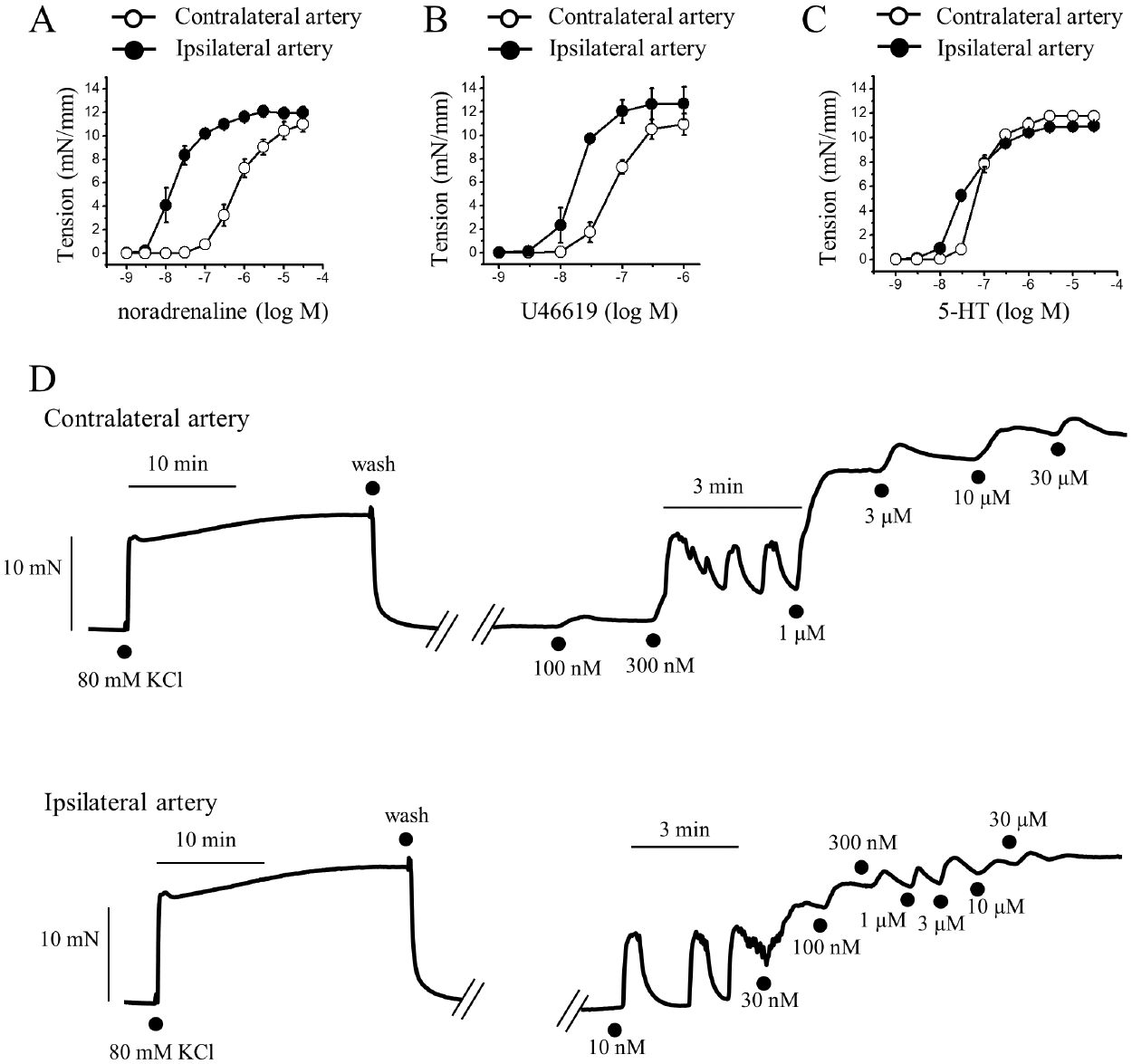
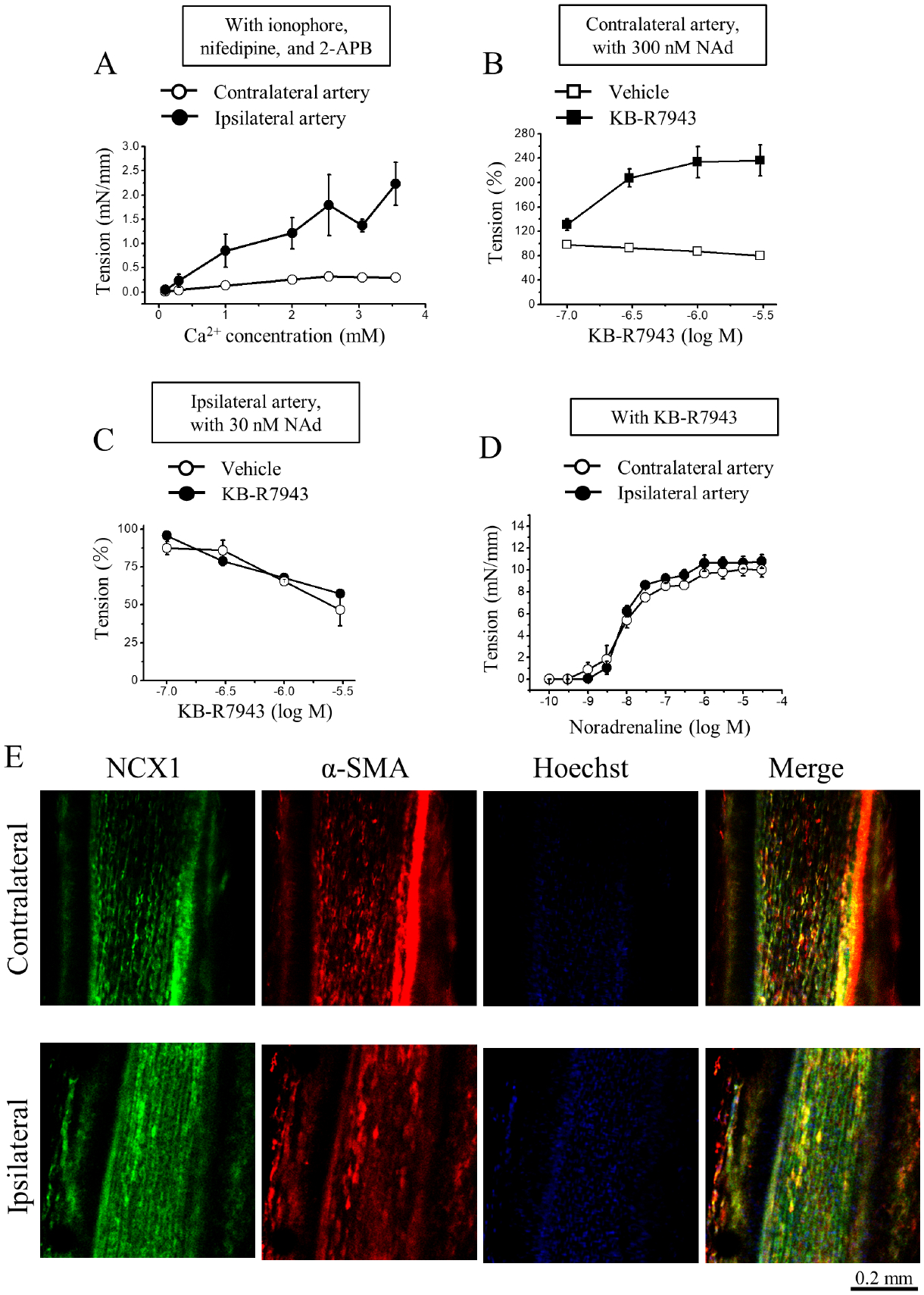
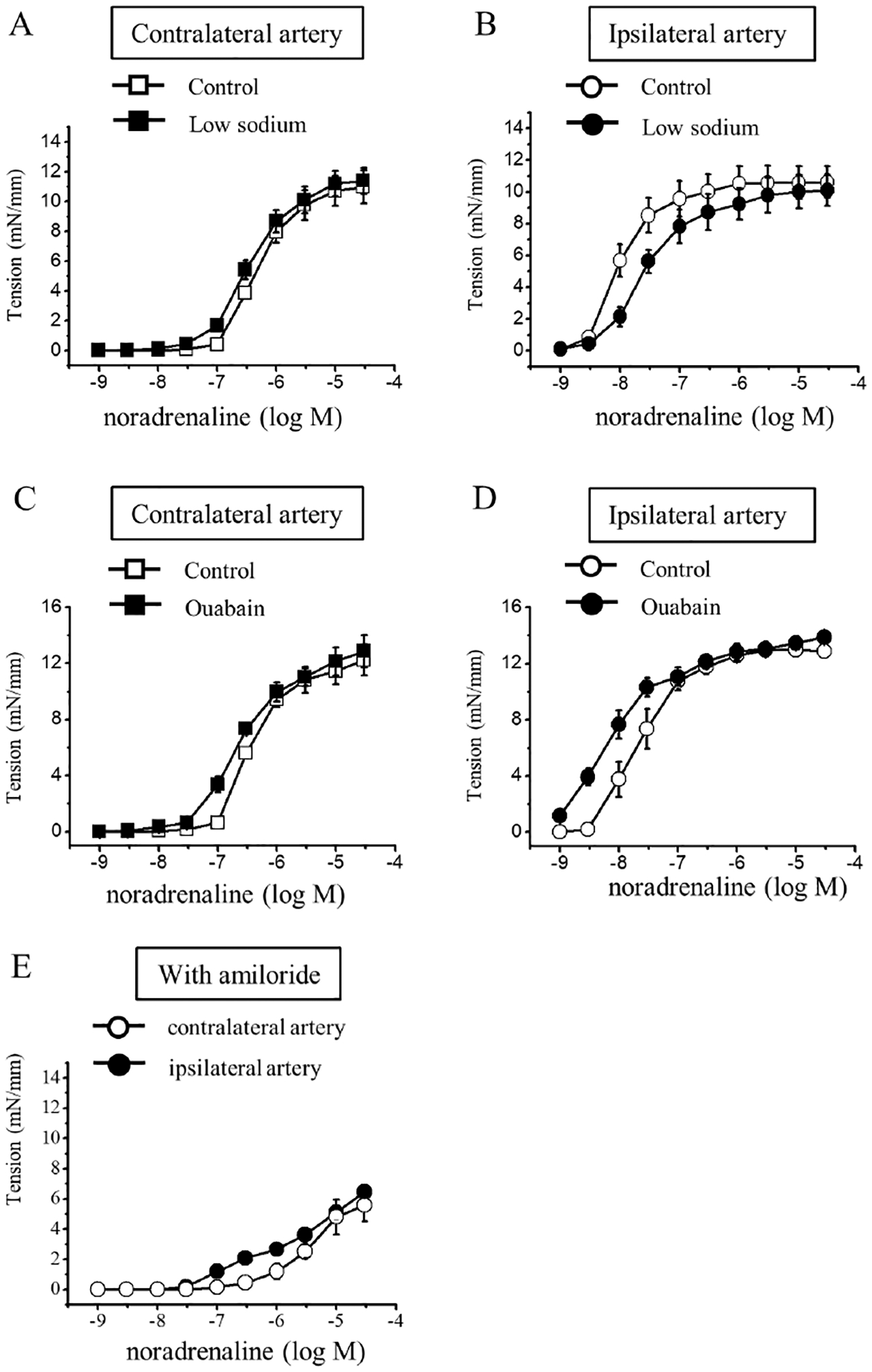
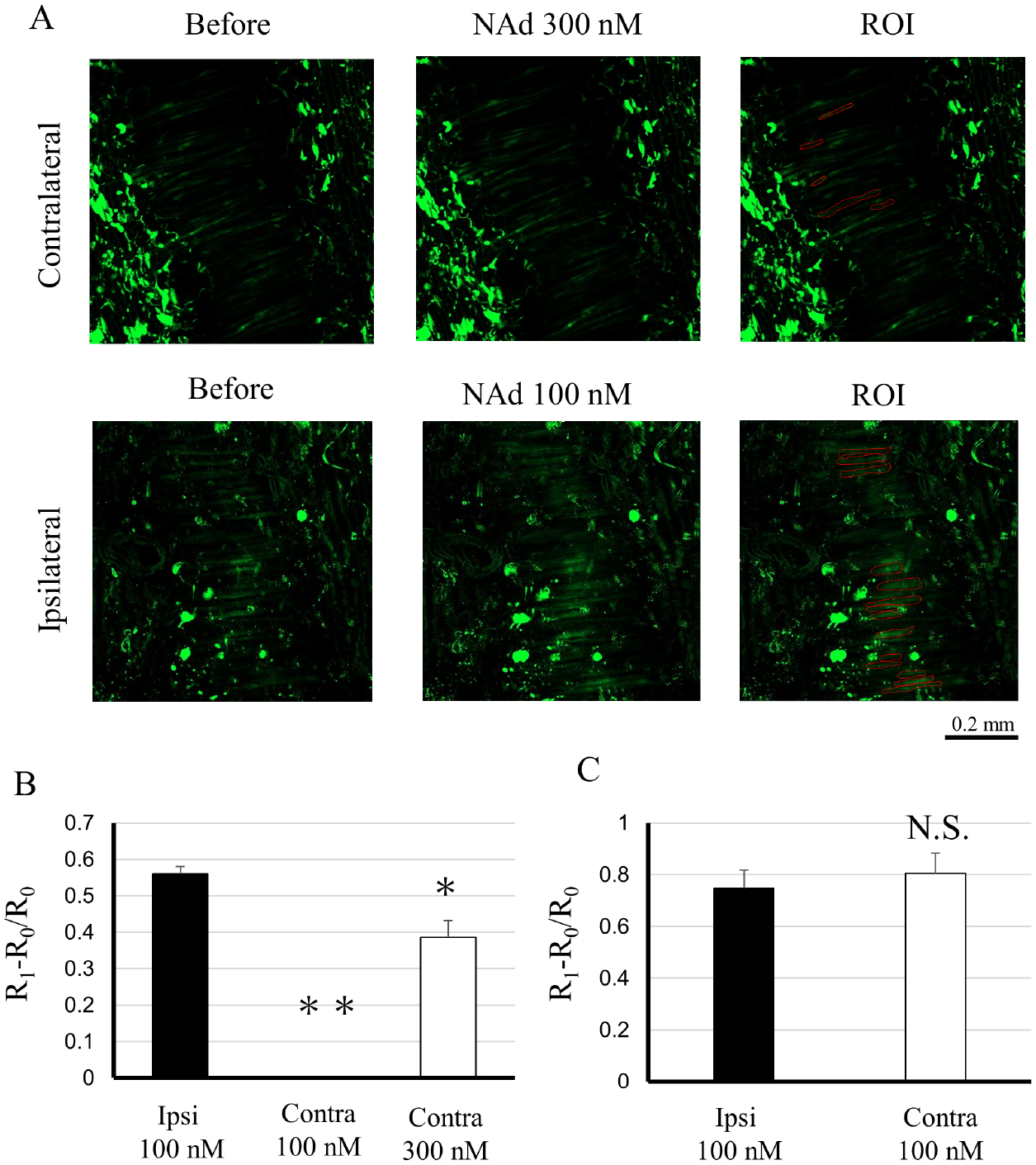
Reduced skin blood flow has been reported in neuropathic pain patients as well as various peripheral neuropathic pain model animals. We have previously shown that vasodilators, which improves reduced skin blood flow, correlatively alleviate neuropathic pain in chronic constriction injury (CCI) mice, a model of neuropathic pain from peripheral nerve injury. Here, we sought to elucidate the mechanism underlying the reduced skin blood flow in CCI rats. The skin blood flow of the ipsilateral plantar arteries was significantly reduced compared to that of the contralateral ones 4 weeks after loose ligation of the sciatic nerve. The contraction induced by noradrenaline, serotonin, and U46619, a thromboxane receptor agonist, in the isolated ipsilateral plantar arteries was significantly enhanced compared to that in the contralateral ones. KB-R7943, a Na+/Ca2+ exchanger (NCX) inhibitor, shifted the concentration-response curves of noradrenaline to the left in the contralateral arteries but had no effect on the ipsilateral side. There was no significant difference in concentration-response curves of noradrenaline between the ipsilateral and contralateral arteries in the presence of KB-R7943. Amiloride, a non-specific inhibitor of Na+ channels and transporters, comparably shifted concentration-response curves of noradrenaline to the left in both the contralateral and ipsilateral arteries. One hundred nM of noradrenaline induced intracellular Ca2+ elevation in the ipsilateral arteries, which was significantly larger than that induced by 300-nM noradrenaline in the contralateral arteries. These results suggest that reduced peripheral blood flow after nerve injury is due to Na+-dependent inactivation of NCX in the ipsilateral plantar arteries.
Keywords: Arteries; Chronic constriction injury; Neuropathic pain; Sodium-calcium exchanger; Vasoconstriction.
Copyright © 2021 Elsevier B.V. All rights reserved.
Conflict of interest statement
Declaration of interests
The authors declare that they have no known competing financial interests or personal relationships that could have appeared to influence the work reported in this paper.
Figures
References
-
- Alles SRA, Smith PA, 2018. Etiology and pharmacology of neuropathic pain. Pharmacol Rev 70, 315–347. - PubMed
-
- Alves-Lopes R, Neves KB, Anagnostopoulou A, Rios FJ, Lacchini S, Montezano AC, Touyz RM, 2020. Crosstalk between vascular redox and calcium signaling in hypertension involves TRPM2 (transient receptor potential melastatin 2) cation channel. Hypertension 75, 139–149. - PubMed
-
- Banke TG, 2011. The dilated TRPA1 channel pore state is blocked by amiloride and analogues. Brain Res 1381, 21–30. - PubMed
-
- Dai XQ, Ramji A, Liu Y, Li Q, Karpinski E, Chen XZ, 2007. Inhibition of TRPP3 channel by amiloride and analogs. Mol Pharmacol 72, 1576–1585. - PubMed
MeSH terms
Substances
Grants and funding
LinkOut - more resources
Full Text Sources
Miscellaneous
